We are taught to treat the calendar like a one-way street. Each year rolls over like a toll booth, charging us a tax of stiff joints, slower mornings, and a quiet, creeping surrender to gravity. Society whispers a very specific script about aging. It tells us to pull up a rocking chair, to hand over the heavy lifting, to accept that our bodies are ancient monuments slowly weathering into dust. We nod along. We buy comfortable shoes. We schedule our lives around caution.
Then, a grandmother from Canada gets down on her kitchen floor, rests her forearms against the linoleum, lifts her hips, and refuses to move for five hours.
Donna Jean Wilde did not just break a Guinness World Record for the longest female plank. She shattered a collective hallucination. For three hundred minutes, while much younger bodies would have folded into spasms of exhaustion, her core held fast against the floor. Behind that astonishing feat lies a medical anomaly, yes, but more importantly, it exposes the massive, beautiful lie we tell ourselves about what a human body is capable of in its sixth decade and beyond.
The Morning the Stopwatch Stopped
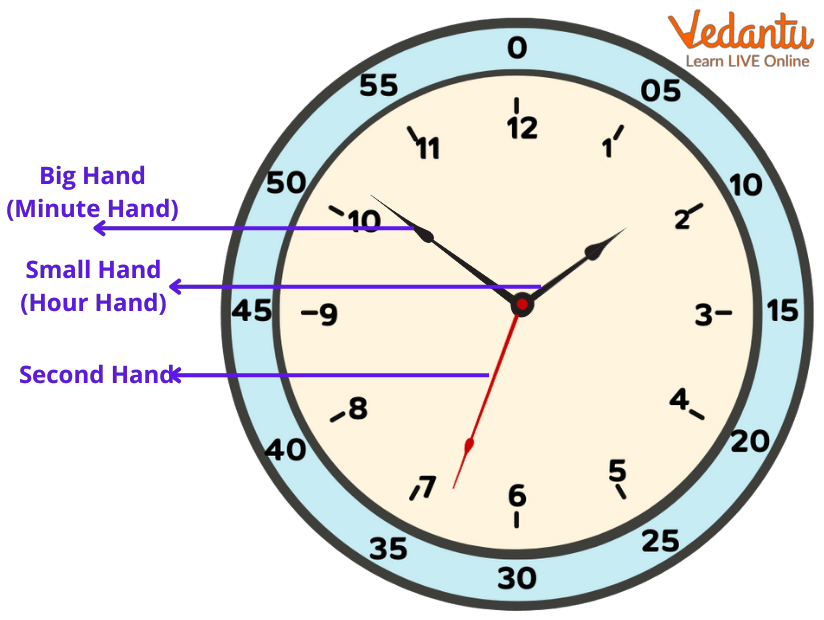
Picture the room. The air smells faintly of coffee and floor wax. The clock on the wall ticks with a mechanical indifference that feels almost offensive when your entire midsection is vibrating with raw effort. At hour four, every nerve ending in the human torso begins to scream a singular demand: stop.
Most of us know the plank. We drop into position on a Tuesday morning resolution, our teeth clenched, watching the seconds crawl past on a smartphone screen. By minute two, our form collapses. We blame our age. We blame our desk jobs. We blame genetics.
Donna Jean Wilde did not have a secret genetic cheat code. She had a broken wrist, which forced her to modify her stance onto her forearms—an adjustment that arguably increased the sheer mechanical torque on her shoulders and core—and she had a stubborn refusal to accept the expiration date society stamps on birth certificates. When she crossed the five-hour mark, she wasn't just setting a benchmark for strength. She was rewriting the physics of late-life potential.
We look at extremes like this and often dismiss them as freak occurrences. We categorize them alongside ultra-marathoners and mountain climbers as things reserved for the genetic elite. That is our defense mechanism. If Donna Jean is a mutant, then our own physical decline is inevitable, and we are absolved of the responsibility to try.
The science, however, flatly rejects that comfort.
What Happens When We Stop Challenging Bone and Muscle
To understand why a five-hour plank by a sixty-one-year-old matters, we have to look honestly at what usually happens to us in the background of daily life. Sarcopenia is the clinical term for it, though it sounds more like a phantom limb: the gradual, silent loss of muscle mass and function that begins creeping into our bodies around age forty.
Left unchecked, our muscle fibers shrink. Bone density follows suit, leaching minerals away in a quiet retreat that leaves our frames vulnerable to the sudden, catastrophic snap of a fall. Traditional medicine used to hand down a prescription of gentle walks and safe stretches, as if an aging body were a piece of fine china destined to chip if exposed to a stiff breeze.
That approach is backward. It treats aging as a disease to be managed rather than a process to be resisted.
When you demand force from a muscle, something remarkable happens. Microscopic stress signals race through the cellular scaffolding. They sound an alarm, and the body responds by laying down fresh protein, knitting denser bone matrices, and recruiting neurological pathways that had gone dark from sheer neglect. Age does not strip us of our ability to adapt; disuse does.
Consider what it takes to hold a plank for three hundred minutes. It requires an unyielding dialogue between the nervous system and the deep stabilizers of the spine—the transversus abdominis, the obliques, the erector spinae. These are the muscles that protect our internal organs, keep our posture upright, and prevent the slouch that turns people into question marks as the decades pile up.
Donna Jean did not wake up one morning and decide to test the universe. Her achievement was the compound interest of thousands of unglamorous, solitary moments. It was the choice to get back on the floor when no one was watching.
The Architecture of Resilience
If you want to understand fitness after sixty, you must discard the language of youth culture. Forget six-pack abs, gym self-ies, and punishing boot camps designed to punish the body into submission. That is performance fitness. What we need as the years accumulate is survival architecture.
Building that architecture requires a shift in how we view daily movement. It is not about adding years to your life; it is about adding life to your years. When fitness becomes a celebration of what your frame can still construct rather than a desperate attempt to erase what time has carved, everything changes.
There are fundamental pillars that keep the human engine running smoothly long past the traditional retirement age.
First is resistance, pure and simple. Muscles do not care about your age; they care about tension. Whether that tension comes from iron plates in a gym or the dead weight of your own body bearing down on a hardwood floor, the muscle fibers respond identically. They thicken. They demand more blood flow. They signal the brain to stay sharp.
Second is balance and proprioception—the invisible sense of where your body exists in space. As we age, the inner ear and the tiny sensors in our joints begin to dull. We trip over area rugs. We hesitate on stairwells. Training the core is the ultimate insurance policy against this drift. A strong midsection is the fulcrum of balance. If the center holds, the periphery can recover.
Third, and perhaps most importantly, is the psychological reinvention. The hardest part of fitness after sixty is not the physical ache; it is the mental permission slip we give ourselves to slow down. We listen to the cultural hum telling us that we are fragile. We internalize the minor aches of a bad night's sleep as permanent disabilities. Breaking through that barrier requires a stubborn, almost unreasonable refusal to surrender your agency.
The Quiet Work in the Corners
Most of us will never plank for five hours. Nor should we. That level of static endurance is an athletic mountain peak, interesting to look at from below, but hardly a requirement for a vibrant life.
The real lesson of the Canadian grandmother's feat is happening in the quiet margins of our days. It is found in the willingness to drop to the floor during a commercial break and hold a plank for thirty seconds. It is found in carrying your own groceries instead of asking for double-bagged lightness. It is the decision to take the stairs because your knees are still yours to command.
The years will pass regardless. The calendar will turn its pages, and the mirror will continue its honest, unsparing work. But the speed of that descent is largely negotiable.
When Donna Jean Wilde finally lowered her body back to the floor after three hundred minutes, the stopwatch clicked off, but the implications kept echoing. She didn't just set a record. She left a marker on the road, proving that the human spirit, housed in bone and sinew, has a much longer fuse than we are ever led to believe.
The floor is right there. The clock is already running.