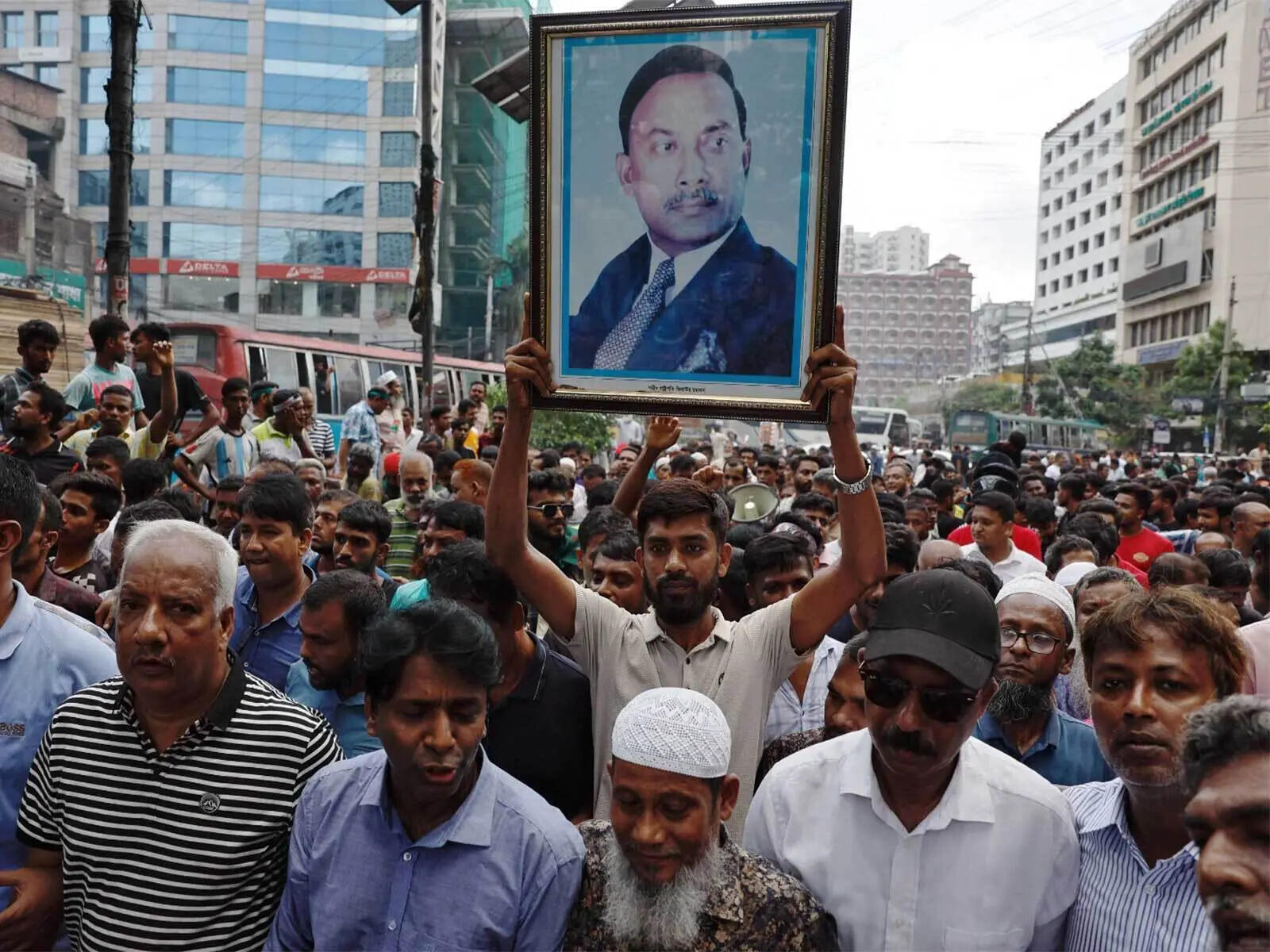
In the quiet, elite enclave of Dhaka’s Banani DOHS, a 45-year game of cat and mouse ended at midnight on July 15, 2026. Detectives from the Dhaka Metropolitan Police arrested retired Major Md Mozaffar Hossain, a convicted assassin of former President Ziaur Rahman. Fleeing immediately after the bloody military coup of May 30, 1981, Hossain had lived under assumed identities, primarily in India, evading a national manhunt and a bounty for over four decades. His capture marks the first major breakthrough for the six-month-old government of Prime Minister Tarique Rahman—the slain president’s eldest son.
The arrest is more than a cold case solved. It is a profound political statement in a country still finding its footing after the convulsive student-led uprising of 2024 and the subsequent transition of power. For decades, the details of the assassination that claimed the life of one of Bangladesh’s founding military figures remained locked behind institutional silence, selective histories, and the geopolitical realities of South Asia. By bringing Mozaffar Hossain into custody, the newly elected administration is sending a clear message to both its supporters and its detractors: the past is never truly buried.
A Midnight Arrest in the Capital
The operation was swift, silent, and highly coordinated. Acted upon precise intelligence, the Detective Branch of the Dhaka Metropolitan Police closed in on a residence in Banani, a high-security neighborhood favored by retired military officials and diplomats. The man they took into custody did not look like the young, rebellious army major who had upended the nation's history in 1981. He was an elderly man, weathered by decades of living on the run and existing on the margins of legality.
Investigators revealed that Hossain had recently slipped back into the country. He had traveled extensively across the Indian border, utilizing multiple aliases and forged travel documents to evade detection by intelligence agencies on both sides. For decades, a meager bounty of just two thousand dollars had hung over his head, a relic of a different era that failed to reflect the true magnitude of his alleged crime.
Following his arrest, police officials wasted no time. Given his status as a former military officer accused of mutiny and murder, Hossain was quickly processed and handed over to the Bangladesh Army. He now faces the prospect of a military court-martial, a process that will inevitably reopen the darkest chapters of the country's post-independence era.
The Ghost of Chittagong Circuit House
To understand the weight of this arrest, one must look back to the early hours of May 30, 1981. Ziaur Rahman, a decorated war hero of the 1971 Liberation War and the founder of the Bangladesh Nationalist Party (BNP), was staying at the Chittagong Circuit House. He had traveled to the port city to resolve a bitter internal feud among local party leaders, a routine political mission that quickly turned fatal.
Shortly after midnight, a group of mid-ranking army officers launched an assault on the building. Armed with automatic weapons, they breached the security perimeter. According to historical records and subsequent investigation files, it was Major Mozaffar Hossain who personally identified the president and fired the fatal shots.
Immediately after the trigger was pulled, Hossain reportedly placed a phone call to Major General Abul Manzoor, the commander of the Army’s 24th Infantry Division in Chittagong, uttering five words that would alter the course of the nation:
"The President has been killed."
The conspirators attempted to establish a "Revolutionary Council," cutting off all communications between Chittagong and the rest of the country. They refused to surrender Zia’s body, which was hastily buried in a shallow grave in the wilderness of Rangunia. But the coup had no deep roots. Within forty-eight hours, the rebellion collapsed under the weight of loyalist pressure led by the army chief, Hussain Muhammad Ershad.
Retribution and Flight
The aftermath of the failed coup was swift and brutal. Major General Manzoor was captured in a nearby tea garden and subsequently killed under highly suspicious circumstances inside the Chittagong cantonment. A military tribunal was rapidly convened to try those involved. Eighteen officers were put on trial for mutiny; thirteen of them were sentenced to death and executed by hanging.
Yet, a few key figures slipped through the dragnet. Mozaffar Hossain was chief among them.
Using the chaotic borderlands of the subcontinent, Hossain crossed into India. Investigative sources indicate that he spent years moving between safehouses in West Bengal, Tripura, and other Indian states. Between 1997 and 1998, he lived quietly under a completely different identity, blending into local communities where no one questioned the quiet older gentleman who kept entirely to himself.
The fact that he remained free for forty-five years points to a broader systemic failure, or perhaps a lack of political will by successive administrations in Dhaka. During the long tenure of the Awami League, the focus remained primarily on prosecuting the killers of Sheikh Mujibur Rahman, the country's founding father. The hunt for Ziaur Rahman's assassins was relegated to the background, a historical footnote in a polarized political climate where one leader's hero was another's villain.
The Son's Justice and the New Dhaka
The political landscape changed entirely in early 2026. Following the collapse of the previous regime, the Bangladesh Nationalist Party swept back into power in a landslide electoral victory. Tarique Rahman, who had spent nearly two decades in exile in London, returned to Dhaka to take the oath of office as Prime Minister on February 17, 2026.
For the new prime minister, the arrest of Mozaffar Hossain is deeply personal. It represents the fulfillment of a long-standing promise to his family and his party’s base to bring his father's killers to justice.
Why did Hossain choose this moment to return to Bangladesh? Some intelligence analysts suggest that the sheer passage of time may have bred a sense of false security. He may have believed that in the chaotic aftermath of the 2024 uprising and the transition of power, a frail, elderly man carrying forged documents could slip unnoticed through Dhaka’s international airport. If so, it was a miscalculation that ignored the quiet, persistent vigilance of the state's investigative machinery.
The arrest of Mozaffar Hossain does not merely close a historical file; it threatens to destabilize long-standing narratives within the military and political establishments. The impending court-martial will likely reveal details about the wider conspiracy behind the 1981 coup, including who facilitated Hossain's decades of survival abroad and who, within the upper echelons of the state, chose to look the other way. In a country currently rebuilding its institutions, the return of a forty-five-year-old ghost ensures that the transition to the future will remain firmly anchored in the unresolved battles of the past.