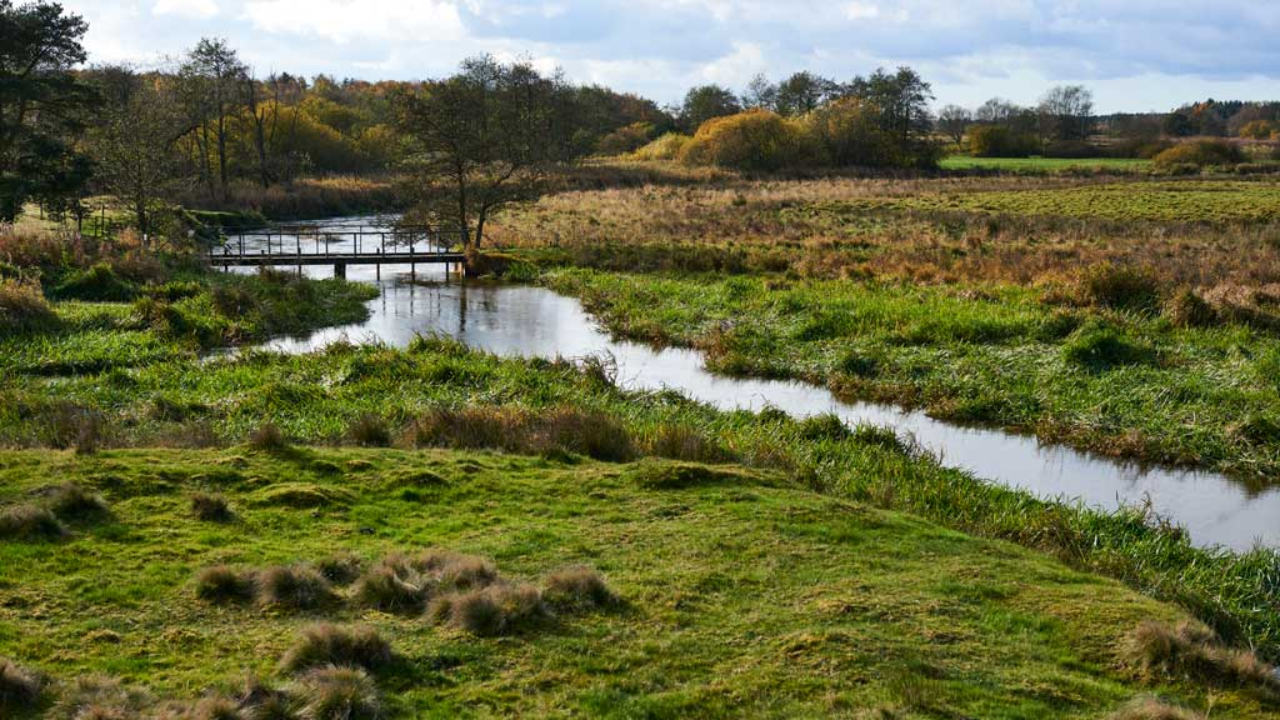
Engineering interventions in low-gradient alluvial systems produce predictable mechanical responses that often diverge sharply from ecological recovery timelines. When the Danish state initiated the reconstruction of the lower River Skjern in West Jutland, the objective was the systemic reversal of mid-century agricultural drainage. Transforming 19 kilometers of straightened, high-velocity drainage channel into 26 kilometers of sinuous meanders required moving millions of cubic meters of earth and re-establishing a dynamic floodplain across 22 square kilometers.
Evaluating this intervention demands a clear separation between physical earthmoving milestones and biological recruitment rates. While structural civil engineering operates on a timeline of months, fluvial geomorphology and macroinvertebrate colonization operate on timelines spanning decades or centuries. Understanding why the Skjern project achieved hydraulic connectivity while experiencing delayed ecological maturation requires an examination of the physical variables governing lowland river restoration.
The Tripartite Mechanics of Lowland Restoration
The restoration of the River Skjern targeted three operational layers: in-stream physical habitats, channel cross-section stability, and lateral connectivity with the adjacent valley floor. Each layer responds differently to hydraulic forces once heavy machinery departs the site.
- In-stream structural diversity depends on local flow velocity gradients, substrate variation, and woody debris accumulation.
- Channel stability is governed by shear stress distribution along the outer banks versus sediment deposition along inner point bars.
- Lateral connectivity relies on overbank flow frequencies capable of dissipating hydraulic energy across the riparian zone.
During the execution phase between 1999 and 2002, heavy machinery reconstructed the physical template, carving out a longer, winding path to increase flow resistance and reduce bed slope velocity. This structural lengthening successfully restored regular overbank flooding, allowing the river to interact with its floodplain during high-discharge events. However, the mechanical design of the channel imposes strict boundary conditions on how water moves, which directly restricts spontaneous morphological evolution.
The Geomorphic Velocity Bottleneck
A common assumption in ecological engineering is that remeandering triggers immediate self-correction, wherein natural erosion and deposition processes rapidly recreate complex features like oxbow lakes, side channels, and braiding islands. Long-term monitoring data from the Skjern catchment disproves this assumption for low-gradient lowland rivers.
Hydrological assessments conducted a decade after completion revealed minimal bank erosion and negligible lateral channel migration. Predictive models indicated a maximum bank retreat of only 6.8 meters over a 100-year horizon. Because the river flows through cohesive sediment layers under regulated discharge regimes, the shear stress exerted by the water is insufficient to drive rapid meander migration.
This creates a structural bottleneck. Features that depend on lateral bank erosion—such as secondary side channels, undercut banks, and isolated oxbows—cannot regenerate spontaneously within human planning horizons. Engineers successfully increased channel length from 19 km to 26 km, but they engineered a static geometry rather than a self-sustaining morphogenetic engine. Without continuous high-energy flood events or aggressive mechanical re-profiling, natural processes will take centuries to accomplish what structural excavation left incomplete.
The Biodiversity Recovery Gradient
Biological recruitment following large-scale river rehabilitation follows a bifurcated trajectory. Species capable of rapid dispersal exhibit immediate population surges, while habitat specialists reliant on complex backwaters experience prolonged stagnation.
Aquatic plants and sensitive insect groups—specifically Ephemeroptera (mayflies), Plecoptera (stoneflies), and Trichoptera (collectively known as EPT taxa)—showed immediate colonization within the first year post-restoration. This initial spike occurred because upstream reaches served as active biological reservoirs, allowing drift-oriented organisms to populate the newly available substrate.
Conversely, taxa dependent on slackwater environments, quiet backwaters, and shallow littoral zones lagged significantly behind historical benchmarks. The primary driver of this deficit is spatial constraint: construction crews recreated only 5.8 percent of the river system's original backwater surface area. Because low-energy backwaters develop at glacial speeds through natural sedimentation patterns, isolated species cannot easily bridge the distance from fragmented populations elsewhere in the broader Danish drainage network.
The system suffers from a landscape-level isolation problem. Even when water quality and nutrient retention targets are met—such as the mitigation of agricultural nitrogen and phosphorus loading flowing into Ringkøbing Fjord—biological completeness remains bounded by the physical scarcity of specialized microhabitats.
Nutrient Dynamics and Agricultural Trade-offs
Beyond aquatic biodiversity, the Skjern project was commissioned to address regional water quality degradation caused by decades of intensive agricultural drainage. The conversion of 22 square kilometers of arable land back into seasonally flooded wetlands altered the regional nutrient budget.
Retention capacity for dissolved nutrients correlates directly with the spatial extent and duration of overbank flooding. During seasonal high-water events, suspended sediments and agricultural run-off spill across the restored meadows, where vegetation assimilation and denitrification reduce the particulate load heading toward the coastal estuary. However, total nutrient retention accounts for less than 10 percent of the total riverine transport volume.
This highlights the operational limits of passive floodplain filtration. While the wetland conversion successfully restored breeding bird populations, staging waterbirds, and iconic migratory fish species like Atlantic salmon, it cannot fully compensate for upstream nutrient loading driven by intensive land use across the broader watershed. Cost-neutral agricultural management through targeted grazing helps maintain the open meadow landscape, but it also creates an ecological tension between maximizing livestock productivity and allowing natural riparian succession.
Active Interventions for Future Catchment Management
The empirical record of the River Skjern establishes that passive waiting is an ineffective strategy for lowland river management. Relying exclusively on unassisted natural processes guarantees centuries of structural stasis.
Future lowland restoration projects must abandon the static "build-and-leave" model in favor of adaptive, interventionist engineering frameworks. Planners should integrate active morphological priming into initial project budgets—intentionally over-excavating side channels, building artificial backwaters, and installing dynamic woody structures that artificially accelerate local turbulence and bank erosion. Biological re-introduction protocols must accompany physical earthworks to overcome regional dispersal barriers for specialized macroinvertebrates and macrophytes, ensuring that hydrological reconfiguration translates directly into complete ecological resilience.