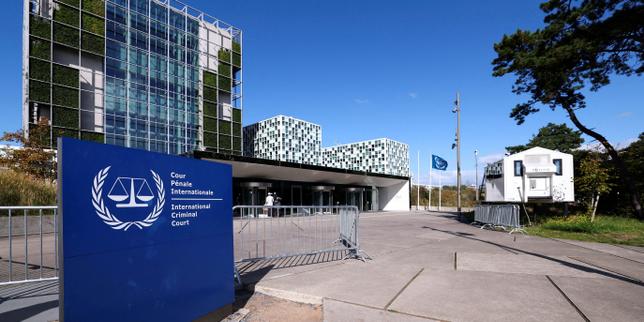
The recent escalation of United States sanctions against the International Criminal Court represents more than a bureaucratic friction point. It is a fundamental realignment of how the world’s most powerful nation exerts its will over international legal architecture. By freezing assets, imposing travel bans, and criminalizing financial engagement with ICC officials, Washington is signaling that institutional neutrality is no longer an acceptable framework when it encroaches upon American or allied national security interests.
At the center of this firestorm are eleven high-ranking ICC officials, including the chief prosecutor and nine judges. These individuals, tasked with the mandate of the Rome Statute, now find themselves the targets of an American administrative apparatus that views their investigative actions as a direct assault on national sovereignty. The sanctions, codified under Executive Order 14203, essentially treat these jurists as agents of a hostile entity. For those who have spent decades tracking the shifting tides of international diplomacy, this is not merely a policy dispute. It is the tactical dismantling of a court’s ability to function independently. Recently making headlines in related news: Ghalibaf and the High Stakes of Tehran War Doctrine.
The logic utilized by the administration is grounded in the assertion that the ICC lacks legitimate authority over nations that are not signatories to the Rome Statute. This argument is an old one, yet its current application is markedly more aggressive. Historically, the relationship between Washington and the Hague has functioned as a tense, albeit manageable, stalemate. Successive administrations have occasionally flirted with cooperation, or at least a tacit acknowledgement of the court’s role. That era has ended. The current directive moves beyond diplomatic protest, creating a climate where the simple act of providing administrative support to these judges—whether through banking services, data hosting, or legal counsel—could trigger severe civil and criminal penalties.
Consider a hypothetical scenario where an international law firm provides research materials to an ICC official designated under the executive order. Under the current regime, that firm risks massive fines or the potential for prison sentences for its partners. This is not a deterrent against a specific criminal act; it is a mechanism designed to create a total vacuum around the targets. The chilling effect on the legal community is intentional. It effectively forces international organizations to choose between maintaining a relationship with the United States or continuing their cooperation with the ICC’s investigative wings. More details regarding the matter are explored by NPR.
Critics point out that this framework targets personal financial interests as a means of political coercion. When you make a prosecutor’s ability to hold a bank account or travel globally dependent on their judicial decisions, you have abandoned the premise of an independent judiciary. Proponents of the sanctions, however, argue that the ICC has overstepped its bounds by attempting to exercise jurisdiction over soldiers and officials of nations that never consented to the court's authority. They maintain that the court is effectively weaponizing its mandate to harass democratic nations with robust military justice systems.
The underlying tension here involves the American concept of the military as an extension of the state, overseen solely by the domestic judicial system. The fear is that the ICC provides a platform for politically motivated prosecutions that circumvent constitutional protections. This concern is often framed as a defense of the American soldier, but the implications extend far deeper. By challenging the court’s right to exist in its current form, the United States is pushing for a world where international law is subservient to the interests of the powerful.
There is a significant legal irony in these developments. The United States has frequently championed the concept of accountability for human rights abuses in other corners of the globe, often advocating for international intervention in states where domestic systems have failed. Yet, when the scope of that accountability turns inward, the machinery of state power is immediately reversed. This double standard is well understood by the global community, though rarely addressed with such blunt force.
Some observers argue that the court’s recent focus on Israel and the United States has accelerated this confrontation. Regardless of the immediate trigger, the structural conflict is permanent. The Rome Statute envisioned a court that would serve as a court of last resort for the entire world. The United States demands a system where the court is a tool for states to utilize against their adversaries, never against their own.
Legal challenges to these sanctions have met with limited success. While injunctions have protected specific clients in isolated cases, the broader executive order remains a formidable wall. The policy is remarkably sticky, designed to outlast individual administrations by embedding punitive measures deep within the treasury and intelligence apparatus. It is a specialized form of warfare, one that does not require an army but relies on the total leverage of the American financial system to isolate individual judges from the rest of the world.
The long-term impact on the court’s efficacy remains uncertain. The ICC cannot prosecute those it cannot reach, and it cannot investigate if it lacks the resources to operate. If the world’s most powerful financial institutions effectively de-platform the court’s personnel, the institution will inevitably wither. Whether this serves the cause of stability or merely creates a landscape where the most powerful actors are permanently shielded from justice is a question currently being answered through real-time attrition.
The mechanisms of these sanctions are precise. They are not intended to change minds; they are designed to limit movement, freeze capital, and isolate targets until they are unable to function. It is a cold, calculated strategy of containment. The outcome will be determined by the resilience of the ICC’s remaining support structures and the willingness of other nations to risk the wrath of the American treasury to defend a court they theoretically uphold. As it stands, the court is losing its access to the essential infrastructure that underpins global legal proceedings.
The trajectory of this conflict suggests that the era of universal, independent international criminal justice is being superseded by a system of regional power blocks, where sovereignty is defined by one's ability to impose legal and financial consequences on those who dare to assert jurisdiction from above.