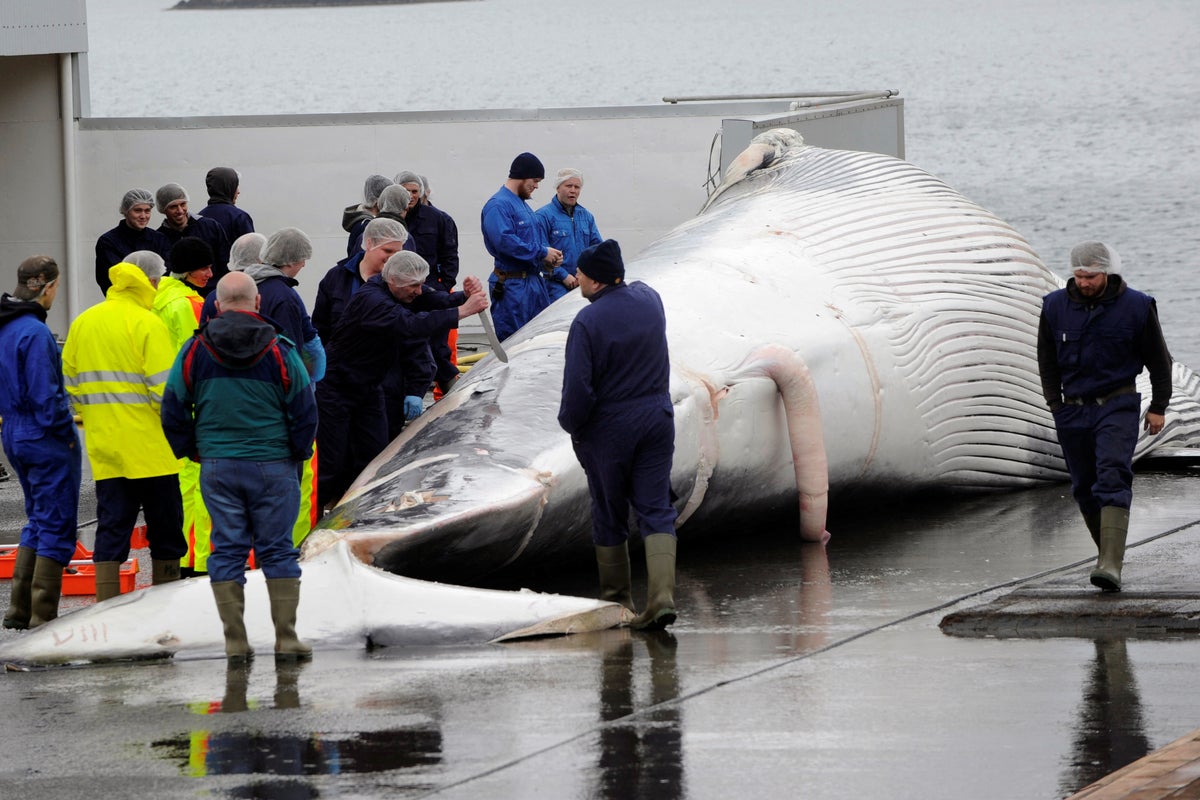
Stop celebrating Iceland's upcoming legislative push to outlaw commercial whaling as a massive victory for marine biodiversity. The lazy consensus dominating global media claims that a 2027 parliamentary ban represents a moral awakening for the North Atlantic island nation.
It does not.
The impending ban on paper is a masterclass in political convenience masking an industry that died of old age, market irrelevance, and sheer corporate exhaustion. Look past the emotional press releases and the celebrity sign-offs from London, and you will find a decaying commercial relic that stopped making economic sense a decade ago.
The Economics Of A Dying Market
For years, mainstream environmental coverage framed Icelandic whaling as a pitched battle between bloodthirsty commercial harpooners and pure-hearted conservationists. That is a convenient cartoon. The real killer of Iceland’s whaling industry was never Greenpeace or international moralizing. It was the Japanese export market.
For the country's sole remaining major whaling operator, Hvalur hf., run by Kristján Loftsson, the business model relied almost entirely on shipping fin whale meat to Japan. When Japanese domestic consumption plummeted and stockpiles rose, the financial oxygen left the room.
Operating a multi-million-dollar whaling vessel requires heavy capital expenditure. When margins compress to zero, businesses fold. Yet, successive governments kept kicking the political football down the road, issuing short-term extensions and managing a dying asset class to avoid direct confrontation with old-guard maritime lobbies.
When the Icelandic Food and Veterinary Authority dropped its brutal 2023 report detailing how a significant percentage of hunted fin whales took agonizing minutes—sometimes hours—to die, it did not spark an overnight ethical revolution. It provided cover for bureaucrats looking for a clean exit ramp.
The Convenient Timing Of 2027
Let us look at the mechanics of the proposed 2027 bill. Notice the scheduling. The current operating permits granted to the last whaling operators run deep into the decade, specifically through 2029.
When politicians announce a ban scheduled for years down the line while existing multi-year licenses are legally protected, they are performing theater. Imagine a scenario where a corporation announces it will stop producing a toxic chemical by the end of the decade—only after its patent expires and its factories are fully amortized. That is not corporate social responsibility. That is accounting.
The ruling coalition in Reykjavik knows precisely what it is doing. By planting the flag for a 2027 legislative ban, they score immediate diplomatic points with international bodies and tourism boards, all while the remaining hunts finish out their permitted quotas.
What The Media Misses About Whale Conservation
The obsessive focus on Iceland, Norway, and Japan misses the actual structural threats facing marine mammals today. Focusing airtime on a handful of harpoons distracts from the invisible slaughter happening at scale.
Industrial container ship strikes, deep-ocean acoustic disruption from seismic testing, chemical runoff, and microplastic accumulation kill thousands of cetaceans annually without generating a single protest headline. Celebrating a commercial whaling ban while global shipping lanes expand unchecked is like praising a hospital for putting a bandage on a patient suffering from systemic organ failure.
Icelandic tourism generates exponentially more capital than whale meat ever did. Whale-watching excursions bring in steady, high-margin revenue streams from travelers who prefer their marine life alive and breathing. The transition away from whaling was inevitable the moment Reykjavík realized tourists pay more to look at a minke whale through a telephoto lens than a local restaurant pays to put it on a plate.
The Cost Of Empty Victories
Pretending that a legislative vote in Parliament solves the moral puzzle of marine stewardship allows governments to wash their hands of harder truths. It costs nothing to pass a ban on an industry that is already collapsing under its own economic weight.
True conservation requires confronting the uncomfortable, unglamorous threats to ocean health that don't fit nicely into a thirty-second social media video. Until policymakers tackle ocean noise pollution and overfishing at an ecosystem level, banning the last few harpoons is nothing more than expensive optics.
Stop buying the narrative that Iceland found its conscience. It just balanced its ledger.


