The United States claims total operational dominance over the Strait of Hormuz, yet global shipping corridors tell a vastly different story.
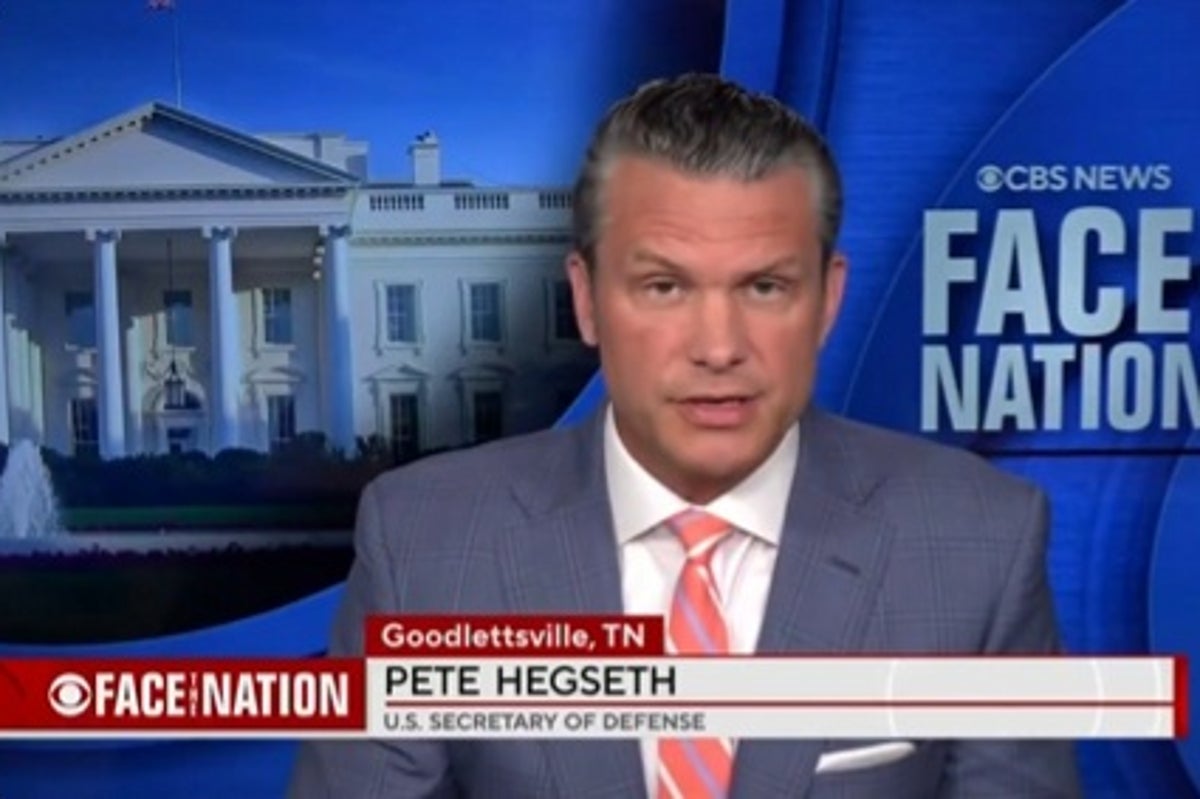
Speaking outside the US Central Command headquarters in Tampa, Florida, Defense Secretary Pete Hegseth asserted that Washington effectively controls the vital maritime chokepoint. He pointed to "Project Freedom," a clandestine military effort to escort commercial vessels through the passage under the cover of night, as proof of American supremacy. Hegseth declared that the US naval blockade has disabled or turned back nearly 140 ships linked to Iranian ports, arguing that such enforcement leaves no question as to who rules the waterway. Learn more on a similar subject: this related article.
The rhetoric masks a far more precarious reality. Despite Washington's triumphalist declarations, the global shipping economy remains locked in a state of severe friction. Major maritime insurers have raised premiums to near-prohibitive levels, and international carriers continue to reroute massive container fleets around the Cape of Good Hope rather than chance the narrow, mine-fringed gulf. Control is not merely the ability to sneak a limited convoy past enemy shores at midnight. True maritime control requires the establishment of an environment safe enough for routine commercial commerce, a standard the Pentagon has yet to fulfill.
The Phantom Escorts of Project Freedom
The underlying friction of the current strategy lies in the definition of naval supremacy. The Pentagon views control through the lens of tactical denial. Because the US Navy can interdict Iranian shipping and strike Islamic Revolutionary Guard Corps launch sites, defense officials argue the strategic upper hand belongs to Washington. More analysis by The New York Times delves into related views on the subject.
The commercial shipping sector operates on entirely different metrics. For a global logistics conglomerate, a waterway is either safe or it is compromised. There is no middle ground.
Strait of Hormuz Transit Risk Metrics (2026)
+-------------------------+-------------------------+-------------------------+
| Indicator               | Pre-Conflict Baseline   | Current Status          |
+-------------------------+-------------------------+-------------------------+
| Daily Commercial Volume | ~21 Million Barrels/Day | Fraction via Escort Only|
| Maritime Insurance Rate | Standard Global Tariff  | War-Risk Premium Apply  |
| Primary Route Status    | Open Unrestricted       | Restricted / Diverted   |
+-------------------------+-------------------------+-------------------------+
Under Project Freedom, commercial vessels are moving under highly restrictive parameters. These transits are localized, erratic, and require heavy military assets to protect. While Hegseth trumpeted that over 100 million barrels of oil have moved through the strait under this initiative, that volume represents only a fraction of what normally flows through the passage during peaceful periods. The administration is essentially running a high-stakes, state-sponsored smuggling operation to keep basic energy markets from collapsing entirely, while publicly declaring that the lanes are wide open.
The Asymmetric Math of Naval Blockades
A conventional navy is built to fight other conventional navies. In the narrow confines of the Strait of Hormuz, which measures just 21 nautical miles wide at its narrowest point, the traditional advantages of a multi-carrier strike group diminish.
Iran has spent three decades preparing for an asymmetric confrontation in these exact waters. Instead of building large, easily targeted destroyers, Tehran invested heavily in thousands of fast-attack craft, anti-ship cruise missiles hidden in coastal cliffs, and low-tech naval mines. The Hudson Institute recently noted that despite suffering heavy losses to its conventional fleet from American airstrikes, Iran's denial-warfare capabilities remain fundamentally intact.
Consider the economic asymmetry of this engagement. A single sea mine costing a few thousand dollars can cripple a commercial tanker worth $100 million. To counter that single mine, the United States must deploy billion-dollar warships, specialized mine-countermeasure squadrons, and constant airborne surveillance.
The shooting down of an American Apache helicopter over the strait underscores this vulnerability. While the Pentagon praised the pilots for surviving the crash in a highly contested environment, the incident proved that Western assets are operating well within the reach of land-based defenses. The US can bomb Iranian missile batteries on a daily basis, but as long as a single mobile launcher or a handful of fast boats can threaten the shipping channel, the commercial market will treat the strait as a no-go zone.
The Burden of Global Commons
A deeper diplomatic fault line lies beneath the tactical maneuvering. Washington is increasingly frustrated by the refusal of international allies to bear the logistical and financial weight of securing the gulf.
Hegseth openly chided European and regional partners, stating that the United States consumes far less Persian Gulf oil than the rest of the industrialized world. He specifically called out the United Kingdom, noting that the Royal Navy should step up to patrol a waterway that underpins international trade.
"Last time I checked, there was supposed to be a big, bad Royal Navy that could be prepared to do things like that as well," Hegseth remarked.
This rhetorical shift highlights a core tension in modern American foreign policy. The current administration wants the prestige and geopolitical leverage that comes with commanding the world's primary energy chokepoint, but it is deeply reluctant to underwrite the costs alone.
Why Allies are Hesitating
The reluctance of international partners to join the American naval coalition is not driven by simple cowardice. It stems from a profound disagreement over strategy.
European and Asian capitals view the current crisis as a direct consequence of Washington’s maximum-pressure campaign against Tehran. Joining the blockade would signal explicit endorsement of an escalatory cycle that many diplomatic partners believe was avoidable. Furthermore, most allied navies lack the specific shallow-water mine-sweeping capabilities required to operate safely in the Persian Gulf after decades of budget cuts and a focus on blue-water power projection.
This leaves the United States trapped in its own rhetoric. To maintain the narrative of global leadership, the Pentagon must keep pouring resources into the strait. Yet every asset deployed to the Middle East is an asset taken away from other vital theaters, such as the Indo-Pacific.
The True Cost to the Domestic Economy
While the White House project an image of absolute defiance abroad, the domestic front is showing clear signs of strain. The fiction of total control in the gulf is eroded by the realities of the domestic marketplace.
Inflation has climbed to an annual rate of 4.2%, driven in large part by rising energy costs and spikes in maritime freight rates. Every time a tanker is forced to bypass the Strait of Hormuz and sail around Africa, weeks are added to the journey. The cost of fuel, insurance, and crew wages increases exponentially, and those expenses are invariably passed down to consumers.
The Pentagon's assertions of dominance cannot offset the hard realities of supply chain disruption. A manufacturing plant in the Midwest does not care about a successful midnight escort mission by the US Navy if the raw materials it needs are sitting on a vessel trapped outside the Persian Gulf for twenty days.
The Munitions Crisis Hidden in Plain Sight
The prolonged nature of the confrontation has exposed a critical vulnerability within the American defense industrial base. Securing the strait and conducting daily airstrikes against Iranian infrastructure requires an immense volume of precision-guided munitions.
During congressional testimony, defense officials acknowledged that replenishing depleted missile stockpiles could take months or even years. Although Hegseth later walked back those comments, calling the narrative of a munitions shortage a "manufactured story," the strain on the defense supply chain is undeniable.
The United States is burning through sophisticated, multi-million-dollar weaponry to counter low-cost asymmetric threats. This reality severely limits Washington's ability to sustain a high-intensity blockade indefinitely. The industrial capacity to build advanced missiles simply cannot keep pace with the rate of consumption in an active war zone.
Industrial Replacement Timelines for Key Naval Munitions
+------------------------------------+------------------------------------+
| Munition Type                      | Estimated Production Replacement   |
+------------------------------------+------------------------------------+
| Precision Guided Missiles          | 12 to 24 Months                    |
| Standard Air-to-Ground Munitions   | 6 to 12 Months                     |
| Specialized Naval Countermeasures  | 18+ Months                         |
+------------------------------------+------------------------------------+
The Path to an Enforced Settlement
The current military posture is ultimately a prelude to negotiation, carried out through kinetic means. The administration has made it clear that the continuous airstrikes and the maritime blockade are designed to force Tehran to accept Washington's terms for a new diplomatic framework.
The risk of this strategy lies in its volatility. When military force is used as the primary tool of diplomacy, the margin for error disappears entirely. An accidental strike on a civilian target or the sinking of a high-value Western warship could easily transform a controlled pressure campaign into an unmanageable regional conflagration.
Control of the Strait of Hormuz cannot be won through press briefings or isolated nocturnal escorts. It is established only when the cost of disruption becomes too high for either side to bear, forcing a return to institutionalized freedom of navigation. Until that diplomatic baseline is restored, declarations of maritime victory are nothing more than political theater staged on a very dangerous sea.