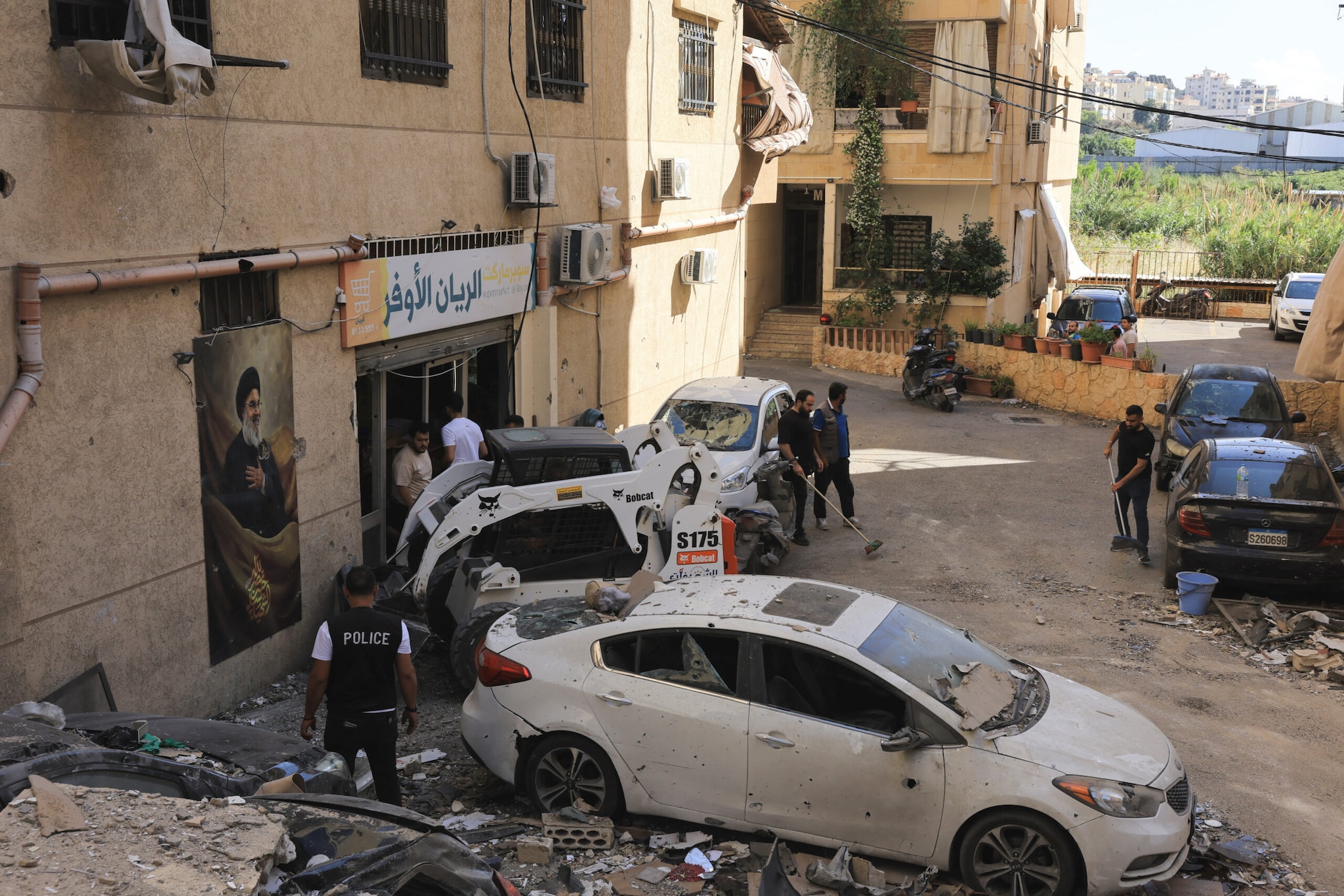
The United States State Department just secured a forty-five-day extension of the shaky Israel-Lebanon ceasefire in Washington, but the diplomatic achievement masks a far more volatile reality on the ground. While American mediators attempt to transform a fragile truce into a historic peace agreement aimed at disarming Hezbollah, the structural flaws of this diplomatic framework are already showing. Israel has expanded its ground presence to the historic Beaufort Castle near Nabatieh, and Hezbollah continues to reject direct negotiations. This forty-five-day window is not a bridge to permanent peace; it is a tactical breathing room for two warring parties preparing for an inevitable, larger collision.
The current diplomatic effort, heavily championed by the White House, relies on a premise that ignores decades of Levantine military reality. The strategy aims to empower the Lebanese government under President Joseph Aoun and Prime Minister Nawaf Salam to assert total state sovereignty and dismantle Hezbollah’s independent arsenal.
It sounds pristine in a State Department press briefing. In reality, it is an impossibility.
The Lebanese Armed Forces do not possess the domestic political mandate or the raw military capability to forcibly disarm a battle-hardened Shia militia that answers to Tehran, not Beirut. By framing the Washington talks around the total disarmament of Hezbollah as a prerequisite for peace, American diplomacy has set a bar that cannot be cleared through committee meetings.
The Beaufort Castle Reality Check
While diplomats in Washington trade drafts, the Israeli military is changing the facts on the ground. Israeli Defense Minister Israel Katz recently announced that the military had planted its flag on the historic Beaufort Castle, explicitly describing the move as the establishment of a permanent presence. This directly contradicts the core demand of the Lebanese delegation, led by Simon Karam, which requires a complete withdrawal of Israeli forces from southern Lebanon.
+-----------------------------------------------------------------------+
|                       THE DIPLOMATIC IMPASSE                          |
+-----------------------------------------------------------------------+
|  U.S. / ISRAELI DEMANDS               |  LEBANESE STATE / HEZBOLLAH   |
+-----------------------------------------------------------------------+
|  • Immediate disarmament of Hezbollah |  • Immediate Israeli pullback |
|  • Permanent Israeli border security  |  • Restoration of sovereignty |
|  • Insertion of Western-backed forces |  • Rejection of direct deals  |
+-----------------------------------------------------------------------+
Israel’s deep incursion into southern Lebanon—utilizing five full military divisions including the 98th and 36th—was designed to push Hezbollah north of the Litani River and destroy its border infrastructure. However, holding territory requires an occupying force. The occupation of strategic high points like Beaufort Castle provides Israel with a tactical advantage, but it also provides Hezbollah with an endless supply of fixed, stationary targets for its drone and anti-tank missile units.
The United Nations Interim Force in Lebanon (UNIFIL), which long served as a flawed buffer, is being phased out completely following a UN Security Council decision driven by American and Israeli pressure. Its mandate will expire at the end of December, leaving a security vacuum that neither the weak Lebanese state nor a multinational committee can easily fill.
The Myth of Lebanese State Enforcement
The fundamental flaw of the Washington peace track is the assumption that the Lebanese state speaks for the armed actors within its borders. Prime Minister Nawaf Salam’s government has publicly condemned Hezbollah’s unauthorized strikes, legally restricted its influence, and approved nominal plans for disarmament. These actions look impressive on paper.
They mean virtually nothing in the suburbs of Beirut or the valleys of the south.
Hezbollah operates as a state within a state. Its Member of Parliament, Ali Fayyad, has explicitly stated that the organization completely opposes direct negotiations with Israel. The group views the Beirut government’s participation in the Washington talks not as a legitimate exercise of statecraft, but as an existential threat orchestrated by Western powers.
Consider a scenario where the Lebanese government signs a formal peace treaty with Israel in Washington. To enforce it, the Lebanese Army would have to march into the Bekaa Valley and southern suburbs to strip Hezbollah of its remaining missile stockpiles. The immediate result would not be regional peace; it would be the immediate ignition of a brutal, multi-factional Lebanese civil war. The Beirut government knows this. They will not pull the trigger.
The Shadow of the Iranian Nuclear Track
The conflict in Lebanon cannot be separated from the wider war involving Iran. The United States and Iran are currently trading secret drafts of a sweeping regional deal involving the release of twelve billion dollars in frozen Iranian assets and the stabilization of the Strait of Hormuz.
American strategists hope that a broader deal with Tehran will naturally choke off the supply of weaponry to Hezbollah, forcing the group into submission.
This is a dangerous miscalculation. Hezbollah has spent decades diversifying its local production capabilities and hoarding underground arsenals. While a U.S.-Iran deal might modify Tehran's overt behavior in the Persian Gulf, it will not cause Hezbollah to voluntarily dissolve its military wing. The group views its arsenal as its sole survival mechanism against Israeli dominance.
Furthermore, Israel is not a party to the direct U.S.-Iran negotiations. The Israeli leadership has made it clear that a diplomatic resolution in the Persian Gulf will not alter its operational goals in Lebanon. Israel will continue to launch preemptive strikes against any perceived Hezbollah buildup, regardless of what documents are signed in Washington or Tehran.
The Collapse of Rhythmic Diplomacy
The State Department’s reliance on short-term ceasefire extensions has created a dangerous cycle of temporary pauses followed by explosive violence. When the initial ten-day truce expired, it was followed by a sharp escalation. The current forty-five-day extension merely delays the inevitable.
Every week the ceasefire holds, Hezbollah works to reconstitute its command-and-control networks, which were heavily degraded by Western airstrikes earlier this year. Concurrently, the Israeli military uses the pause to rotate fresh brigades, fortify newly captured hilltops, and refine targeting packages for the next phase of operations.
True diplomacy requires a alignment of leverage and realistic political goals. The Washington talks possess neither. They demand a political outcome—the total disarmament of an entrenched, ideologically driven militia—that cannot be achieved without the absolute military destruction of that militia or the collapse of the Lebanese state itself.
By extending the clock without addressing the fundamental irreconcilability of the two sides' positions, the United States is not preventing a wider war. It is merely ensuring that when the forty-five days expire, the subsequent eruption of fighting will be far more intense, better planned, and twice as destructive for the civilians caught between the Litani River and the Israeli border.
The White House must abandon the fiction that a weak Lebanese government can perform a military miracle on command. Diplomacy that refuses to acknowledge the actual distribution of power on the ground is not statecraft; it is theater.
Stop measuring progress by the number of days added to a dead-end truce, and start addressing the reality of a permanent Israeli occupation force facing an unyielding insurgent army.