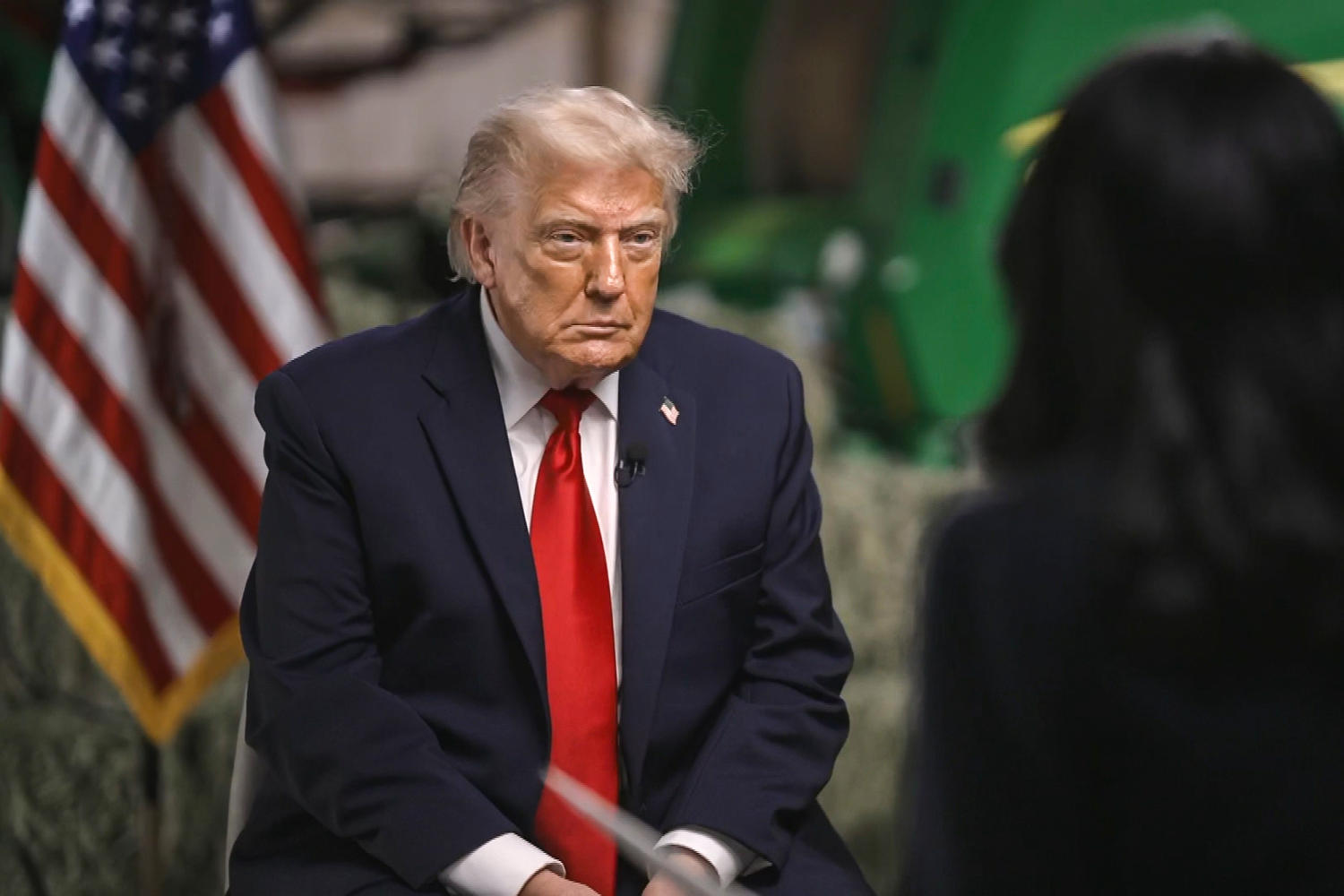
Donald Trump wants Wall Street to believe he has surrendered his leverage over monetary policy. By publicly declaring that incoming Federal Reserve Chair Kevin Warsh can "do whatever he wants" regarding interest rates, the president has constructed a convenient political shield. But this sudden reverence for central bank autonomy is a calculation, not a conversion. Underneath the rhetoric lies an economy squeezed by persistent 3.8% consumer price inflation and a soaring 6% producer price index, forces that are actively pushing the Federal Reserve toward a politically toxic interest rate hike.
The White House is not stepping back; it is shifting accountability. If Warsh maintains high rates or executes a tightening maneuver to combat these mounting price pressures, the administration can blame an "independent" technocrat while reaping the benefits of a cooled inflation cycle just in time for future electoral cycles. Conversely, if Warsh yields to the economic gravity of a roaring labor market and cuts rates anyway, the administration wins its preferred policy outcome without bearing the scars of overt political interference. It is a masterclass in risk delegation.
The Mirage of Non Interference
For months, the White House maintained an aggressive pressure campaign against outgoing Chair Jerome Powell. The tactics were raw, utilizing public insults and a highly weaponized Department of Justice investigation into the multibillion-dollar renovations of the Fed's Washington headquarters. That probe was quietly shelved only weeks ago. Now, with Warsh taking the helm after a tight 54-45 Senate confirmation vote, the tone from the Oval Office has shifted from open warfare to performative deference.
This shift ignores the structural reality of how the Federal Open Market Committee operates. The chair holds immense communicative power, but they possess only one vote among twelve. Warsh inherits a deeply fractured committee. The April policy meeting concluded with three formal dissents, marking the highest level of internal rebellion against a policy statement since 1992. Governors Christopher Waller and Lisa Cook, alongside regional bank presidents, have formed a hawkish wall, openly signaling that the central bank's lingering "easing bias" must be dismantled.
Warsh cannot simply do what he wants. He must govern a committee where the institutional memory is fiercely protective of its mandate. Powell, who has taken the historic step of remaining on the Board of Governors to safeguard the institution from what he termed an ongoing "stress test," stands as a direct counterweight inside the room.
Dismantling the Signaling Mechanism
The true battleground over the coming months will not be fought over a quarter-point move in the federal funds rate. It will be fought over the machinery of central bank communication. Warsh has spent years criticizing the modern Fed’s reliance on forward guidance, a tool popularized during the zero-interest-rate era to anchor long-term borrowing costs by telegraphing future policy moves.
Traditional Fed Framework (Powell Era)
[Economic Data] -> [Forward Guidance / Dot Plot] -> [Market Alignment] -> [Rate Action]

Proposed Warsh Framework (Greenspan Style)
[Economic Data] -> [Immediate Discretionary Vote] -> [Rate Action] -> (No Forward Promises)
During his Senate confirmation hearings, Warsh explicitly stated his intent to roll back these forward-looking promises. Market insiders expect him to start stripping this language from the policy statement as early as the mid-June meeting. More radically, there is active discussion about abandoning or severely altering the quarterly "dot plot"—the visual chart of individual policymaker interest rate projections introduced by Ben Bernanke in 2012.
To Warsh, the dot plot is an institutional trap. It forces the committee to cling to outdated economic forecasts long after the reality on the ground has changed, creating policy lag and stoking market volatility when the dots inevitably shift. By removing the dots and the explicit easing bias, Warsh aims to return the Fed to an era of strategic ambiguity, much like Alan Greenspan’s tenure in the 1990s.
This structural overhaul serves the White House beautifully. Without a clear forward path or a dot plot explicitly showing that officials expect interest rates to remain higher for longer, Wall Street will lose its primary mechanism for pricing in long-term hawkishness. The elimination of forward guidance obscures the long-term pain of high interest rates, allowing the administration to escape the daily market tantrum that a transparently hawkish Fed would otherwise trigger.
The Geopolitical Inflation Trap
The administration's sudden willingness to grant Warsh nominal autonomy is also a shield against an unavoidable economic reality: the conflict with Iran has fundamentally altered the global supply chain. When hostilities broke out in late February, conventional economic models suggested that spiking energy prices would act as a tax on consumers, destroying demand and ultimately slowing economic growth.
The data has proved those models wrong. Growth and employment remain remarkably resilient, but the supply-side shock has sent wholesale prices surging. The 6% jump in the producer price index is a leading indicator that consumer-facing inflation is unlikely to drift back to the 2% target anytime soon. Wall Street has caught on. Traders using the CME FedWatch tool have erased virtually all probability of a rate cut this year, instead pricing in a greater than 50% chance of an outright interest rate hike before December.
Market Reality Check: In early 2024, the consensus pointed to a steady series of rate cuts. Today, wholesale inflation is at a three-year high, and the structural floor for interest rates has permanently shifted upward.
If Warsh is forced to raise rates to prevent an inflation spiral, the political fallout will be severe. Mortgage rates will tick higher, corporate debt refinancing costs will escalate, and consumer credit will tighten. By establishing a narrative of total Fed independence now, the White House ensures that the blame for this economic medicine falls squarely on the shoulders of the central bank's new leadership, protecting executive branch policy from the wrath of an inflation-weary public.
The Legal and Institutional Battleground
The tension inside the central bank is further complicated by an unprecedented legal battle over the composition of the Board of Governors itself. The administration's attempts to remove Governor Lisa Cook over contested allegations regarding historical mortgage applications have wound up before the Supreme Court. This executive overreach has unified the institutionalists within the Federal Reserve system.
Powell’s recent acceptance speech for the John F. Kennedy Profile in Courage Award in Boston was an unambiguous shot across the bow of the executive branch. His warning that the public will lose faith in the financial system if administrations remove central bankers over policy differences highlights the internal resistance Warsh faces. Powell’s choice to remain as a governor ensures that any attempt by Warsh to radically pivot policy toward the administration's political preferences will be met with immediate, high-profile internal dissent.
The Federal Reserve is designed to be an island of stability insulated from the short-term pressures of election cycles. By publicly telling Warsh to do what he wants, the president is attempting to project the image of a leader respecting that tradition. In reality, he is positioning the central bank to take the fall for an economy that is growing too hot to handle.