Walk into a hardware engineering lab at two in the morning, and you will smell cold pizza, ozone, and quiet desperation.
Picture a hypothetical senior silicon architect—let us call her Maya—staring at a thermal map of a next-generation server rack. She has worked at Nvidia for eleven years. She survived the crypto winter when the stock cratered, and she stayed through the blistering, sleepless sprint that turned her employer into the beating heart of the global economy. On her wall hangs a laminated quote from the man who runs the place, a reminder that their company is always thirty days away from going out of business. For eleven years, Maya has answered to a singular, unmistakable north star. Not a committee. Not a rotational executive slate. One man in a black leather jacket.
Now ask yourself what happens to Maya the morning after that man steps down.
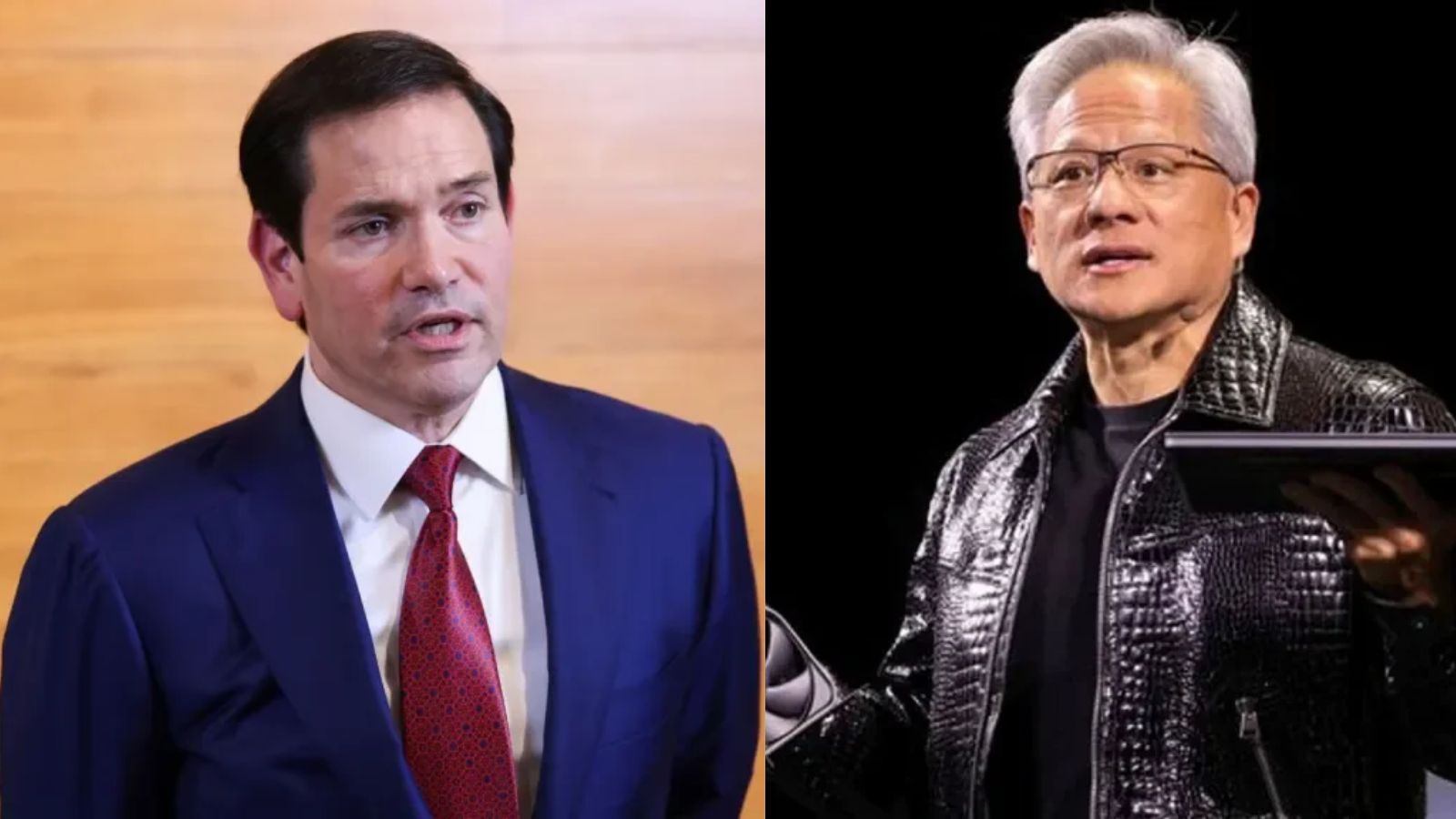
This is the quiet nightmare keeping Wall Street fund managers and Washington policymakers awake at night, and it is why Treasury Secretary Scott Bessent recently dropped a verbal grenade into the middle of Silicon Valley’s favorite fairy tale. Speaking publicly about the future of American industrial power, Bessent stated plainly that when the time comes to replace Nvidia chief executive Jensen Huang, the board will have to look outside the company’s walls.
Pause. Let that sink in.
To the casual observer, succession planning at a trillion-dollar corporation sounds like dry governance theater—the kind of thing institutional lawyers argue about over lukewarm coffee. In reality, Bessent’s remark exposes a terrifying structural vulnerability at the center of modern capitalism. Nvidia is no longer just a chipmaker from Santa Clara. It is the geopolitical equivalent of a central bank for artificial intelligence, an enterprise whose market capitalization rivals the gross domestic product of G7 nations, and whose hardware dictates the pace of scientific discovery, military readiness, and economic growth across the Western world. Yet beneath its towering valuation lies an organizational architecture built entirely around the nervous system of one sixty-three-year-old founder.
The Architecture of a One-Man Empire
To understand why an insider cannot easily step into Jensen Huang’s boots, you have to strip away the mythology and look at how Nvidia actually operates. Most Fortune 500 companies run like pyramid schemes of delegation. A chief executive sits at the top, shielded by layers of chief operating officers, division presidents, and vice presidents who filter bad news before it ever reaches the corner office.
Nvidia famously incinerated that org chart decades ago.
Huang operates with upwards of fifty to sixty direct reports. There is no chief operating officer acting as a buffer. There are no traditional status reports or polished slide decks designed to hide ugly truths. Instead, Huang relies on what insiders call "Top-5" emails—short, raw lists sent directly to him by engineers and managers detailing what they are working on and what is breaking. He reads them at odd hours, dives straight into the technical weeds of software compilers or packaging yields, and makes instantaneous resource decisions that would take a conventional corporate bureaucracy six months to debate.
Think of the company not as a pyramid, but as a wagon wheel. Huang is the hub. Every spoke connects directly to him, and almost none of the spokes connect to each other.
I have spent years watching founder-led technology giants wrestle with mortality, and the pattern is always the same. When a charismatic architect builds a flat organization around their own superhuman stamina, the executives directly beneath them become extraordinary specialists, not generalists. An executive who runs data center networking knows every packet switch on earth; an executive who runs automotive software knows every autonomous sensor stack. Because Huang absorbs the entire burden of cross-company synthesis, none of his lieutenants ever get the chance to practice being the hub. They are world-class concert soloists playing under a conductor who never leaves the podium.
If you promote one of those soloists to the podium tomorrow, two things happen immediately. First, the fifty peers who used to report to the founder suddenly have to take orders from someone who was their equal yesterday. Resentment curdles fast in high-ego engineering cultures. Second, the newly minted chief executive discovers they have never actually managed the whole symphony—only their own instrument.
History Leaves Clues in the Dust
We do not have to guess how this movie ends because Silicon Valley has screened it dozens of times.
Consider what happened in Redmond at the turn of the century. Bill Gates built Microsoft with the same obsessive, hyper-technical intensity that defines Huang. When Gates stepped back and handed the reins to his trusted insider and college friend Steve Ballmer, the company possessed near-monopolistic power. Yet over the next decade, insulated by internal habits and fierce divisional turf wars, Microsoft missed mobile computing, stumbled in search, and drifted into stagnation. It took years of painful cultural surgery under Satya Nadella—an insider who essentially had to behave like an outsider to break the old religion—to rescue the franchise.
Look at Cupertino. Tim Cook is widely celebrated as one of the greatest operational minds in business history, having turned Apple into a cash-generating titan after Steve Jobs died. Yet Cook succeeded because Jobs spent his final years deliberately designing a functional organization meant to survive him, pairing Cook’s supply-chain mastery with Jony Ive’s design authority. Even then, critics still debate whether Apple’s post-Jobs era traded revolutionary invention for logistical perfection.
Then look at the cautionary tales where founder-centric gravity collapsed inward. When Larry Ellison stepped back from day-to-day control at Oracle, or when Bob Iger initially handed Disney to an internal successor in Bob Chapek, the transition exposed just how much institutional cohesion depended on the personal instincts of the departing leader. In Chapek’s case, an insider promoted from a specific vertical—theme parks—found himself catastrophically out of his depth navigating Hollywood talent, political crosswinds, and streaming economics. The board eventually had to beg Iger to come back.
Nvidia’s stakes make Disney’s boardroom drama look like a high school student council election. If Nvidia stumbles for even two product cycles, hyperscalers like Microsoft, Alphabet, and Meta—who are already spending tens of billions of dollars designing their own custom silicon to escape Nvidia’s pricing power—will rip market share away with ruthless speed.
Why Washington Is Suddenly Watching the Org Chart
You might wonder why the United States Treasury Secretary is weighing in on corporate succession at a private semiconductor firm. Normally, cabinet officials avoid naming names when discussing boardroom governance, lest they spook investors or invite accusations of market interference.
Bessent’s willingness to say the quiet part out loud reveals just how deeply Nvidia has merged with American national security.
Walk the halls of the Treasury Department or the Pentagon today, and Nvidia’s graphics processing units are no longer viewed as commercial electronics. They are strategic assets, spoken of in the same hushed, urgent tones once reserved for enriched uranium, crude oil reserves, and aircraft carriers. Export controls restricting advanced chips to China sit at the center of American foreign policy. Domestic data center buildouts strain regional power grids and dominate federal infrastructure planning. Meanwhile, because Nvidia’s stock accounts for such a massive slice of major index funds, the retirement savings of millions of ordinary teachers, firefighters, and nurses rise and fall with every quarterly earnings call from Santa Clara.
When a single company becomes "too systemic to fail," its leadership bench becomes a matter of public interest.
From Bessent’s vantage point—shaped by decades on Wall Street diagnosing structural risk before markets price it in—an insider promotion at Nvidia carries an unacceptable hazard. An internal candidate raised inside the founder’s shadow will almost inevitably try to mimic Huang’s style without possessing Huang’s unique authority. You cannot fake founder magic. When a successor tries to run a sixty-person flat structure without the founder’s lifetime of accumulated trust, decision-making slows to a crawl, political factions form in the shadows, and innovation suffocates under internal caution.
An outsider, by contrast, arrives without emotional baggage. They owe no favors to veteran vice presidents. They are free to dismantle the hub-and-spoke model, install real operational layers, and build a modern management structure designed for durability rather than heroic individual endurance.
The Trap of the Outside Savior
Yet if hiring an outsider sounds like the clean, rational answer on a whiteboard, step back into the real world and try to find one.
Here is where the story twists into a genuine paradox. Let us look closely at what happens when a high-tech engineering powerhouse imports a chief executive from outside its walls.
Take Intel. For decades, Intel was the undisputed king of semiconductors, until complacency and manufacturing missteps eroded its lead. When the board bypassed internal engineers and hired Bob Swan, a seasoned finance executive, the company drifted further behind Asian rivals because financial discipline could not fix broken physics at the nanometer scale. Later, Intel brought back Pat Gelsinger—a revered engineer who had grown up at Intel decades earlier—only for Gelsinger to discover that rebuilding a hollowed-out manufacturing titan requires time and capital that impatient public markets rarely grant.
Or look at Boeing, a company whose descent into crisis began the moment its engineering-first culture was handed over to executives imported from McDonnell Douglas and General Electric who treated commercial aviation like an exercise in financial engineering.
Nvidia’s moat is not merely its hardware; it is CUDA, the sprawling software ecosystem that locks millions of developers into Nvidia’s architecture, combined with an annual product cadence that forces engineers to reinvent networking, memory, and silicon simultaneously every twelve months. A conventional corporate chief executive parachuted in from a traditional industrial conglomerate, a consumer tech giant, or a Wall Street firm would drown in the technical complexity within forty-eight hours. Engineers smell incompetence instantly. The moment an outsider uses a buzzword to mask a lack of understanding about tensor cores or interconnect bandwidth, the brightest minds in the building start updating their resumes.
Consider the sheer absurdity of the job description. Whoever sits in that chair next must possess deep fluency in semiconductor physics and software architecture, the diplomatic dexterity to negotiate export rules with Washington and Beijing simultaneously, the commercial instincts to keep trillion-dollar cloud customers loyal while they secretly build competing chips, and the sheer force of personality to command a workforce accustomed to working for a living legend.
How many human beings on planet Earth fit that profile? You could probably count them on the fingers of one hand, and almost all of them are already running companies of their own.
The Invisible Clock Ticking in Santa Clara
To his credit, Jensen Huang shows zero signs of packing his bags. In interviews, he routinely jokes about working until he drops, fueled by an immigrant’s terror of complacency that dates back to his childhood washing dishes at a Denny’s restaurant. He has spoken candidly about the physical and emotional toll of the job, admitting that if he knew back in 1993 how agonizing building the company would be, he never would have started it.
That honesty is refreshing, and entirely beside the point.
Biology does not negotiate with market capitalization. No founder outruns time forever, and great institutions are judged not by how brightly they burn under their creator, but by whether they survive the creator’s departure. Right now, Nvidia’s board of directors faces a quiet, agonizing dilemma. If they begin overtly auditioning external candidates while Huang is still at the height of his powers, they risk triggering palace intrigue, unsettling customers, and distracting a workforce operating at maximum velocity. If they wait until a health crisis or sudden retirement forces their hand, they risk plunging the global technology sector into chaos.
What makes this moment so gripping is that there is no textbook answer. Every option carries poison. Promote from within, and you risk watching a delicate, hyper-centralized machine fracture under the weight of its own complexity. Recruit from the outside, and you risk handing the crown jewels of the artificial intelligence era to a stranger who mistakes the balance sheet for the engine.
Think back to Maya, our hypothetical silicon architect sitting in that cold lab at two in the morning, staring at thermal maps on her monitor. She is not thinking about Treasury speeches or governance white papers. She is thinking about whether the company she gave her youth to will still feel like a daring insurgent laboratory five years from now, or whether it will slowly harden into another cautious, bloated corporate giant managed by committee.
Somewhere out there, a future chief executive is walking through a different building, unaware that a boardroom in Santa Clara and a cabinet office in Washington are already measuring their shoulders for the heaviest leather jacket in business history.