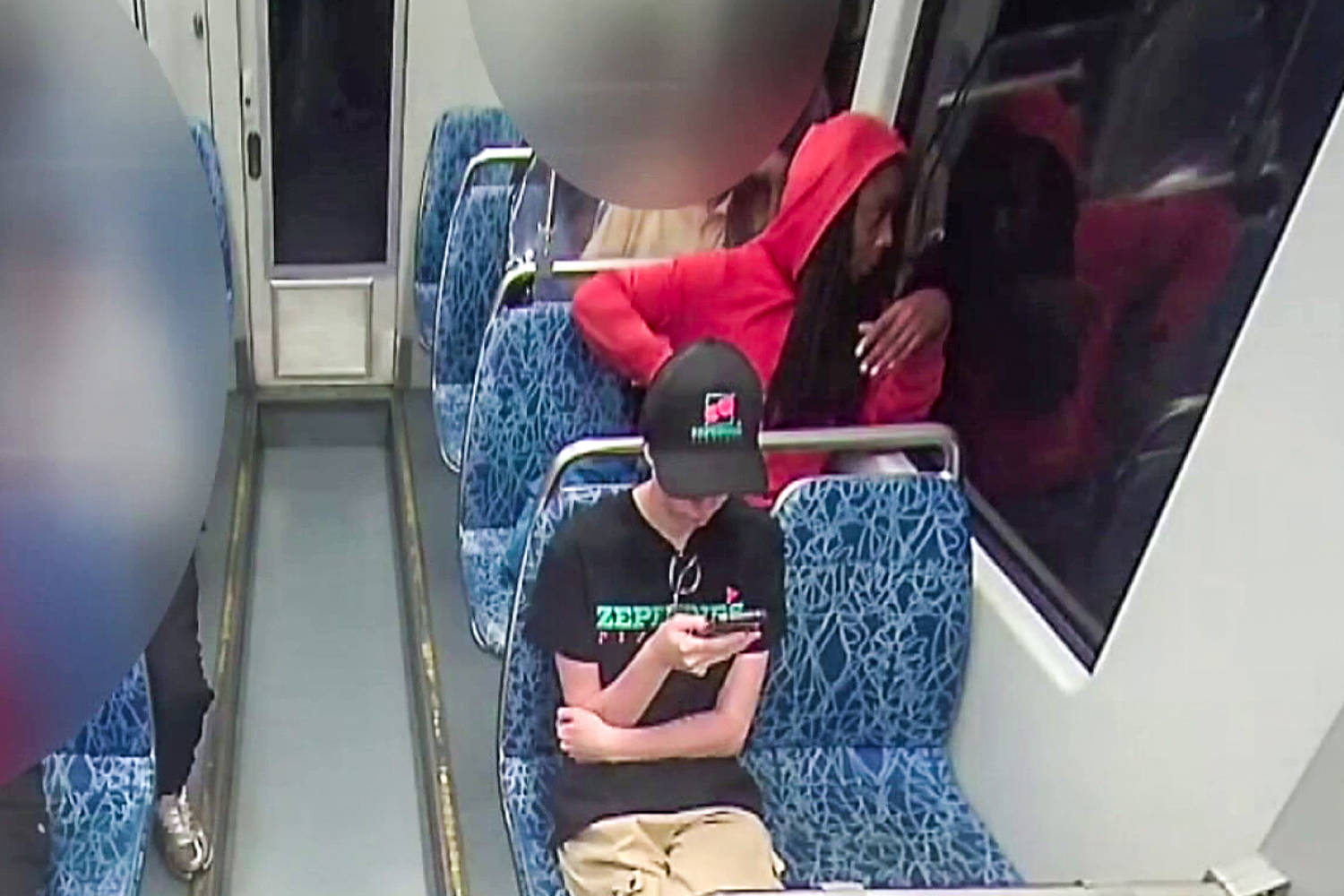
The headlines write themselves, dripping with a collective, copy-pasted outrage: "Man accused of killing Ukrainian woman on North Carolina train found incompetent to stand trial."
The media plays the exact same track every single time a violent crime involves a severely mentally ill defendant. The subtext of the mainstream coverage is always a mixture of panic and defeat. They paint a picture of a broken system where a horrific act occurs—in this case, the tragic, unprovoked killing of a Ukrainian refugee on a moving transit car—and the perpetrator simply slips through a legal trapdoor, evading justice because a couple of state psychiatrists signed a piece of paper. The public reads it and thinks "incompetent" means "exonerated." They think it means the defendant walks out the back door of the courthouse and onto the street.
They are completely, utterly wrong.
The lazy consensus surrounding competency rulings in high-profile violent crimes is rooted in a fundamental misunderstanding of criminal law, psychiatric reality, and institutional mechanics. Finding a defendant incompetent to stand trial is not a get-out-of-jail-free card. It is not a defense. It is not an acquittal. In reality, being found incompetent often triggers a far more indefinite, deeply bureaucratic, and punitive institutionalization than a standard prison sentence would ever carry.
The media covers these rulings as the end of a story. For anyone who actually works within the intersection of the penal and psychiatric systems, we know it is merely the prologue to a bureaucratic nightmare.
The Illusions of the "Incompetent" Escape Hatch
Let's clear up the definitions that the average newsroom completely mangles.
Competency to stand trial has absolutely nothing to do with a defendant’s sanity at the time of the crime. That is the insanity defense, a completely separate legal mechanism that is rarely invoked and even more rarely successful. Competency is purely about the present tense. Under the landmark Supreme Court standard established in Dusky v. United States, a defendant must possess a "sufficient present ability to consult with his lawyer with a reasonable degree of rational understanding" and a "rational as well as factual understanding of the proceedings against him."
Imagine a scenario where a defendant is so deeply consumed by active, treatment-resistant psychosis that they believe their defense attorney is an operative sent by a foreign intelligence agency to harvest their organs. That person cannot assist in their own defense. Putting them through a trial isn’t just a violation of constitutional due process; it is a structural impossibility.
When a judge rules that a defendant facing murder charges is incompetent, the state does not drop the charges and apologize.
- The Reality of Commitment: The defendant is immediately remanded to a high-security state psychiatric hospital for "competency restoration."
- The Illusion of Liberty: They are locked in a concrete facility, often under conditions far more restrictive and volatile than a standard state penitentiary.
- The Treatment Mandate: They are subjected to aggressive, state-mandated pharmacological interventions designed to force their brain into a state of temporary, legally defined rationality.
I have watched families of victims rage outside courthouses, convinced that a competency ruling means the killer won. What they do not see is that the individual is being transported in shackles to a forensic unit where they will spend months, years, or potentially the rest of their natural life confined without ever seeing a jury.
Dismantling the "People Also Ask" Assumptions
When cases like the North Carolina train killing break, public search trends spike with predictable, panicked questions. Let's dismantle the underlying premises of those questions with brutal objectivity.
Can an incompetent defendant ever be tried?
The short answer is yes, and they usually are. The entire purpose of a forensic psychiatric commitment is restoration. The state does not give up. Under federal precedents like Jackson v. Indiana, an individual cannot be held indefinitely solely for competency restoration if there is no substantial probability they will achieve competency in the foreseeable future.
However, in practice, "foreseeable future" is an incredibly elastic concept when a homicide charge is on the table. The state will pump a defendant full of antipsychotics, haul them back before a judge every six months, and evaluate them until they can scrape together enough cognitive coherence to pass the Dusky bar. The trial isn't cancelled; it is merely paused in a state of suspended animation.
What happens if someone can never be restored to competency?
This is the scenario that terrifies the public, yet the reality is completely sanitized by standard news reporting. If a defendant is deemed permanently unrestorable—meaning their brain damage, dementia, or severe schizophrenia is completely resistant to medical intervention—the state does not open the front gates.
Instead, the prosecution initiates civil commitment proceedings. Because the individual has demonstrated extreme, lethal dangerousness, they are committed to a locked forensic psychiatric facility under state mental health laws. These commitments are reviewed periodically, but for individuals accused of brutal, unprovoked violence, they amount to a permanent life sentence behind bars. Except it isn’t a prison; it’s an understaffed, bleak psychiatric ward where the administrative oversight is dizzying and the chance of release is practically zero.
The Heavy Price of the State's Failed Safety Nets
The true scandal of cases like the North Carolina train killing is not that the court found the defendant incompetent. The true scandal is the systemic blindness that allowed a profoundly broken individual to wander onto a public transit car in the first place.
I have spent years tracking how municipalities handle severe, transient mental illness. We have traded long-term psychiatric care for a chaotic cycle of short-term crisis stabilization and immediate release back into the wild. The institutional knowledge of how to manage chronically violent, psychotic individuals has been completely erased by decades of defunding and ideological shifts.
Consider the data on forensic hospital beds across the United States:
| State Metric | The Reality on the Ground |
|---|---|
| Waitlists | Hundreds of jail inmates deemed incompetent wait months in county jails just to get a bed at a restoration facility. |
| Bed Capacity | Massive shortages nationwide mean states are constantly triaging who is "dangerous enough" to keep locked up. |
| Recidivism | The revolving door between local jails, homelessness, and acute psychosis is the predictable precursor to horrific violence. |
The media focuses entirely on the courthouse drama because it is easy to cover. It requires no deep investigative work to report what a judge said on a Tuesday morning. It requires immense, uncomfortable work to point out that the state knew this individual was a ticking time bomb weeks or months before the attack, yet did absolutely nothing because the legal thresholds for involuntary outpatient commitment are completely broken.
The Dark Side of the Counter-Intuitive Truth
To be entirely transparent, the contrarian view that the competency system is highly punitive comes with its own dark, systemic costs. While the defendant is not "getting away with it," the victim's family is subjected to a unique, agonizing form of psychological torture.
A standard criminal trial offers a grim form of closure. There is a verdict. There is a sentencing hearing. There is a definitive end to the legal chapter.
When a defendant enters the competency loop, that closure is violently stripped away. The case enters a perpetual state of limbo. Victims' families must show up to status hearings year after year, forcing themselves to relive the worst day of their lives, only to hear a judge say that the defendant is still too sick to face the music. It is a slow-motion car crash of administrative delays, psychiatric evaluations, and legal grandstanding.
The system doesn't let the defendant go free, but it forces the victims to live in a permanent state of unresolved trauma. That isn't a loophole for the criminal; it's an administrative prison for the innocent.
Stop Demanding Fair Trials for People Who Don't Know Where They Are
The visceral reaction to a competency ruling is to demand that the state "try them anyway." We hear talking heads bluster about accountability and the rights of the deceased. They want a performance. They want the optics of justice.
But forcing a profoundly psychotic individual through a adversarial criminal trial isn't justice; it’s a farce that compromises the integrity of the entire constitutional framework. If the law can ignore the mental capacity of a defendant just because the crime is heinous, then the law ceases to exist as a principled system. It becomes a weapon of pure vengeance.
The system is working exactly as designed when it halts a trial for an incompetent defendant. The failure occurred long before the train doors opened, long before the knife was drawn, and long before the court convened. Stop looking at the bench for answers to a crisis that belongs entirely to public health and law enforcement's systemic refusal to intervene before blood is spilled.
The courtroom is just where we clean up the wreckage. Stop expecting it to fix the structural rot that caused the crash.


