The Myth of the Strategic Broker
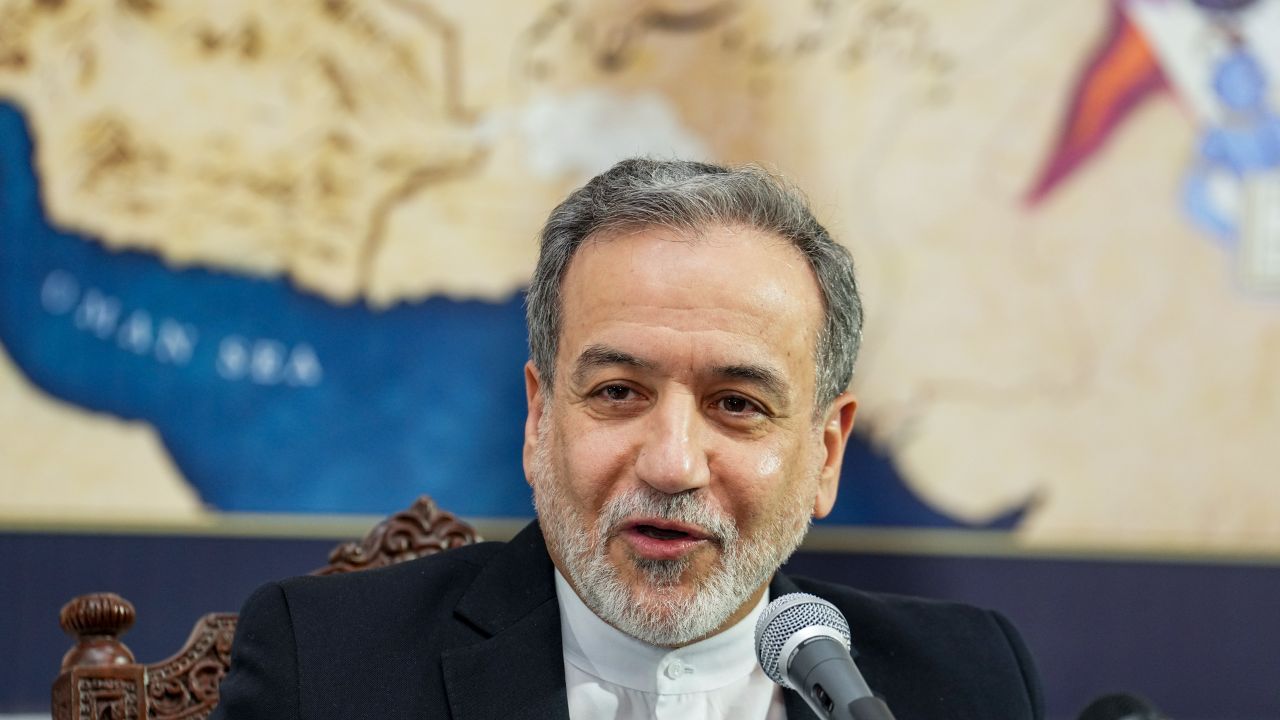
Iran is knocking on New Delhi’s door again, whispering the same tired seduction: "India can do more." It is a classic geopolitical trap. When Tehran suggests that India’s unique position—balancing a relationship with Israel while maintaining ties with the Islamic Republic—makes it the "perfect mediator," they aren't complimenting Indian diplomacy. They are looking for a shield.
The consensus among the foreign policy elite is that India is "rising" as a global arbiter. Pundits suggest that Prime Minister Modi’s "de-hyphenated" policy allows India to step into the vacuum left by a distrusted United States. This is a fundamental misreading of power dynamics. In the brutal, zero-sum theater of West Asian conflict, "neutrality" is often just another word for "irrelevance."
India doesn't need to save West Asia. India needs to secure its interest in West Asia. Those are two very different, often diametrically opposed, missions.
The High Cost of "Doing More"
Whenever a regional power tells India it can "do more," what they actually mean is they want India to spend its hard-earned diplomatic capital to bail them out of a strategic corner. Iran is currently suffocating under a web of sanctions and internal pressures. By inviting India to mediate, Tehran hopes to drag a massive, legitimate economy into its orbit to dilute Western pressure.
I have watched nations burn billions in political goodwill trying to play the middleman in conflicts they don't fully understand. India’s strength has always been its transactional clarity. We buy what we need; we sell what we produce. The moment India attempts to "solve" the ideological blood feuds of the Levant or the Persian Gulf, it inherits the baggage of both sides without the leverage to satisfy either.
Why Mediation is a Losing Game for New Delhi:
- Zero Leverage: Mediation works when the mediator can either promise a massive carrot or swing a heavy stick. India is not yet in a position to provide a security umbrella for the Gulf, nor is it willing to sanction Israel or Iran to force compliance. Without teeth, mediation is just expensive tourism.
- The Entanglement Risk: Look at the I2U2 (India, Israel, UAE, USA) initiative. It is a brilliant economic corridor project. If India leans too heavily toward Iranian interests to "balance" the scales, it risks sabotaging the very maritime and tech partnerships that fuel its GDP.
- Domestic Distraction: Every hour spent worrying about the internal red lines of the IRGC or the Likud party is an hour not spent on the Indo-Pacific—the only theater where India’s existential survival is actually at stake.
The "Trust Issue" Smokescreen
Tehran loves to point out that the U.S. has a "trust issue" in the region. They aren't wrong. From the botched withdrawal from Afghanistan to the shifting goalposts of the JCPOA (the nuclear deal), Washington’s word isn't what it used to be. But the counter-intuitive truth is this: An unreliable America is still more useful to India than a "reliable" Iran.
Western analysts often drone on about the "multipolar world" as if it’s a cozy campfire where everyone gets a turn to lead. It’s not. It’s a bar fight. In a bar fight, you don't necessarily want the most honest guy in the room on your side; you want the guy with the most reach and the biggest bank account.
India’s reliance on the U.S. for high-tech defense transfers, intelligence sharing, and semiconductor ecosystems far outweighs the benefit of being a "moral leader" in West Asia. If "doing more" for Iran means alienating the West, the math simply doesn't add up.
Dismantling the Energy Security Fallacy
For decades, the "lazy consensus" was that India must play nice with everyone in West Asia because of oil. "Energy security" was the magic phrase used to justify every spineless diplomatic move.
That era is over.
- The Russian Pivot: Since 2022, India has fundamentally rewired its energy supply chain. Russia is now a primary provider. The Middle East is still vital, but the leash is longer.
- The Renewables Surge: With India’s aggressive push into green hydrogen and solar, the long-term strategic value of being an "energy hostage" to West Asian volatility is plummeting.
- Market Power: India is one of the world's largest oil consumers. In a world moving toward an energy transition, the buyer holds the power, not the seller. India doesn't need to beg for stability; it can demand competitive pricing from a position of strength.
The Chabahar Trap
The port of Chabahar is often cited as the crown jewel of India-Iran cooperation—a way to bypass Pakistan and reach Central Asia. The competitor article likely views this as a reason for India to deepen ties.
Here is the inconvenient truth: Chabahar is a slow-motion project that has been "just about to finish" for a decade. While India dithers over Iranian bureaucracy and the threat of secondary U.S. sanctions, China has built out the Port of Gwadar and integrated it into a multi-billion dollar corridor.
India should treat Chabahar as a commercial outpost, not a strategic anchor. We must stop pretending that a single port in a volatile country is worth compromising our broader global alignment. If the price of keeping Chabahar is becoming Iran’s mouthpiece on the world stage, the price is too high.
Stop Asking "How Can We Help?"
The "People Also Ask" sections of the internet are filled with queries like "Can India bring peace to the Middle East?" or "Is India a superpower in West Asia?"
The answer is: Who cares?
Superpower status isn't about how many fires you put out; it’s about how many fires you can afford to ignore. The United States spent twenty years and trillions of dollars trying to "bring peace" to the region, and they have nothing to show for it but a massive debt and a weary electorate. Why would India want to repeat that failure?
Actionable advice for the Indian Ministry of External Affairs:
- Prioritize the IMEEC: The India-Middle East-Europe Economic Corridor is the future. It links India to the UAE, Saudi Arabia, and Israel. Notice someone missing? Iran.
- Weaponize Trade, Not Diplomacy: If we want influence, we buy assets. We don't send envoys to talk about "ancient civilizations" and "shared history." That’s poetry. Geopolitics is accounting.
- Let China Try: If Beijing wants to try and mediate between Riyadh and Tehran, let them. Let them get bogged down in the centuries-old complexities. While they are busy playing referee, India should be busy capturing their market share in Southeast Asia.
The Cold Reality of Realpolitik
Imagine a scenario where India actually tries to "do more." Prime Minister Modi flies to Tehran, then to Tel Aviv. He proposes a ceasefire.
What happens?
Israel will not stop until its security objectives are met. Iran will not stop using its proxies to project power. India’s "peace plan" gets filed in the same drawer as every other failed initiative since 1948. The only difference is that now, India has annoyed the Americans, frustrated the Israelis, and disappointed the Iranians.
There is no "soft power" win here. In West Asia, power is measured in calories, kilowatts, and kinetic force. India is doing exactly what it should: staying quiet, buying cheap energy where it can, and focusing on its own domestic industrialization.
The most "responsible" thing India can do for the West Asia conflict is to stay out of it.
The world is messy. West Asia is messier. India’s job is to be the fortress, not the fire department.
Tell Tehran thanks for the invite, but we're busy building a five-trillion-dollar economy. We don't have time to fix a conflict that doesn't want to be fixed.