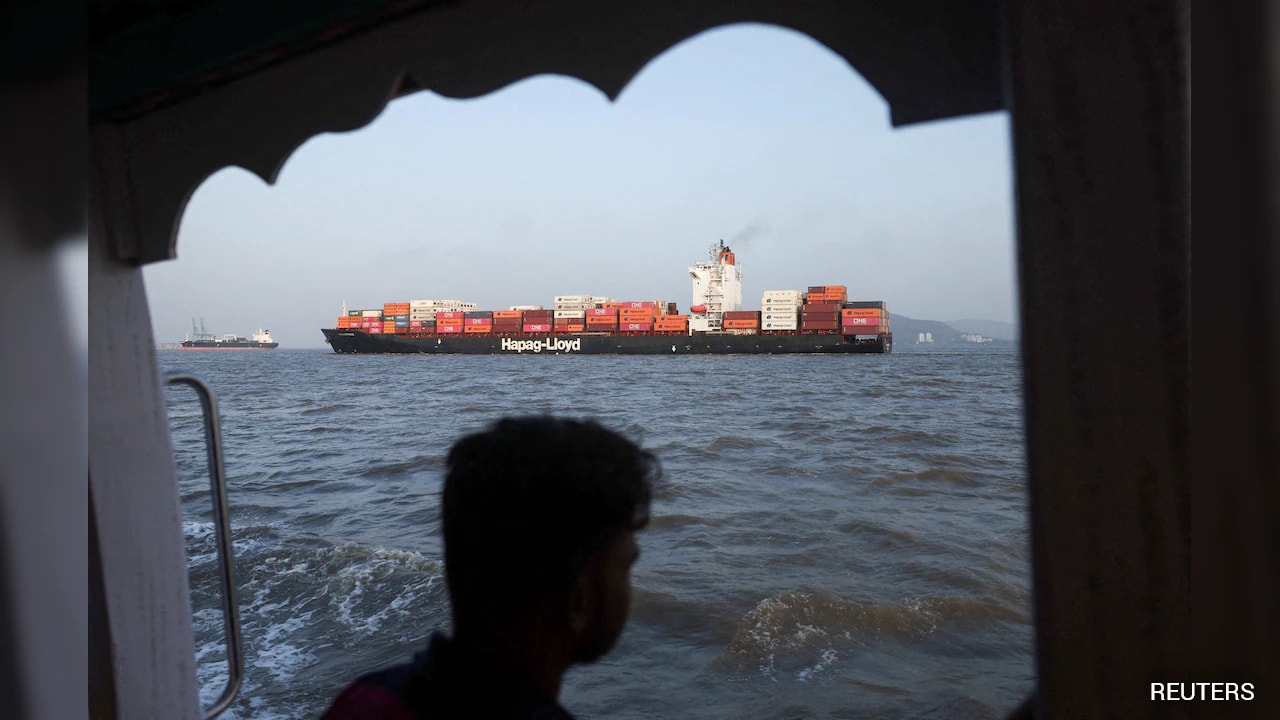
Two dead Indian seafarers in less than a week. Sixteen dead or missing since the geopolitical powder keg in West Asia blew wide open on February 28.
For the Indian government, those numbers were the breaking point.
On Wednesday, India’s Directorate General of Shipping issued a sweeping, indefinite ban. The directive is simple: shipowners, recruitment firms, and maritime managers are prohibited from deploying Indian seafarers on any vessels routing through the Strait of Hormuz.
It is a drastic, aggressive move. India is essentially telling the global shipping industry that it will no longer allow its citizens to serve as human shields in the escalating war between the United States and Iran.
The Cost of Staying Neutral in a War Zone
If you think this is just standard diplomatic posturing, you aren't paying attention to how fast the region is deteriorating.
On Tuesday, two massive United Arab Emirates-flagged crude tankers—the Mombasa B and the Al Bahyah—were transiting Omani waters in the southern shipping lane of the Strait. Iranian cruise missiles slammed into both ships. The vessels, owned by the shipping arm of Abu Dhabi National Oil Company (ADNOC), suffered major structural damage.
The physical damage to steel and oil is one thing. The human cost is what forced New Delhi's hand. One Indian national on those tankers was killed; eight others were left wounded.
Iran’s Islamic Revolutionary Guard Corps (IRGC) didn't flinch. They proudly claimed the strikes, arguing that the supertankers ignored warnings, went dark by turning off their transponders, and tried to navigate through a mined zone.
But to India, the excuse doesn't matter. The Forward Seamen’s Union of India (FSUI) immediately fired off a letter to Prime Minister Narendra Modi. They demanded a fierce official protest to the United Nations, reminding the administration that Indian workers are dying in a conflict they have absolutely nothing to do with.
Why the Strait of Hormuz Is an Absolute Nightmare Right Now
The Strait of Hormuz is a tiny, 33-kilometer-wide maritime choke point. It separates Iran from Oman and connects the Persian Gulf to the Gulf of Oman. It also carries over 20% of the world’s petroleum and a massive chunk of India's daily energy supply.
The current escalation is ugly:
- Nightly US Air Strikes: The United States has unleashed consecutive waves of air strikes directly hitting targets inside Iran.
- Blockades and Fees: US President Donald Trump announced intentions to impose a complete blockade on Iranian ports and slap a 20% transit fee on cargo passing through the Strait.
- Targeted Ships: Civilian merchant vessels are caught in the crossfire. Tankers like the MT Settebello, MT Celestial, MT Marivex, and MT Safesea Vishnu—all heavily staffed by Indian crews—have been targeted during this campaign.
India's Ministry of External Affairs (MEA) summoned Iran's Deputy Ambassador in New Delhi. The diplomatic message was sharp and angry, condemning the attacks on commercial ships and demanding that civilian seafarers be protected. But diplomacy moves slow, and missiles fly fast. The immediate ban on deploying Indian sailors was the only logical shield left.
The Massive Logistics Headache for Global Shipping
You can't overstate how much this ban will disrupt global shipping logistics.
Indian seafarers make up roughly 10% to 12% of the global seafaring workforce. They are the backbone of international trade. When India tells shipping lines that they cannot put Indian crew members on ships passing through the world’s most crucial oil chokepoint, it sends shockwaves through maritime human resources.
Shipowners now face a terrible choice. They can reroute their massive tankers thousands of miles around Africa—which adds weeks of travel time, burns millions of dollars in extra fuel, and spikes global shipping rates. Or, they can try to swap out Indian crew members before ships enter the Persian Gulf, a logistical nightmare that ports simply aren't equipped to handle smoothly.
India's Military Response in the Shadows
While New Delhi is pulling its civilian workforce out of the fire, the Indian Navy is digging in.
Through Operation Sankalp, India's long-standing maritime security mission, the Navy is executing an independent escort strategy. They have deployed over half a dozen heavily armed warships and logistics vessels to the Gulf of Oman.
                          [ Persian Gulf ]
                                 |
                         Strait of Hormuz
                         (High-Risk Zone)
                                 |
   ====================== [ Gulf of Oman ] ======================
  [ Indian Navy Warships / Operation Sankalp Escort Corridor ]
                                 |
                           [ Indian Ocean ]
Notice India's highly calculated naval positioning:
- The Boundary Line: Indian Navy warships are strictly staying east of the Strait of Hormuz. They are not entering the waterway itself.
- No Western Coalition: India has refused to join any US-led multi-nation military coalition in the region. They want to maintain a strictly non-escalatory, defensive posture.
- The Escort Corridor: Warships are creating a protective security corridor in the Gulf of Oman. When India-bound fuel and gas tankers manage to exit the Strait, naval assets—complete with marine commandos (MARCOS) and attack helicopters—take over to escort them safely home.
It is a delicate balancing act. India cannot afford to alienate Iran completely because of its broader strategic interests, yet it cannot let its energy security or its people be destroyed in the name of Tehran's war with Washington.
What Happens Next
If you operate merchant shipping, manage maritime crews, or rely on Middle Eastern trade, you need to adjust your operational strategy immediately.
- Audit Crew Nationalities: Immediately check the crew manifests of all vessels scheduled to transit the Persian Gulf or Gulf of Oman. If you have Indian nationals on board, you must coordinate with maritime agencies to ensure you are not in violation of the Directorate General of Shipping’s mandate.
- Utilize Navy Communication Channels: Ensure your ship captains are actively communicating with the Indian Navy’s Information Fusion Centre for Indian Ocean Region (IFC-IOR) and the MMDAC communication centres. If an emergency strikes, these are the direct lifelines for real-time military assistance.
- Factor in Delayed Fuel Shipments: Expect significant delays in crude oil and LPG deliveries. Even though the Indian Navy successfully escorted the LPG tanker Shivalik safely to Mundra Port in Gujarat, dozens of other vessels remain bottlenecked or trapped waiting for safe transit corridors.
India’s decision to ban its seafarers from the Strait of Hormuz is a stark reminder that in modern warfare, the global supply chain is the primary battlefield. Waiting for a diplomatic solution isn't an option when lives are on the line. Protect your crew, secure your routes, and do not underestimate the volatility of the Gulf.
This detailed report on Operation Sankalp shows how the Indian Navy is currently deployed in the region to guard these highly volatile trade routes.