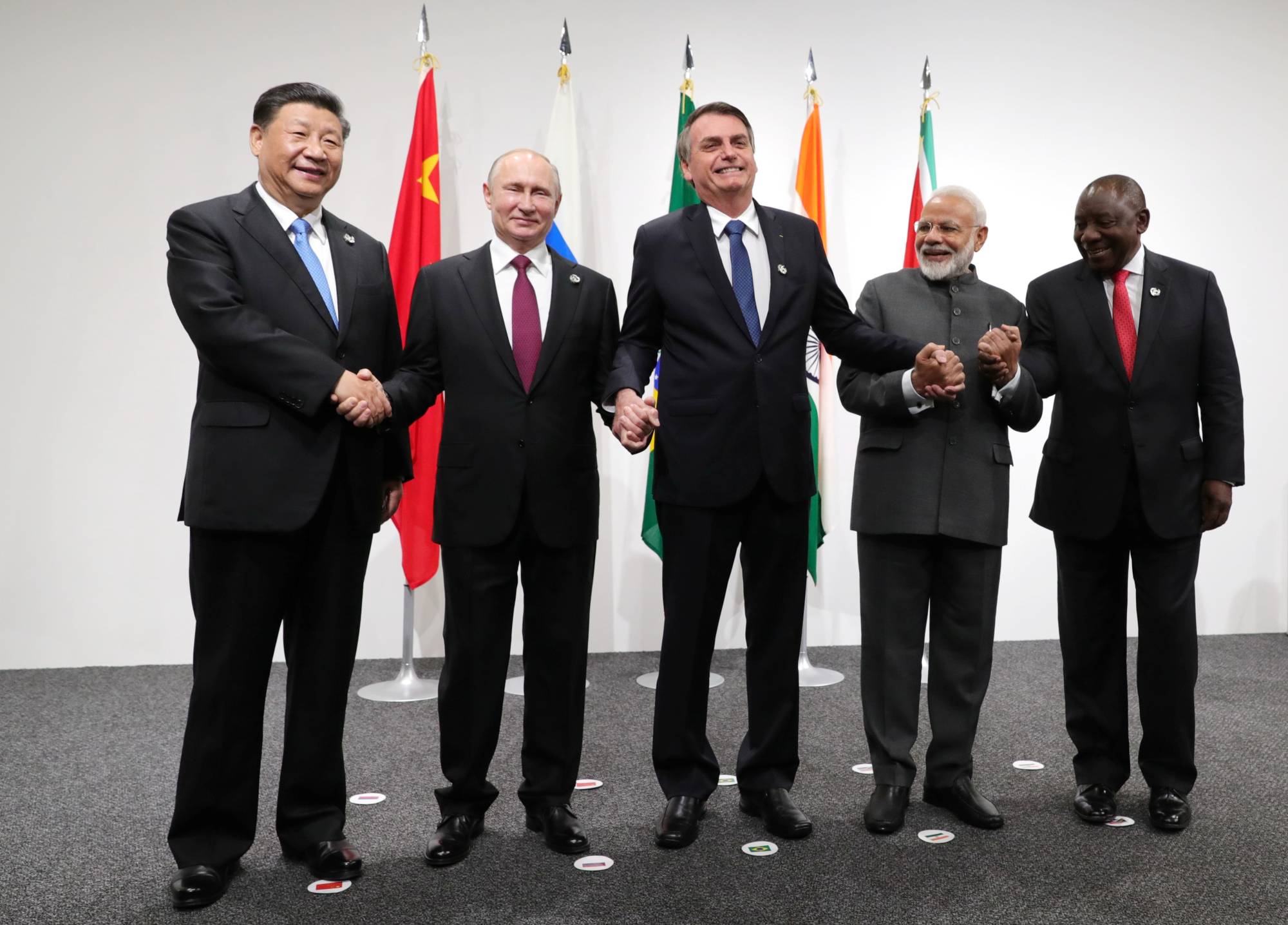
For over a decade, financial journalism has regurgitated the same lazy narrative. The lazy consensus runs on a predictable script: India entered the BRICS bloc fourteen years ago as the awkward, stuttering member—the fiscal weak link burdened by red tape, currency volatility, and structural inertia. Then, according to the mainstream fairy tale, a miraculous economic awakening occurred. India supposedly transformed itself from the liability of the emerging market club into its shining growth engine, carrying the weight of a multi-continental coalition on its back.
It is a comforting story. It is also entirely backwards. You might also find this related article interesting: India is Not Rescuing Russia By Buying Its Oil Refined Products Are Just Finding A New Door.
India did not transform BRICS. India used BRICS as a strategic pressure valve while quietly executing a bilateral, inward-looking industrial policy that abandoned multilateral economic synchronization the moment it stopped being convenient. To understand why the conventional narrative collapses under basic scrutiny, you have to look past the diplomatic photo ops and examine the ledger of actual trade flows, capital allocations, and geopolitical hedging.
The Myth of Collective Ascent
The entire architecture of BRICS was built on an arithmetic fallacy. Economists in the early 2000s grouped Brazil, Russia, India, China, and South Africa together because they shared high projected growth rates and large populations. They shared nothing else. They had conflicting territorial claims, divergent legal systems, competing industrial bases, and currencies that reacted to entirely different macroeconomic shocks. As extensively documented in recent articles by The Wall Street Journal, the effects are notable.
Treating BRICS as a unified economic organism has always been analytical laziness. Trade between India and China soared, yes, but it created a massive structural trade deficit that New Delhi spent the last decade desperately trying to throttle. Trade between India and Russia remains historically lopsided, dominated by discounted crude purchases born of wartime opportunism rather than deep-seated trade integration.
When commentators talk about India changing its standing within BRICS over the past fourteen years, they are misattributing unilateral domestic reforms and aggressive geopolitical balancing to a club that lacks a binding trade pact, a common monetary policy, or even a shared strategic doctrine.
India’s rise was accomplished despite the multilateral constraints of BRICS, not because of them.
The Pivot From Openness to Fortress Economics
If you want to understand how India's role actually changed, look at tariff walls. Fourteen years ago, the prevailing orthodoxy in Indian economic policy was that integration into global supply chains required lowering barriers, courting multinational manufacturing, and betting big on export-led growth modeled loosely on East Asian miracles.
That playbook broke.
Today, India has quietly retreated into a sophisticated form of neo-protectionism. Through production-linked incentive schemes, aggressive local-content mandates, and a stubborn refusal to sign comprehensive regional trade agreements like the Regional Comprehensive Economic Partnership, New Delhi signaled a stark shift. It stopped trying to be the world’s assembly line and started demanding that foreign capital build factories on Indian soil strictly to serve domestic demand.
This is not the behavior of a multilateral growth engine. This is the behavior of a sovereign economic nationalist playing a long, cold game of sovereign self-preservation.
While Western analysts were busy writing op-eds about how BRICS was challenging the dollar hegemony—a project that has achieved virtually nothing concrete beyond rhetorical posturing—India was busy signing bilateral defense pacts with the United States, quad-sharing intelligence in the Indo-Pacific, and positioning its tech sector to siphon foreign direct investment away from a slowing Beijing.
India plays in BRICS because diplomatic optionality is a cheap asset. But its real economic anchor was never Brasília, Moscow, or Beijing. Its anchor is domestic consumption at a scale that terrifies foreign competitors and captivates global boardrooms.
The Dangerous Illusion of De-Dollarization
Let us address the elephant in the room that fuels so many breathless headlines about the bloc’s evolution: the obsession with de-dollarization.
Every few months, a financial pundit writes a piece claiming that BRICS is about to replace the greenback with a gold-backed currency or a localized trade settlement mechanism. It is economic theater.
India’s central bank is far too sophisticated to fall for this trap. When India bought Russian oil in non-dollar currencies, it wasn't a masterstroke of anti-imperialist monetary policy; it was a pragmatic arbitrage play forced by Western sanctions. The moment those non-dollar balances accumulated in local accounts, Moscow discovered what every country trading with India eventually learns: you cannot easily spend rupees on global capital markets because India maintains capital controls to protect its macroeconomic stability.
A currency cannot become a global reserve asset if the issuing nation actively restricts capital convertibility. New Delhi knows this. It has zero interest in tying its monetary sovereignty to a currency basket dominated by a hyper-regulated Chinese yuan or a sanctioned Russian ruble. To pretend otherwise is to misunderstand the fundamental paranoia that governs India's financial policymakers—a paranoia born of historical balance-of-payments crises that taught them to trust no one's currency but their own reserves.
The Real Shift
The transformation over the last fourteen years is not that India became a better team player in BRICS. The transformation is that India stopped caring about the team entirely.
BRICS went from being a theoretical validation of India’s global emergence to a diplomatic cocktail party where India shows up, shakes hands, blocks any institutional overreach that threatens its strategic autonomy, and then leaves to pursue bilateral deals that actually move the needle for its domestic GDP.
The next time you read a headline about how the bloc is reshaping the global order, check the actual trade data. You will find that India is winning by playing a solo game, using a multilateral label as camouflage while it builds its own fortress.
Stop looking for collective harmony where there is only ruthless, calculated self-interest. That is not a weakness. That is how empires are built.