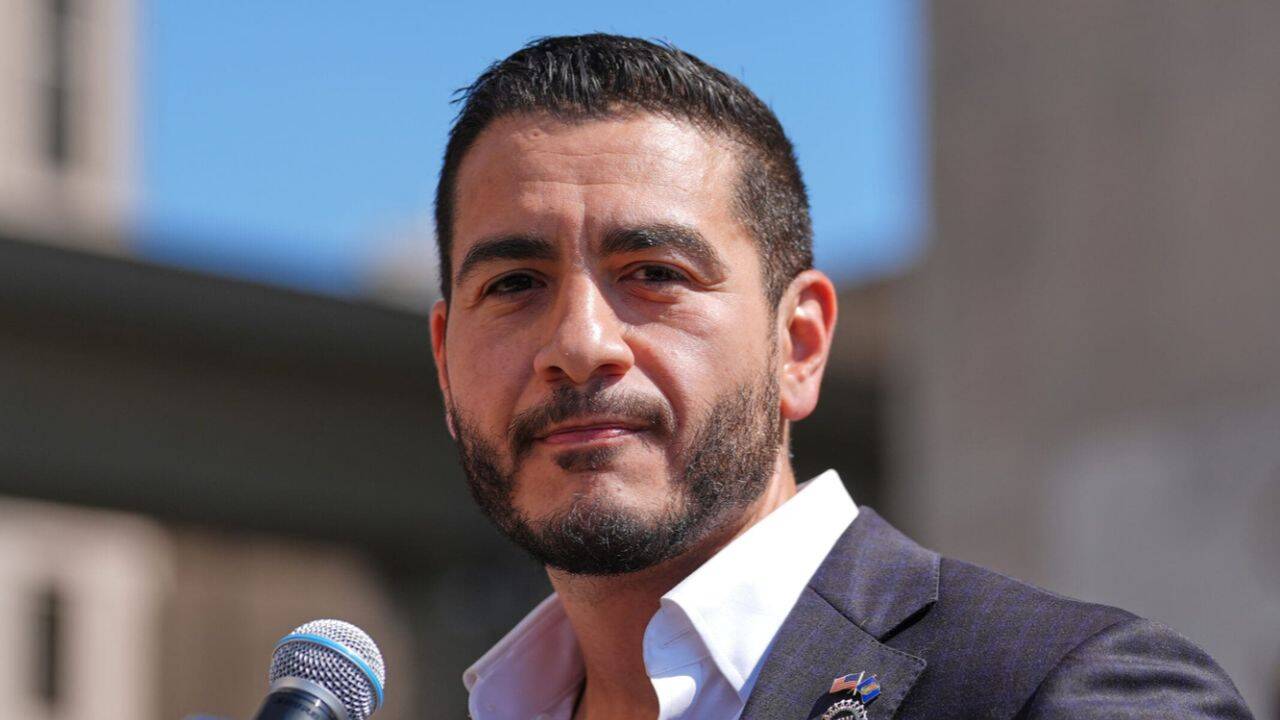
Wikipedia biography edits preceding high-stakes primary elections function as a predictable, low-cost mechanism for digital reputation management, yet public accusations of coordinated sanitization frequently conflate standard crowd-sourced policy enforcement with paid political intervention. When allegations surfaced that the Wikipedia biography of former Detroit Health Director and Michigan U.S. Senate candidate Abdul El-Sayed had been systematically scrubbed of controversial statements ahead of the 2026 election cycle, the resulting commentary—including remarks from Wikipedia co-founder Larry Sanger—exposed a fundamental divide between public perception of ideological gatekeeping and the actual operational mechanics of Wikimedia governance. Understanding whether an encyclopedia entry has been improperly manipulated requires separating verifiable revision histories from speculative attribution, auditing edit patterns against Wikipedia’s explicit Biographies of Living Persons (BLP) policies, and evaluating the structural vulnerabilities of open-source knowledge platforms during active campaign cycles.
The Architecture of Pre-Election Biography Audits
Political campaigns treat Wikipedia as a primary search-engine optimization asset because its pages consistently rank first in organic search results for candidate names and feed directly into large language model training sets and search engine knowledge panels. When a public figure enters a major race—such as the 2026 Michigan U.S. Senate contest following Senator Gary Peters' retirement—their Wikipedia page transitions from a static archival record into an active contested space.
Analysts and opposition researchers tracking these entries look for three distinct operational signatures that differentiate routine editorial maintenance from strategic reputation management:
- Asymmetric Sourcing Shifts: Legitimate updates introduce peer-reviewed data, major mainstream reporting, or official legislative records to balance a page. Strategic sanitization removes well-sourced negative coverage from established outlets while retaining favorable coverage from identical publications, creating a citation asymmetry that violates Wikipedia’s Neutral Point of View (NPOV) standard.
- Euphemistic Framing and Passive Construction: Rather than deleting entire sections—which triggers automated anti-vandalism bots and alerts page watchers—sophisticated editors alter syntax. Active descriptions of political controversies, regulatory disputes, or controversial past rhetoric are rewritten into passive, bureaucratic phrasing that lowers the emotional salience of the text without technically removing the underlying fact.
- Timing Correlation with Campaign Milestones: A spike in single-purpose account activity occurring within 30 to 90 days of an exploratory committee launch or formal candidacy announcement indicates anticipatory narrative control rather than organic reader interest.
In the case of Abdul El-Sayed, scrutiny centered on whether critical passages regarding his tenure leading the Detroit Health Department, his past progressive policy positions, and prior campaign controversies were softened or excised as his name circulated as a prominent contender in Michigan's Democratic Senate primary. However, establishing that text was softened is distinct from proving who directed the edits.
Separating Editorial Policy from Attribution
A rigorous forensic review of any Wikipedia dispute requires distinguishing between three separate variables: the textual delta (what changed), the policy justification (why editors say it changed), and the actor attribution (who executed the change). Most partisan media coverage collapses these three variables into a single narrative, assuming that any removal of negative text equals paid campaign interference.
Wikipedia’s internal governance relies heavily on its Biographies of Living Persons (BLP) policy, which mandates a strict presumption in favor of privacy and conservative sourcing for living individuals. Under BLP guidelines, any contentious material that is poorly sourced, relies on primary documents without secondary analysis, or gives undue weight to minor controversies must be removed immediately without waiting for consensus. Consequently, experienced volunteer editors—many with no financial or personal connection to a candidate—routinely strip out critical paragraphs added by partisan detractors during election years. To an outside observer unfamiliar with Wikimedia’s internal rulebook, a routine BLP enforcement action looks identical to a political operative scrubbing an inconvenient record.
Conversely, paid conflict-of-interest (COI) editing does occur across political and corporate articles, typically executed through undisclosed accounts, newly registered usernames, or rotating IP addresses that edit exclusively within a narrow topical cluster. Under Wikipedia’s Terms of Use, paid editors must publicly disclose their employer, client, and affiliation. When undisclosed editors systematically soften tone across multiple sections while invoking procedural rules to revert critics, they exploit the platform’s reliance on good-faith assumptions. Without technical attribution—such as CheckUser data linking accounts to campaign infrastructure or disclosed COI declarations—public observers can verify the directional bias of the edits, but they cannot definitively attribute agency to the candidate or their staff.
The Structural Critique from Larry Sanger
Commentary from Wikipedia co-founder Larry Sanger regarding the El-Sayed editing controversy fits into a broader, multi-decade structural critique of the platform’s governance model. Having departed the project in 2002, Sanger has consistently argued that Wikipedia abandoned its original neutrality principle in favor of an ideological consensus enforced by entrenched administrators and a restrictive list of approved sources.
Sanger’s intervention in the El-Sayed discussion highlights two systemic vulnerabilities in how the encyclopedia handles political figures:
- Source Hierarchies as Ideological Filters: Wikipedia’s Perennial Sources list categorizes media outlets by reliability. While designed to exclude fabricated news and partisan blogs, critics contend that the classification system systematically deprecates conservative outlets while treating legacy centrist and center-left publications as unassailable consensus. When a political candidate’s controversies are primarily documented by outlets rated as unreliable or partisan on Wikipedia, editors can legally purge those controversies from the biography under existing sourcing rules, regardless of whether the underlying facts are accurate.
- The Illusion of Neutrality via Consensus: In an open editing environment where participation skews demographically toward specific political and geographic cohorts, "consensus" on a Talk page reflects the views of the most active, procedurally fluent editors rather than an objective balance of public opinion. When controversies surrounding a progressive candidate like El-Sayed are debated on an article’s Talk page, the resulting wording reflects the editorial judgment of the participating cohort rather than a mathematical midpoint between supporters and critics.
Sanger’s critique does not constitute forensic proof that El-Sayed’s campaign hired editors to sanitize his biography. Instead, it diagnoses the environmental conditions that allow favorable framing to persist on Wikipedia without requiring explicit covert intervention by a political committee.
Strategic Mechanics of Political Reputation Management on Open Platforms
To evaluate how political actors operate within these constraints, analysts must map the incentive structure governing digital reputation defense. Direct editing by a candidate’s staff carries high reputational risk; if an IP address belonging to a campaign office or a congressional server modifies a biography, automated tracking bots flag the edit immediately, generating a secondary news cycle far more damaging than the original Wikipedia text.
Because direct intervention is penalized, sophisticated political operations rely on indirect mechanisms that leave no verifiable forensic trail:
- Talk Page Petitioning: Legitimate campaign representatives or legal counsel post formal requests on the article’s public Talk page, pointing out factual errors, outdated polling, or BLP violations, and asking independent editors to implement the corrections. This complies fully with Wikimedia policy and shields the campaign from accusations of covert manipulation.
- Source Seeding: Rather than editing Wikipedia directly, communications teams pitch corrective or contextual stories to mainstream outlets classified as "generally reliable" on Wikipedia’s Perennial Sources list. Once the story is published, volunteer editors naturally incorporate the new framing into the biography to keep the article current.
- Asymmetric Monitoring: Supportive activists monitor candidate pages via watchlists, immediately reverting negative additions by citing NPOV or undue weight policies while allowing positive updates to remain unchallenged.
In high-profile primary races like Michigan’s Senate contest, where progressive and establishment factions compete for narrative dominance, every major candidate’s Wikipedia page becomes a proxy battleground for these exact tactics. The presence of softened language on El-Sayed’s page demonstrates that the entry underwent active editorial curation, whether driven by ideological volunteers applying strict BLP standards or strategic actors operating within the margins of platform rules.
Evaluating Evidence Versus Inference in Digital Forensics
When assessing claims of Wikipedia manipulation, researchers must maintain strict epistemic discipline between documented facts and plausible hypotheses:
- Documented Facts: Wikipedia’s public revision history logs every character added or deleted, the timestamp of the modification, and the username or IP address responsible. Talk page archives record the exact policy arguments used to justify retaining or removing text. Larry Sanger’s public statements reflect his documented, ongoing assessment of Wikimedia’s institutional bias.
- Unverified Hypotheses: Attributing specific anonymous or pseudonymous edits directly to Abdul El-Sayed or his campaign staff remains speculative unless corroborated by disclosed COI statements, leaked communications, or technical IP verification conducted by Wikimedia administrators.
Treating an unattributed edit history as proof of campaign misconduct commits an attribution error, while dismissing substantial textual softening as purely coincidental ignores the well-documented reality of pre-election digital reputation management.
Operational Framework for Auditing Political Biographies
Journalists, researchers, and voters evaluating the integrity of a candidate’s Wikipedia entry during an election cycle should bypass partisan commentary and execute a direct forensic audit of the page’s metadata:
- Inspect the Revision History Delta: Navigate to the "View history" tab on the biography and use the revision comparison tool to isolate edits made within the six months preceding the candidate’s campaign announcement. Look specifically for large byte deletions in sections covering past controversies, public health tenure, or prior electoral defeats.
- Audit Contributor Profiles: Click on the usernames responsible for major textual softening. Check their global contribution logs to determine whether they are established generalists who edit thousands of unrelated articles or single-purpose accounts focused exclusively on a narrow set of political figures.
- Review Talk Page Disputes: Examine the "Talk" tab and its archives to see whether deleted controversies were debated openly. If major sections vanished without a corresponding Talk page discussion or policy citation, the edits warrant heightened scrutiny for potential COI interference.
- Cross-Reference Deprecated Sources: Identify which citations were removed during the edits. Determine whether the deleted facts were supported by major wire services and local newspapers of record—such as the Detroit Free Press or The Detroit News—or whether they relied on partisan aggregators that fail Wikipedia’s baseline reliability thresholds.