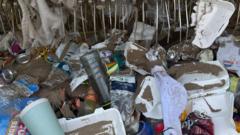
Whenever summer temperatures spike, the narrative follows a predictable script. Tabloids scream about traffic gridlock, local councils panic over overflowing trash cans in public parks, and the public blames the weather. This blame is entirely misplaced. A heatwave does not create systemic failure; it merely exposes the structural rot and administrative neglect that exist year-round. The real crisis is not meteorological. It is an infrastructure blindspot born from decades of reactive governance and cost-cutting measures that treat recurring seasonal shifts as unforeseen emergencies.
The Melting Asphalt Myth and the Realities of Underfunded Transit
The moment the thermometer crosses 30 degrees Celsius, rail networks slow down and highways buckle. The standard public relations response from transit authorities involves a shrug and an explanation about physics. We are told that metal expands and tarmac softens.
This defense ignores decades of material science. Countries in the Middle East and parts of the American Southwest regularly manage infrastructure in temperatures exceeding 40 degrees Celsius without a total collapse of their logistics networks. They achieve this through proactive engineering.
Rail track failure during high temperatures is primarily a failure of pre-tensioning. When steel rails are laid, they are stressed to a "stress-free temperature" (SFT), usually the midpoint between winter lows and summer highs.
[Winter Low (-10°C)] <------- Neutral SFT (21°C) -------> [Summer High (52°C)]
If a nation's infrastructure budget assumes that historical averages will hold forever, they set the SFT too low. When actual temperatures exceed that engineered threshold, the rail expands beyond its constraints, resulting in track buckling.
Fixing this requires significant capital expenditure. It demands regular track-destressing campaigns and the use of polymer-modified bitumen on roads, which elevates the softening point of asphalt. Instead, transit agencies opt for cheap fixes. Speed restrictions are implemented as a safety buffer, masking a refusal to invest in resilient materials. Drivers and commuters pay the price in lost hours, while supply chains grind to a halt.
The Broken Economics of Municipal Waste
The sight of trash piling up in public spaces during a hot weekend is routinely framed as a failure of public morality. Media outlets focus on thoughtless sunbathers leaving behind plastic wrappers and aluminum cans. While individual laziness exists, the actual bottleneck is an rigid, outdated municipal procurement framework.
Local government waste contracts are structured around predictable, historic volume baselines. They operate on tight margins, with fixed collection schedules that do not account for sudden shifts in public behavior. When a weekend heatwave drives thousands of citizens out of their homes and into parks, the volume of waste generated in specific geographic zones increases exponentially within hours.
+---------------------------------------------------------------+
|                      MUNICIPAL WASTE BOTTLENECK               |
+---------------------------------------------------------------+
|                                                               |
|  [Static Waste Contract] ----> Fixed Schedules & Capacity     |
|                                            |                  |
|                                            v                  |
|  [Heatwave Weekend]     ----> Exponential Volume Spike        |
|                                            |                  |
|                                            v                  |
|  [Systemic Failure]     ----> Overflowing Bins & Litter       |
|                                                               |
+---------------------------------------------------------------+
|  Result: Public blamed for systemic logistics failures.      |
+---------------------------------------------------------------+
A standard public bin holds roughly 100 liters of waste. During a peak summer afternoon, that bin can fill up in less than forty minutes. Once a bin reaches capacity, an anthropological phenomenon occurs: people pile trash around the base of the container. Wind and scavenging animals scatter this waste, turning a logistical delay into an environmental hazard.
The solution is not more anti-littering campaigns. The solution is dynamic, data-driven routing. Sensor-managed bins, which alert collection teams when they reach 80% capacity, have existed for years. Yet, cash-strapped municipalities rarely invest in these systems. They stick to rigid, manual routes dictated by decades-old contracts. It is cheaper for a city to issue a press release lecturing the public about civic pride than it is to renegotiate a waste management contract to allow for on-demand weekend staffing.
The Human and Economic Toll of Thermal Inequity
The impact of these infrastructure failures is not distributed equally. Heatwaves exacerbate existing economic divides, hitting lower-income urban populations the hardest. This reality is governed by the urban heat island effect, a phenomenon where concrete-heavy neighborhoods experience significantly higher temperatures than wealthier, greener suburbs.
- Lack of Canopy Cover: Low-income areas consistently feature fewer trees and green spaces, removing natural cooling mechanisms.
- Thermal Mass Retention: Large expanses of asphalt and brick absorb solar radiation during the day and re-radiate that heat throughout the night.
- Poor Housing Insulation: Older, multi-family housing units frequently lack adequate ventilation or modern insulation, turning apartments into thermal traps.
When public transit fails during a heatwave, white-collar employees often have the luxury of working from home in air-conditioned environments. Hourly laborers, service industry staff, and healthcare workers do not. They are forced onto delayed, overheated buses and trains, arriving at work already exhausted. This reduces productivity and creates a hidden public health crisis. Emergency rooms see predictable surges in admissions for heat exhaustion and dehydration during these periods, costs that are absorbed by the public health system rather than the agencies responsible for infrastructure maintenance.
The Failure of Reactive Policy
Governments remain trapped in a cycle of crisis management. When a heatwave hits, emergency committees meet, temporary speed limits are set, and temporary water stations are deployed. Once the weather cools, the urgency vanishes, and the reports are filed away.
This reactive loop ensures that every subsequent heatwave produces identical results. True resilience requires shifting from emergency response to preventative engineering. This means updating building codes to mandate passive cooling designs, revising transit asset management frameworks to prioritize high-tolerance materials, and redesigning city layouts to incorporate open, shaded public spaces. Until municipal and national budgets treat rising summer temperatures as a baseline reality rather than an anomaly, our cities will continue to buckle under the sun.