The Great Geographic Illusion
Every major media outlet points you toward the south-west of England for the upcoming solar eclipse. They tell you that Land's End or West Cornwall will give you the ultimate celestial prize. They are technically correct, yet practically misleading.
On August 12, 2026, the United Kingdom will experience a deep partial solar eclipse. The moon will bite into the solar disk, masking between 90 and 96 percent of the sun across the British Isles. The south-west hits the peak at roughly 96 percent. Glasgow and Edinburgh will hover near 91 percent.
The mathematical difference between 91 percent and 96 percent coverage is five percentage points. The practical difference to the human eye is virtually non-existent without precision instruments. Both regions experience a deep partial phase. Neither region experiences total darkness.
Chasing coordinates down to the final mile of Cornish coastline creates unnecessary gridlock. The actual bottleneck is not latitude or longitude. It is horizon geometry and atmospheric physics.
The Low-Altitude Trap
The biggest variable in your viewing experience has nothing to do with how far south you drive. It has everything to do with the clock and the compass.
The maximum eclipse occurs shortly after 7:00 PM British Summer Time. At 7:00 PM in August, the sun sits exceptionally low in the western sky. It hangs at an altitude of just a few degrees above the horizon.
If you are standing on a beach with high cliffs behind you, or nestled in an urban valley surrounded by Victorian townhouses, the sun will vanish behind terrestrial obstacles long before the maximum phase begins. A commuter standing on a London rooftop with an unobstructed view toward the west will witness a cleaner eclipse than a traveler trapped in a wooded Cornish valley.
Elevation trumps southern latitude every single time under these specific conditions. Elevated moorlands, high clifftops facing the open sea, and open park elevations offer superior sightlines.
The Geography of Obscuration
Let us look closely at how the numbers break down across the nation.
| Location | Approximate Max Coverage | Approximate Peak Time |
|---|---|---|
| Land's End | 95.8% | 7:16 PM |
| Cardiff | 93.2% | 7:13 PM |
| Belfast | 93.1% | 7:08 PM |
| Manchester | 91.5% | 7:10 PM |
| London | 91.0% | 7:12 PM |
| Edinburgh | 90.7% | 7:05 PM |
Notice how compressed that range is. The entire country shares a very tight window of twilight obscuration. Scotland lags behind Cornwall by a mere five percentage points.
If your goal is scientific utility or photography, those five points matter. If your goal is experiencing a striking atmospheric phenomenon while standing in your local park, traveling six hours down the M5 motorway guarantees bumper-to-bumper misery for an imperceptible gain in shadow depth.
The Optics of Safety and Hype
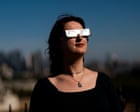
Commercial opportunists have weaponized this astronomical event. Specialized ISO 12312-2 certified eclipse glasses are selling out across online vendors. Astronomical societies are fielding thousands of calls regarding retinal damage.
The danger is real, but the panic is inflated. Looking directly at a 90 percent eclipsed sun remains just as dangerous as looking at a full sun. The human blink reflex fails because the ambient light drops, tricking the brain into thinking the hazard has passed. Infrared and ultraviolet radiation pour straight into the retina without immediate pain sensors sounding an alarm.
You do not need a £50 smart telescope filter to participate. A simple pinhole projector constructed from two pieces of card stock projects a crisp, inverted image of the crescent sun onto the ground.
The Weather Wildcard
Meteorology remains the ultimate arbiter of celestial events in the British Isles. Coastal fog and marine stratus clouds frequently roll into the south-west of England during late summer evenings.
A traveler who spends three hundred pounds on petrol and accommodation to reach a cliff edge in Cornwall, only to be swallowed by a sea mist, will miss the entire spectacle. Meanwhile, someone standing in an ordinary suburban backyard in the Midlands might experience a sudden break in the cloud cover at precisely 7:12 PM.
Flexibility beats rigid travel planning. Check the satellite infrared loop two hours before the event rather than booking flights or hotels months in advance.
Position yourself near a western-facing opening. Keep your cardboard projector ready. Ignore the marketing hype telling you that salvation only exists at the absolute geographic tip of the mainland.

/cdn.vox-cdn.com/uploads/chorus_asset/file/22155007/doc_ock.jpg)