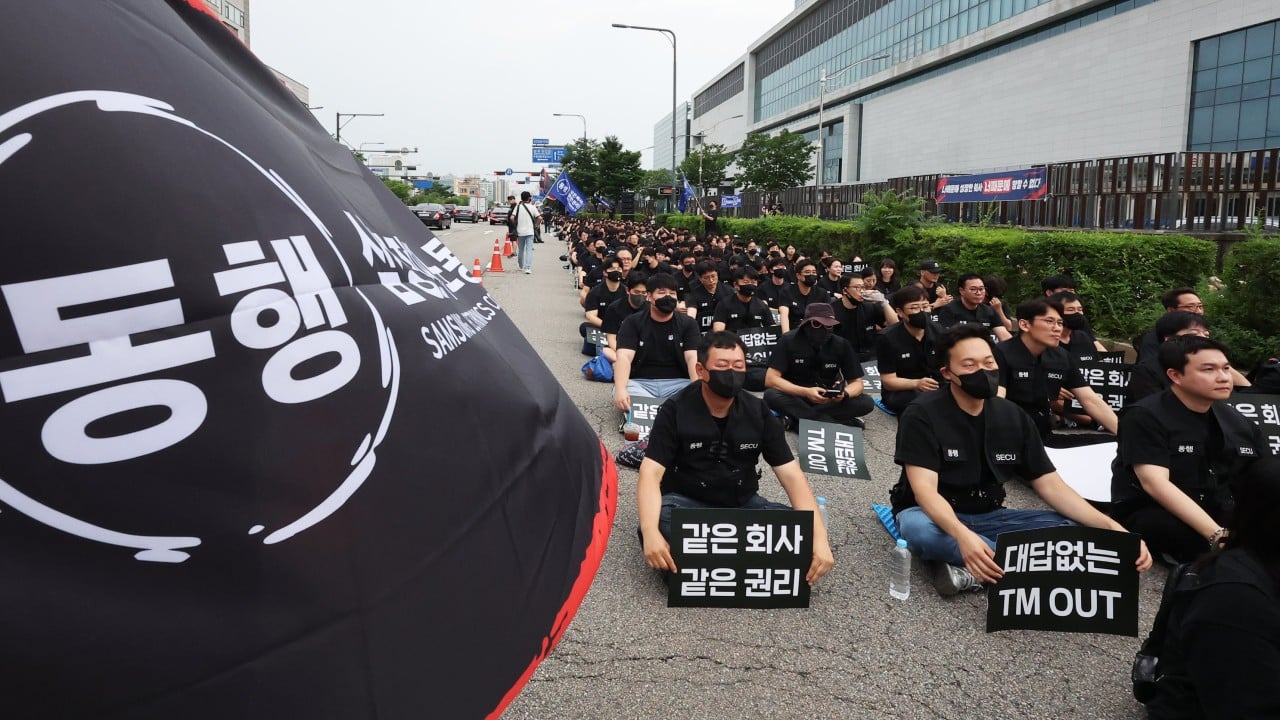
Samsung Electronics bought temporary industrial peace at a breathtaking price. By yielding to union threats of an 18-day general strike and agreeing to payout packages worth up to $400,000 for individual memory chip workers, the world’s leading memory manufacturer averted a supply chain disaster. However, that historic concession did not end the turmoil; it lit a fuse under the nation's corporate order. The unprecedented windfall has ignited wage envy, broken traditional labor solidarity, and triggered domino-effect strikes across South Korea’s major industrial sectors.
What began as a localized standoff over profit sharing during an artificial intelligence boom has escalated into a structural crisis. Across the country, workers at automakers, telecommunication giants, and rival tech firms are walking out or threatening production halts, demanding their own slice of corporate earnings. The settlement that saved Samsung's semiconductor operations is now destroying the delicate consensus between South Korea’s corporate titans and their unionized workforces.
The Unprecedented Settlement That Rewrote Labor Rules
To understand the current wave of industrial unrest, one must examine the mechanics of the agreement struck between Samsung management and union representatives. Facing the prospect of a massive strike that government officials warned could cost nearly $670 million in direct losses, the company agreed to dismantle its long-standing bonus caps. Under the mediated agreement, Samsung committed 10.5 percent of its semiconductor division’s operating profit into a stock-based bonus pool, alongside an additional 1.5 percent in cash payouts.
The numbers are staggering. With projections pointing toward record-setting operating profits driven by global demand for high-bandwidth memory chips, the overall bonus pool for the 78,000 workers in the semiconductor division expanded to roughly $26.6 billion. For the 28,000 specialized engineers and line operators in the core memory unit, the deal translates to individual payouts reaching up to 600 million won, or roughly $400,000 per person.
The money is not a simple lump-sum cash giveaway. Samsung structured the compensation to bind key engineering talent to the firm over the long haul. The equity-based payouts will be distributed over a ten-year horizon, contingent on the memory division reaching ambitious operating profit benchmarks of 200 trillion won annually through 2028. Even with these performance targets, the sheer scale of the agreement shattered every precedent in South Korean labor history.
The Two-Tiered Workforce Fracturing Internal Union Solidarity
The massive payout created immediate, intense bitterness within Samsung’s own workforce. The agreement created an enormous financial gulf between employees working on high-margin memory chips and those assigned to consumer devices, televisions, and smartphones.
While a memory chip engineer stands to receive $400,000, colleagues in the Device eXperience division are slated to receive bonuses averaging around $4,000. That represents a 100-to-1 disparity between workers who eat in the same cafeterias and clock into the same corporate campuses.
Dissident workers quickly took action. Five employees from the consumer electronics division filed a lawsuit in Suwon District Court seeking an injunction to block the union ratification vote, claiming non-chip staff were effectively sidelined during negotiations. Though the court rejected the filing and the broader labor coalition ratified the deal, the social fabric of the workforce dissolved.
+------------------------------------+-----------------------+------------------------+
| Division                           | Est. Bonus Payout     | Compensation Type      |
+------------------------------------+-----------------------+------------------------+
| Semiconductor (Memory Division)    | Up to ~$400,000       | Equity + Cash (10-Yr)  |
| Foundry & Logic Design             | Substantial (Varies)  | Equity + Cash          |
| Device eXperience (Smartphones/TVs)| ~$4,000               | Standard Cash/Bonus    |
+------------------------------------+-----------------------+------------------------+
Protests inside corporate offices took on an ominous tone. Staff members began arriving at work dressed entirely in black clothes and wearing black face masks to signify what they termed the death of fair compensation. The old labor narrative of collective unity gave way to factional economic self-interest.
This internal rift highlights a fundamental shift in South Korean labor dynamics. Historical labor organizing in the country relied heavily on ideological solidarity, broad political goals, and equal protection for all members of a conglomerate. Today's tech-savvy, younger workers view unions primarily as transactional agents designed to maximize personal returns. When a union delivers astronomical wealth to one segment of its membership while leaving others behind, the collective bargaining framework breaks under the weight of its own success.
The Industrial Contagion Across South Korea's Conglomerates
The consequences extended far beyond Samsung's factory gates. Executives across South Korea's major industrial conglomerates suddenly found themselves facing workforces demanding identical profit-sharing mechanisms.
Assembly line workers at Hyundai Motor staged partial strikes, putting down tools to demand that up to 30 percent of the company’s consolidated profit be allocated directly to employee bonuses. At HD Hyundai Heavy Industries and telecom giant LG Uplus, organized labor unions put forward similar demands, insisting on profit-sharing clauses equal to at least 30 percent of operating earnings. Meanwhile, workers at Hanwha Aerospace and HD Hyundai Electric initiated campaigns demanding the complete abolition of corporate bonus caps.
The contagion moved fast through the domestic software and internet ecosystem as well. Thousands of employees at Kakao, the operator of South Korea’s dominant messaging application, organized the first strike in the company's history to demand that 15 percent of operating profits be set aside for performance bonuses. At Naver, the country's primary search engine provider, union leadership began constructing cross-affiliate labor unions to force management into broad profit-sharing concessions.
The economic logic driving these demands is straightforward, even if corporate leadership finds it untenable. For years, corporate executive boards insisted that global competitive pressures required strict pay discipline and capped performance bonuses. When Samsung demonstrated that it could hand over 10.5 percent of semiconductor profits without collapsing its capital expenditure budgets, every unionized workforce in the country lost faith in corporate austerity arguments.
Macroeconomic Risks and the Threat to Competitiveness
The timing of this widespread industrial friction poses serious challenges for South Korea’s export-driven economy. The nation’s economic structure relies heavily on a handful of massive conglomerates that account for a significant percentage of national gross domestic product.
When bonus payouts become tied directly to volatile quarterly or annual profit spikes, corporate long-term planning suffers. Semiconductor manufacturing and heavy industries require immense capital allocation for research, factory modernization, and advanced tooling. Diverting tens of billions of dollars into individual stock bonuses directly reduces the capital available to re-invest against aggressive foreign competitors.
Furthermore, inflation and wage disparity risks are mounting. As chip workers and specialized tech personnel receive multi-hundred-thousand-dollar payouts, local real estate markets around tech hubs like Pyeongtaek and Suwon face distortion, while workers in non-booming sectors see their purchasing power erode.
South Korean business associations warn that if current union demands become standard practice, corporate agility will vanish. Multinational investors are taking notice, re-evaluating country risk factors in an economy already vulnerable to regional supply chain bottlenecks and geopolitical instability.
The Unresolved Crisis at the Heart of South Korean Business
South Korea's corporate leadership stands at a crossroads. The decision by Samsung to resolve a labor threat by opening the corporate treasury established an irreversible precedent.
Companies cannot simply offer $400,000 payouts across every sector. Auto manufacturing, shipbuilding, and consumer electronics operate on far slimmer operating margins than high-density AI memory manufacturing. Expecting non-tech industries to match chip-division windfalls is mathematically impossible.
Yet, telling unionized workforces to accept modest bonuses while tech peers receive fortune-altering stock packages guarantees persistent industrial conflict. The $400,000 settlement did not solve Samsung's labor problems; it merely exported them to the entire South Korean economy, setting off an industrial confrontation that management teams across the nation are ill-equipped to control.