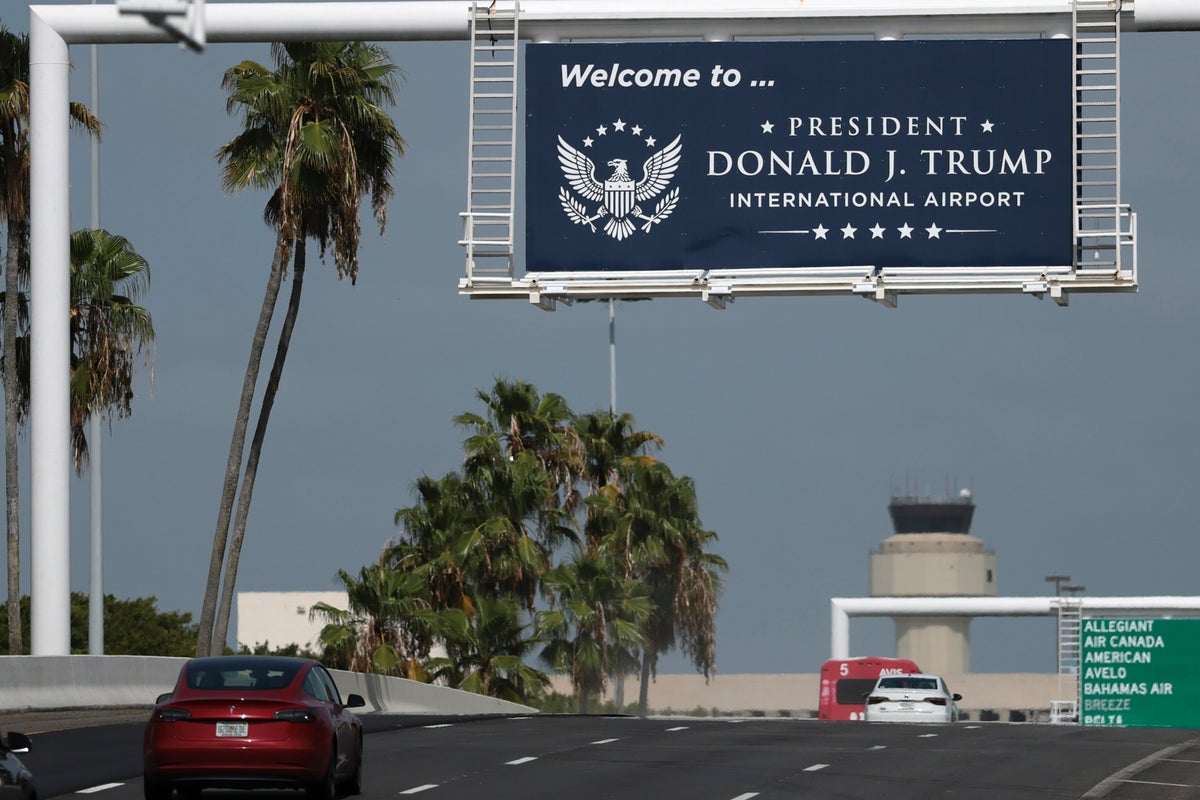
The Federal Aviation Administration has formally proposed special flight rules targeting the airspace immediately surrounding President Donald J. Trump's Mar-a-Lago residence and the adjacent airfield. Prompted by urgent Secret Service threat intelligence, the regulatory shift aims to lock down a one-nautical-mile radius up to 2,000 feet. This regulatory tightening arrives on the heels of the airfield's official rebranding as President Donald J. Trump International Airport, compounding commercial friction with high-stakes national security. Aviation professionals and local stakeholders are staring down an unprecedented operational bottleneck.
Security versus accessibility remains an intractable balancing act in modern American infrastructure. Mar-a-Lago sits uncomfortably close to the primary commercial runways of a busy South Florida transportation hub. When the Secret Service flags persistent vulnerabilities involving unauthorized aircraft and small unmanned drone systems, federal regulators have very few diplomatic options left on the table. Ignoring the threat intelligence is a luxury no administration can afford. Yet clamping down on an active commercial flight path threatens to choke the economic arteries of Palm Beach County.
Commercial airliners following strictly mandated arrival and departure profiles will maintain clearance, narrowly avoiding what would otherwise be a total operational shutdown of the facility's core runway. Without these hyper-specific procedural carve-outs, the airport would effectively cease to function as a viable commercial hub. General aviation operators, however, face a much harsher reality. The margins for error are shrinking to zero. Pilots flying smaller recreational aircraft or charter services must navigate a labyrinth of heightened surveillance, strict radio protocols, and zero-tolerance enforcement zones.
Historical precedent offers a sobering window into how federal agencies handle these high-security real estate bubbles. Back in 2001, the FAA clamped down on the airspace surrounding George W. Bush’s ranch in Crawford, Texas, establishing a protective perimeter that altered local flight planning for years. But Crawford was a rural enclave far removed from a bustling metropolitan airport corridor. Applying similar containment logic to a densely populated coastal tourist destination wrapped around an international airfield creates a completely different magnitude of operational strain.
Local resentment has been quietly simmering since the facility underwent its high-profile name change. Commercial passengers and local homeowners already grappling with noise abatement issues and sporadic presidential movement delays now face permanent structural adjustments to their local skies. Commissioners and municipal planners find themselves sidelined by federal mandates that override local municipal planning. There is nothing local authorities can do to alter a directive issued under the banner of executive protection.
Emergency and law enforcement aircraft retain access provisions, provided pilots stay locked into active two-way communication with air traffic control and secure prior authorization. Those mechanics sound simple on paper. In the chaotic theater of a medical evacuation or a sudden coastal storm response, every extra layer of bureaucratic gatekeeping introduces dangerous latency. Air traffic controllers already managing congested airspace above South Florida are absorbing an immense cognitive load to police these perimeters without triggering gridlock.
The broader implications extend far beyond the runways of Palm Beach. As commercial drone technology proliferates and threats evolve from traditional aviation to low-altitude consumer electronics, federal authorities are scrambling to rewrite the playbook for protecting high-value political targets embedded within urban centers. Mar-a-Lago represents the extreme convergence of private residential security and public infrastructure. Every new restriction codified by the FAA sets a legal and operational benchmark for how future administrations will handle the airspace of leaders living outside the Washington bubble. The federal footprint in local skies is expanding, and the friction between national security and civilian freedom of movement is only beginning to intensify.
FAA implements year-round flight restrictions around Mar-a-Lago
This video provides an on-the-ground look at how local officials and residents are responding to the permanent airspace changes surrounding the Mar-a-Lago estate.