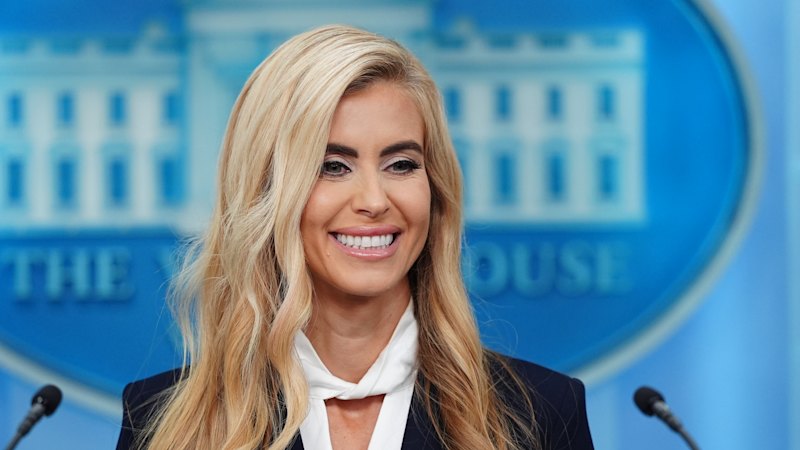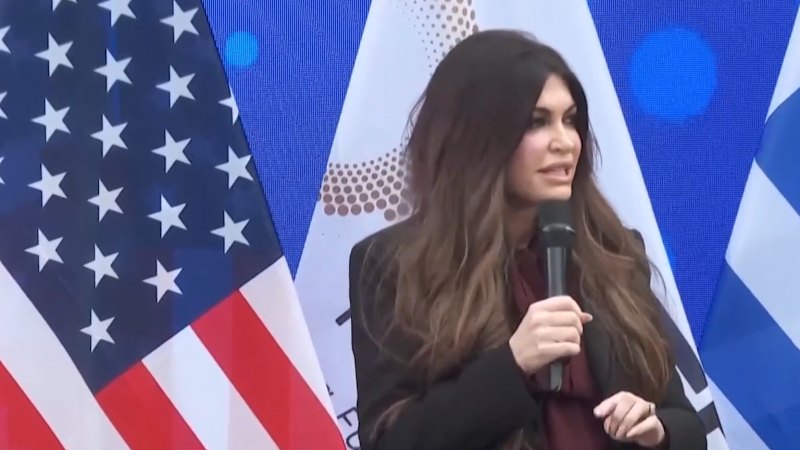
President Donald Trump asked U.S. Ambassador to Greece Kimberly Guilfoyle to resign on October 13, 2026, pulling the plug on a diplomatic tenure that lasted less than a year after misconduct allegations became too loud to ignore. White House Press Secretary Katie Zacharia confirmed the request during her first press briefing, and Guilfoyle stepped down the same day.
It ended fast. Less than a week earlier, Secretary of State Marco Rubio had been in Athens standing beside her at a embassy dedication ceremony. Meanwhile, you can read other developments here: Fourteen Minutes at the Podium and the Art of Saying Nothing.
What broke the arrangement was not a single diplomatic blunder on the ground in Greece. It was a collision between campaign-era habits, private-sector entanglements, and the unforgiving spotlight of Washington and European energy politics. When the White House decides a political appointee has turned from a loyal surrogate into an operational liability, loyalty rarely buys much runway.
http://googleusercontent.com/lmdx_content/fLeKsfcpfTaFElUBZsvpOjsqoNTNuCxSjSSXbreaFtyvBkvYPBIBvwAYHYnQSpnaXSXYOdWledricjRdNZNQAIpUDRnZCdYJjVhrJqQgpVBZTZikMKAPYYDjSzKPOEbiuMjeWZvTuYSEffOPXJaFbROvGuChgcPnLCjrtFav14164 To see the full picture, check out the detailed analysis by NPR.
How Campaign Habits Collided With Diplomatic Rules
Political appointments to major embassies have a long history in American foreign policy. Presidents regularly reward major fundraisers, media surrogates, and close allies with prestigious posts in European capitals, betting that political access matters more than career diplomacy.
Guilfoyle fit that mold closely. A former prosecutor and television host who raised money for Trump campaigns and stood inside his inner circle for years, she was nominated in December 2024, confirmed by the Senate in September 2025, and sworn into the Athens post in November 2025.
The friction started before she ever unpacked in Greece. Reporting in late September and early October 2026 spotlighted text messages from July 2025—just ahead of her Senate confirmation—in which Guilfoyle allegedly asked donor Eric Deters to wire $100,000 toward an American Express balance in a manner that would not show up publicly. Deters said he did not pay.
Her lawyers pushed back hard. They argued that money she sought related to unpaid speaking engagements and public appearances prior to her diplomatic service, and they said she intended to pursue legal remedies to collect debts owed.
Legally, there is a big difference between collecting a disputed speaking fee and trading official access for cash. Politically, that distinction evaporates the moment a headline frames a text message around secrecy and donor money. In embassy work, perception moves faster than legal nuance, and once donors and lawmakers start asking whether an envoy viewed a confirmation window as a financial bridge, the White House's tolerance shrinks to almost nothing.
Energy Deals, Private Jets, and Athens Friction
Athens is never just a postcard posting. In recent years, Greece has positioned itself as a key transit and energy hub for southeastern Europe, especially around liquefied natural gas and regional pipeline routes linking supply lines toward the Balkans.
Reports examining Guilfoyle's time in Greece pointed to intense focus on Balkan energy deals routed through Aktor Group, a Greek company. According to those accounts, a lobbyist tied to Aktor frequently appeared around her meetings, and private-jet travel was arranged in connection with the company.
Her legal team rejected any impropriety over private aircraft, maintaining that Guilfoyle sought, received, and followed State Department guidance and travel rules before every trip.
Travel rules are technical, and diplomats often have narrow lanes for accepting third-party logistics or attending business-heavy events. Yet even when every form is signed, an ambassador's closeness to a single commercial player invites tough questions from rivals, local press, and career staff. When commercial advocacy looks overly concentrated, the embassy's broader credibility as an impartial broker for U.S. industry takes a hit.
Reports also circulated about sharp remarks at an Athens dinner involving political developments in Romania, as well as high staff turnover inside the mission. Representatives disputed the dinner characterization. Still, an ambassador whose internal team is frayed has fewer quiet defenders inside Foggy Bottom when outside scrutiny hits.
Why Rubio and Trump Shifted Course So Quickly
Watching the White House and State Department pivot over a matter of days tells you everything about how modern political crises are managed.
In early October 2026, Rubio defended the embassy's work in Athens and pushed back on reporters asking about unconfirmed claims. At the foot of his aircraft, he told journalists that an anonymous or unverified source was not "the gospel" for him.
That is standard institutional posture. A Secretary of State rarely piles onto an ambassador in public while traveling on her turf.
By October 12, the tone in Washington had hardened. Asked whether he was considering removing her, Trump told reporters he was looking at it and added plainly, "We're not happy". The next day, Zacharia announced the resignation request, and Trump told reporters he did not like what he had been reading.
No criminal charges were reported, and Guilfoyle maintained she had served with honor and would fight false accusations. Meanwhile, the State Department's Office of Inspector General was examining issues touching on gifts, travel, and related conduct, and Democratic lawmakers pressed for records and inquiries.
- Reputational containment: Once a story crosses from niche trade coverage into mainstream political headlines, keeping an embattled envoy in place forces daily answers from the President and the Secretary of State.
- Institutional insulation: Asking for a resignation lets the administration close the chapter quickly without waiting months for an inspector general review or congressional fight to play out.
- Transactional limits: Even longtime political allies become expendable when their controversies begin distracting from broader policy priorities—such as defense sales and regional security alignment in the eastern Mediterranean.
What This Means for Political Envoys and Allies
There is an overlooked irony in how quickly a high-profile political appointment can unravel.
People outside diplomacy often assume that being close to the President makes an ambassador untouchable. In practice, proximity cuts both ways. When a career foreign service officer gets into trouble, bureaucratic inertia can sometimes slow the exit. When a political loyalist draws fire over money, access, or ethics, the President has the cleanest, fastest lever imaginable to cut the cord.
For the Greek government, the episode required careful footing. Foreign Minister Giorgos Gerapetritis indicated that Guilfoyle had been dealt with like any other ambassador, even as opposition figures raised questions about the fallout in Athens. For host nations, sudden ambassadorial exits are awkward, though seasoned governments know that bilateral defense and energy ties outlast individual envoys.
A counter-argument worth taking seriously is that aggressive, deal-oriented envoys sometimes shake up stagnant diplomatic habits and push commercial priorities faster than traditional protocol allows. Proponents of political appointments often argue that outsiders bring urgency and direct access to the Oval Office.
That argument has real merit when boundaries stay crisp. It falls apart the moment personal finances, donor favors, or opaque business ties blur into official conduct.
Anyone advising future political nominees—or evaluating how Washington vets them—can take three practical lessons from the Athens implosion:
- Clean up pre-confirmation finances completely: Any unpaid fees, personal debts, or informal donor communications left hanging before a Senate hearing will resurface under a magnifying glass later.
- Keep commercial lobbying at arm's length: Even legitimate advocacy for U.S. energy or defense interests loses credibility if a single private firm or lobbyist appears too close to the ambassador's orbit or travel.
- Treat compliance officers as shield, not speed bumps: Following ethics and travel rules to the letter protects both the diplomat and the appointing president when political heat arrives.
Diplomatic posts trade on trust—with allies, with career staff, and with the public back home. Once that trust cracks, a resignation request is rarely a surprise.