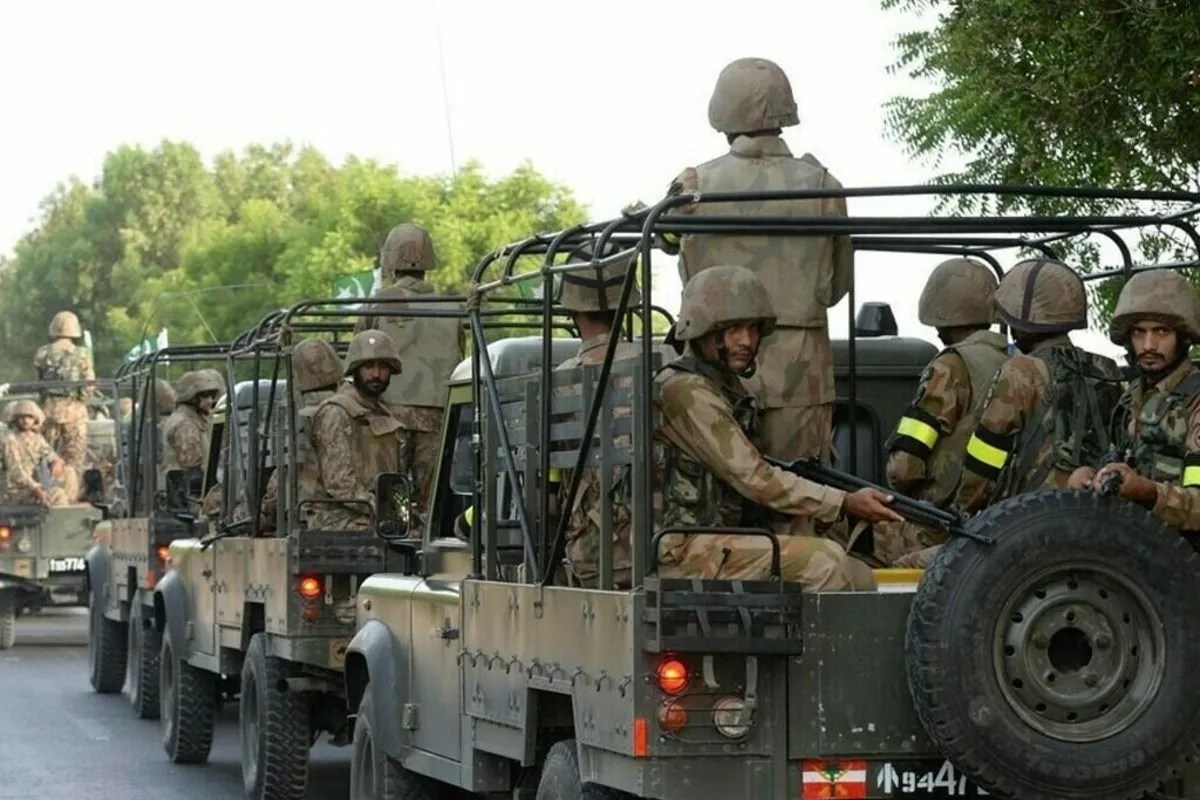
When military press releases announce double-digit militant casualties, the raw statistics rarely capture the grinding operational reality on the ground. Recent security sweeps across Pakistan's southwestern Balochistan province, highlighted by intelligence-based raids that neutralized dozens of combatants including multiple high-profile insurgent cells, point to a deepening cycle of violence. State authorities frame these actions as necessary strikes against externally supported separatist and militant networks. Yet the persistent frequency of ambushes, highway blockades, and coordinated assaults reveals an entrenched conflict far more complex than simple body counts suggest.
The friction is structural. Balochistan is Pakistan's largest province by geographic area while remaining its most sparsely populated and economically marginalized territory. Vast tracts of arid terrain, porous borders, and rugged mountain ranges provide natural sanctuary for armed groups challenging federal authority. For decades, local grievances over resource distribution, missing persons, and economic disenfranchisement have served as fertile recruitment grounds for separatist organizations like the Balochistan Liberation Army alongside various radical Islamist factions. When security forces launch coordinated operations, they are not merely engaging tactical targets; they are attempting to assert state control over a vast territory where federal writ has historically remained contested.
The Anatomy of an Escalating Counter Insurgency
Militant tactics have evolved past traditional ambushes and crude roadside bombs. Recent engagements in districts like Kolpur, Mastung, and areas adjacent to Quetta demonstrate a sharp upward curve in technical sophistication. Armed quadcopters and commercial drones are increasingly deployed to drop improvised munitions on military convoys and patrol units. This shift introduces asymmetrical warfare challenges that conventional infantry units are forced to adapt to on the fly. Counter-terrorism officials note that the acquisition of advanced commercial technology allows insurgent cells to bypass traditional choke points, conducting reconnaissance and targeted strikes with minimal exposure.
The financial architecture sustaining these armed networks warrants closer inspection. Insurgent factions operating in the region rely heavily on extortion, kidnapping for ransom, smuggling rings across neighboring borders, and alleged external financial backing from hostile intelligence services. Federal responses under overarching security frameworks like the National Action Plan and localized campaigns attempt to choke these revenue streams by securing transit routes such as the Quetta-Taftan National Highway. Securing thousands of kilometers of highway infrastructure while simultaneously conducting aggressive search-and-destroy missions in remote ravines requires immense logistical stamina and sustained intelligence-gathering capabilities.
Ground realities dictate that every military deployment carries a steep human cost. Elite officers and regular infantry personnel face relentless attrition from snipers, IEDs, and aerial harassment. Casualties among security forces underscore the lethal hazard of urban and rural clearance operations. When a major or a seasoned havildar falls during a routine patrol sweep, the institutional grief reverberates deeply through military ranks, intensifying retaliatory resolve within the general headquarters. This dynamic locks both sides into an escalatory spiral where diplomatic off-ramps remain virtually nonexistent.
Technological Shifts on the Frontlines
Civilian populations bear the heaviest brunt of this protracted low-intensity warfare. Local residents find themselves caught between aggressive state security measures and violent insurgent coercion. Movement restrictions, identity checks at countless checkpoints, and prolonged communication blackouts disrupt daily commerce and agriculture. Economic development projects tied to major infrastructure corridors frequently stall as construction crews and engineers become primary targets for militant sabotage. The promise of regional prosperity through trade connectivity clashes violently with the reality of an active war zone.
Intelligence collection remains the primary currency of modern counter-insurgency. Traditional informants and human intelligence networks are increasingly complemented by signals intelligence and electronic surveillance. However, the vast expanse of the province creates severe blind spots. Insurgent commanders frequently exploit local terrain knowledge, disappearing into nomadic settlements or cross-border sanctuaries before response units can deploy heavy firepower. Bridging this intelligence gap requires real-time coordination between provincial police, federal intelligence agencies, and specialized frontier corps units—an institutional matrix historically prone to bureaucratic friction and jurisdictional overlap.
Regional geopolitics further complicates internal stability. Federal authorities repeatedly point fingers across international borders, accusing neighboring actors of providing safe havens, logistics, and financial lifelines to insurgent leadership. Conversely, external capitals deny these allegations, arguing that domestic grievances and systemic policy failures within the federation are the primary drivers of unrest. This diplomatic standoff prevents effective cross-border cooperation against shared security threats, leaving local security forces to fight a containment battle on home soil without regional burden-sharing.
The Economics and Geopolitics of Resource Security
Economic imperatives dictate that the federal government cannot afford to abandon Balochistan. The province holds immense mineral wealth, natural gas reserves, and strategic maritime access points essential for long-term national growth. Safeguarding these economic assets requires an unbroken security umbrella. Yet relying solely on kinetic force risks hardening local civilian alienation. Military victories measured in neutralized combatants do little to win the ideological or political allegiance of a skeptical local populace. Sustainable peace demands a dual-track strategy combining rigorous counter-terrorism operations with credible political dialogue and substantial socioeconomic investment.
Logistical endurance separates operational success from catastrophic failure in desert warfare. Troops stationed in remote outposts face extreme weather extremes, supply line vulnerabilities, and constant threat alerts. Maintaining motor pools, repairing armored personnel carriers, and ensuring uninterrupted medical evacuation lines across hundreds of miles of unpaved tracks test the administrative limits of the armed forces. Insurgents exploit these vulnerabilities by targeting fuel tankers, supply trucks, and communication relay stations, attempting to isolate remote garrisons and force tactical retreats.
The Human and Psychological Toll
The psychological dimension of this conflict is equally punishing. Soldiers rotate through hostile sectors where every civilian could be an informant and every stationary vehicle a potential bomb trap. Prolonged deployment cycles erode morale and mental health, creating a silent crisis within military formations. On the opposing side, insurgent fighters endure harsh living conditions in mountain caves, sustained by ideological indoctrination and deep-seated grievances. This psychological entrenchment ensures that neither military pressure nor material hardships easily break the will of committed combatants.
Historical precedent suggests that military operations alone cannot resolve ethno-nationalist insurgencies. Decades of past security campaigns in the region followed a familiar cycle: intense kinetic operations, temporary suppression of militant activity, followed by a resurgence under new leadership structures with renewed vigor. Without addressing core issues of political representation, fair resource allocation, and accountability for human rights abuses, the structural roots of the insurgency remain intact. The state's current kinetic push achieves tactical victories, but the strategic horizon remains clouded by unresolved political questions.
As security forces continue clearance sweeps across rugged valleys and remote mountain passes, the immediate outlook remains volatile. Tactical adaptations by militant groups ensure that conventional military dominance is constantly tested by asymmetric surprises. The state's resolve to eliminate armed challenges through sustained operational campaigns faces the unyielding reality of geographical scale and deep-seated local resentment. Breaking this cycle requires more than intensified search operations; it demands an honest reckoning with the root causes that transform arid valleys into perpetual battlegrounds.