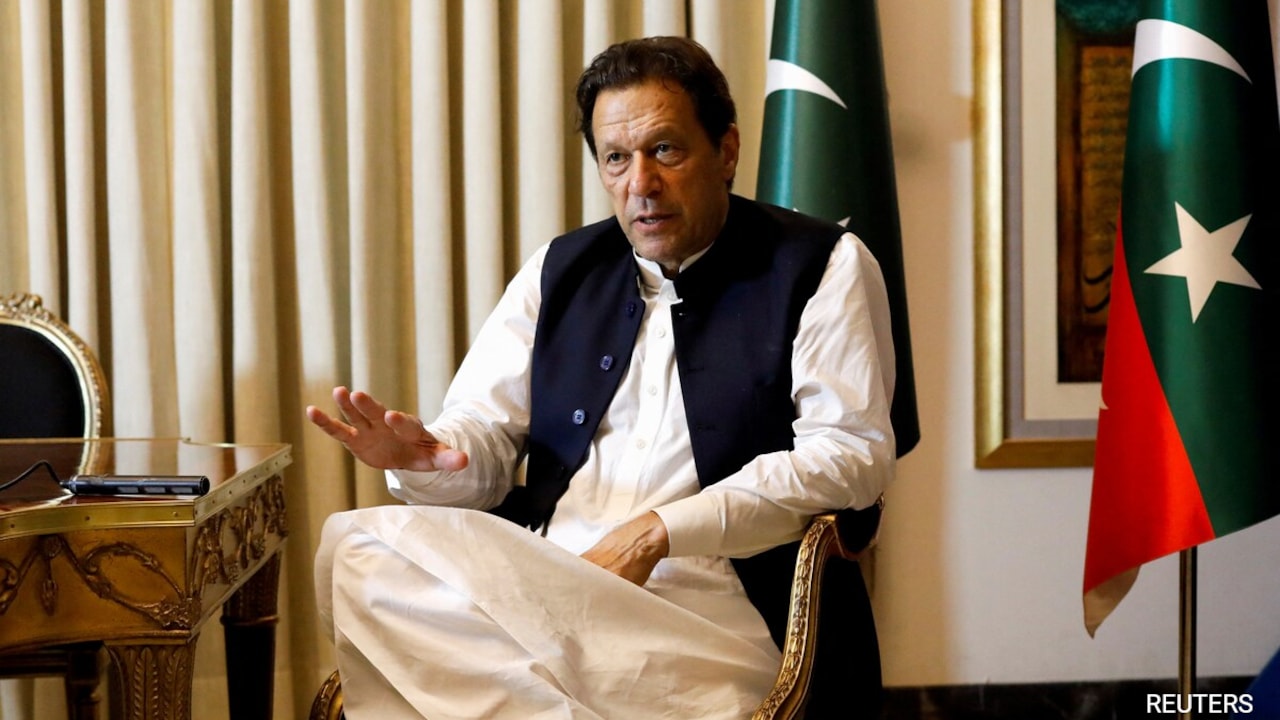
The federal administration in Islamabad has formally moved to challenge a Supreme Court directive that ordered jailed former prime minister Imran Khan transferred from Adiala Jail to a private facility for urgent medical evaluation. This high-stakes legal maneuver pits the executive branch directly against the highest court of the land, escalating an already volatile political confrontation over the health and confinement of the 73-year-old politician.
A three-member bench had previously instructed authorities to move Khan to Shifa International Hospital within a strict 48-hour window, citing rising alarm over his deteriorating vision, high blood pressure, and severe isolation. Yet, government representatives quickly pushed back, filing a formal review petition that argues the judicial order bypasses established prison regulations.
The Legal Fault Lines
At the heart of the government's challenge lies a rigid interpretation of statutory code, specifically invoking Rule 197 of the Pakistan Prison Rules, 1978. State lawyers contend that the procedure for treating convicted prisoners mandates care either within prison walls or inside designated public medical institutions rather than private hospitals.
By ordering a transfer to a private facility like Shifa International Hospital, the administration argues that the Supreme Court inadvertently overlooked statutory frameworks, creating a dangerous legal precedent. Law Minister Azam Nazeer Tarar voiced this friction publicly, stating that the original judicial directive fell outside the strict confines of existing law.
This institutional tug-of-war highlights the precarious boundary between judicial oversight and executive authority in Pakistan. The government's review petition warns that allowing a high-profile convict special medical placement risks fracturing the principle of equal treatment under the law for all inmates. Critics outside government corridors view the maneuver differently, interpreting it as a calculated delay designed to keep the former prime minister tightly sequestered away from independent physicians and public view.
Behind the Medical Alarms
The immediate catalyst for the judicial intervention was a cascade of alarming health reports leaked and shared by close associates, including former president Arif Alvi. Medical disclosures pointed to extreme stress, elevated heart rates, and a severe eye condition known as right central retinal vein occlusion that had previously threatened significant vision loss.
For months, the Pakistan Tehreek-e-Insaf (PTI) party and members of Khan's family have asserted that his prolonged solitary confinement amounts to calculated psychological and physical torture. Sons Kasim and Sulaiman Khan repeatedly voiced fears regarding his safety, pointing to months of restricted access where legal counsel and relatives were routinely blocked from visiting him.
Conversely, jail superintendents and government medical boards presented contrasting evaluations to the bench. State-backed reports insisted that Khan's vital signs remained stable and that his eyesight had largely recovered following multiple check-ups by government specialists. This stark discrepancy between official optimism and family-led panic turned the courtroom into a battleground of competing medical narratives, forcing the judiciary to step in to protect fundamental rights.
The Broader Political Shockwave
Imran Khan has remained incarcerated since August 2023 across multiple convictions stemming from corruption charges, state secrets cases, and other legal challenges following his ouster in a 2022 parliamentary no-confidence vote. His supporters maintain that these trials are politically orchestrated to permanently neutralize his massive populist following.
The friction over his medical status is emblematic of a broader crisis gripping the nation's democratic institutions. The military-backed administration faces mounting international scrutiny from organizations like Amnesty International over human rights violations and the systematic silencing of political opposition.
As the Supreme Court prepares to weigh the government's review petition ahead of the next major hearing date, the standoff threatens to ignite fresh street demonstrations. The ultimate resolution of this hospital transfer dispute will test the limits of judicial independence against the entrenched power of the state apparatus.