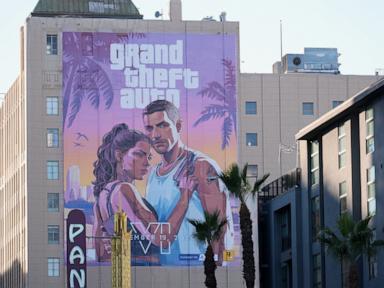
Grand Theft Auto VI arrives at a moment when the traditional video game industry is buckling under bloated budgets, massive layoffs, and shrinking risk tolerance. Rockstar Games and its parent company, Take-Two Interactive, are not merely releasing a sequel; they are staging a multi-billion-dollar referendum on whether single-player blockbuster development can still carry an entire publicly traded corporation. Set in the neon-soaked, sun-bleached expanse of Leonida—Rockstar’s satirical mirror of modern Florida—the game centers on dual protagonists Lucia and Jason while attempting to recapture the cultural stranglehold that turned Grand Theft Auto V into an unprecedented financial juggernaut.
The stakes are historic. Over thirteen years have passed since Grand Theft Auto V launched on seventh-generation console hardware, during which time the predecessor sold well over 200 million copies and generated billions in recurring revenue through Grand Theft Auto Online. Wall Street has spent years pricing Take-Two’s stock around the eventual arrival of this single release. When a single piece of entertainment software carries the financial expectations of a small nation’s GDP, creative decisions stop being purely artistic and start functioning as macroeconomic indicators. If you enjoyed this post, you might want to look at: this related article.
The Dual-Protagonist Shift and Narrative Risk
For decades, the Grand Theft Auto formula relied on an escalating cycle of cynicism. Protagonists were either blank-slate criminals climbing an arbitrary ladder or exaggerated caricatures designed to mock American excess from a safe, ironic distance. Bringing in Lucia as the franchise’s first modern female lead alongside her partner, Jason, signals a deliberate structural recalibration by Rockstar’s writing room.
This is not simply a cosmetic update for modern demographics. Structuring a crime saga around a romantic and criminal partnership—drawing clear structural inspiration from the Bonnie and Clyde archetype—forces the narrative to deal with interpersonal friction rather than pure, unbridled nihilism. In Grand Theft Auto V, the three-protagonist system allowed players to jump between Michael, Franklin, and Trevor, creating a kinetic, heist-driven rhythm that occasionally sacrificed emotional cohesion for spectacle. Narrowing the focus to two characters bound by mutual dependence raises the dramatic tension. For another perspective on this story, refer to the recent coverage from BBC.
Yet this narrative shift carries substantial creative risk. Rockstar built its empire on ruthless satire that spared no political faction, subculture, or corporate entity. Over the past decade, however, internet culture and American public life have grown so absurd that traditional parody struggles to keep pace. Early footage of Leonida leans heavily into viral social media clips, Florida-man headlines, and livestreaming culture. The danger for Rockstar is that mirroring reality too closely makes the satire feel redundant rather than biting. If the real world already looks like a Grand Theft Auto radio broadcast, the writers have to work twice as hard to find an angle that actually stings.
The Departure of Old Guard Voices
Evaluating the narrative direction also requires looking at who is no longer in the building. Dan Houser, co-founder and longtime head writer whose cynical, sharp-tongued sensibility defined every mainline entry from Grand Theft Auto III through Red Dead Redemption 2, departed Rockstar in 2020. Lazlow Jones, the architect behind the franchise’s iconic talk radio stations and pedestrian dialogue, left the same year.
Their exits represent the single biggest creative unknown surrounding Grand Theft Auto VI. Writing hundreds of hours of background chatter, commercial parodies, and mission banter that stays funny after a decade of replays is an extraordinarily specific craft. While veteran developers like Sam Houser and long-tenured directors remain at the helm, the absence of the original writing leadership raises legitimate questions about whether the tonal balance between gritty crime drama and absurd comedy will hold steady.
Audio Architecture and the Economics of the Soundtrack
Music in Grand Theft Auto has never been mere background noise; it is the primary mechanism through which Rockstar anchors a fictional city in real-world cultural memory. From the synth-pop nostalgia of Vice City to the West Coast hip-hop of San Andreas, the radio dial acts as an emotional time capsule. For Leonida and Vice City, Rockstar faces a licensing environment that has changed completely since 2013.
Music rights holders now fully understand the astronomical value of video game placements. When Grand Theft Auto V launched, record labels treated game sync deals as secondary promotional avenues. Today, major labels and independent artists alike view Rockstar’s radio stations as premier global distribution platforms capable of reviving dormant catalogs and generating massive streaming spikes overnight. Consequently, licensing fees have skyrocketed, and perpetual digital rights have become notoriously difficult to secure without triggering future delisting headaches.
To navigate these licensing traps, Rockstar has spent the last several years quietly building its own music infrastructure, even launching a dedicated record label in partnership with Circoloco to sign and distribute original tracks. This gives the studio direct ownership over master recordings, allowing them to integrate club culture, electronic music, and underground hip-hop into the game world without facing expired contracts ten years down the line.
Consider how a modern soundtrack functions inside an open-world ecosystem:
- Dynamic Stem Mixing: Modern game engines no longer just play flat MP3 files over a car stereo. Audio systems dynamically strip away vocals or basslines depending on whether the player is inside a nightclub, walking past a muffled car window, or entering a high-speed police pursuit.
- Cultural Curation Over Top-40 Hits: While legacy tracks—such as Tom Petty’s "Love Is a Long Road" featured in the debut reveal—provide immediate emotional hooks, the heavy lifting falls on regional Florida bass, Latin trap, reggaeton, and underground dance music that give Leonida its distinct geographic identity.
- Live Service Updates: Unlike the static radio dials of the PlayStation 2 era, the soundtrack of Grand Theft Auto VI is built to expand continuously, adding new stations, DJ mixes, and exclusive premieres as the online component evolves.
The Financial Anatomy of a Mega-Release
To understand why Take-Two Interactive has staked its corporate future on this release, you have to look at the brutal economics of modern AAA game development. Between 2018 and 2026, development budgets for top-tier open-world titles ballooned past the $300 million mark, with marketing expenditures frequently matching production costs dollar for dollar. Grand Theft Auto VI sits in an entirely different stratosphere, with industry analysts routinely estimating total combined development and marketing outlays north of $1 billion.
No other publisher on earth can comfortably absorb that kind of capital burn over an eight-to-ten-year development cycle. Take-Two managed it only because Grand Theft Auto Online functioned as an automated printing press, generating hundreds of millions of dollars annually through Shark Card microtransactions and GTA+ subscriptions with minimal relative overhead.
| Financial & Market Metric | Grand Theft Auto V (2013 Launch) | Grand Theft Auto VI (Current Era) |
|---|---|---|
| Primary Hardware Base | PS3 & Xbox 360 (~160M combined units) | PS5 & Xbox Series X/S (Smaller initial base) |
| Standard Retail Price | $59.99 USD | $69.99+ USD (With tiered deluxe editions) |
| Revenue Model | Box sales first; Online added later | Simultaneous box sales & integrated live service |
| Development Cycle | ~5 years | 8+ years (Post-Red Dead Redemption 2) |
| Corporate Dependency | High, backed by multiple active franchises | Extreme; serves as Take-Two's primary growth engine |
This table highlights a critical structural vulnerability that optimistic market projections often gloss over. When Grand Theft Auto V launched in September 2013, it released at the very end of the PlayStation 3 and Xbox 360 lifecycle, tapping into a massive, fully mature install base of roughly 160 million consoles. Grand Theft Auto VI launches exclusively on current-generation hardware—PlayStation 5 and Xbox Series X/S—where the combined global install base is significantly smaller, and where PC players are once again forced to wait for a delayed port.
Rockstar’s traditional staggered release strategy—launching on consoles first before bringing the game to PC a year or two later—is a calculated financial play designed to maximize double-dipping. Hardcore fans buy the console version at launch and inevitably purchase the PC version later for superior frame rates and modding capabilities. However, in an era where PC gaming accounts for a massive share of global software revenue, holding back the PC release leaves billions of dollars on the table during the crucial launch window.
Technical Ambition Versus Console Reality
Every mainline Rockstar release sets a new benchmark for open-world simulation, and the technical leap demonstrated in the RAGE (Rockstar Advanced Game Engine) upgrades for Leonida is staggering. The density of non-player characters on Vice Beach, the strand-based hair physics, the volumetric lighting cutting through humid Florida air, and the complex water simulations represent the absolute ceiling of what current console silicon can render.
That technical ambition brings an unavoidable hardware bottleneck. Console players have grown accustomed to choosing between 30 frames per second in high-resolution fidelity modes and 60 frames per second in performance modes. Grand Theft Auto VI is intensely CPU-bound. Rendering hundreds of independent AI routines, complex vehicle physics, and sprawling draw distances simultaneously pushes the Zen 2 processors inside the PlayStation 5 and Xbox Series X to their thermal and architectural limits.
If the game launches locked at 30 frames per second on base consoles, Rockstar will face immediate friction from an audience conditioned by years of 60fps standards. Yet scaling back crowd density or AI simulation just to hit a higher frame rate would undermine the very sense of a living, breathing world that justifies the game’s existence. Hardware manufacturers, particularly Sony with the PlayStation 5 Pro, are banking heavily on Grand Theft Auto VI acting as the ultimate system seller—the singular piece of software capable of convincing millions of holdouts to finally upgrade their living room hardware.
The Live-Service Transition and Creator Economy
The single-player campaign of Lucia and Jason will dominate headlines during launch month, but Take-Two’s long-term valuation hinges entirely on what happens six months later. The true battleground is the next iteration of Grand Theft Auto Online.
Over the past five years, Rockstar watched something unexpected happen to Grand Theft Auto V on PC. While official online servers remained profitable, massive audiences migrated to FiveM and RedM—community-run roleplay servers where players worked virtual jobs, ran simulated police departments, and created custom storylines that dominated Twitch and YouTube viewership. Instead of shutting these modders down with cease-and-desist letters, Rockstar made a stunning strategic pivot in 2023 and acquired Cfx.re, the team behind FiveM.
That acquisition revealed Rockstar’s blueprint for the future. Grand Theft Auto VI is not just being built as a closed theme park; it is being engineered as a creator platform designed to compete directly with Fortnite and Roblox for user-generated content. By bringing the top roleplay developers in-house, Rockstar signaled its intention to formalize user-generated servers, custom economies, and creator monetization directly inside the official ecosystem.
This creates a delicate balancing act. If Rockstar monetizes the new online environment too aggressively out of the gate—locking basic vehicles, properties, or customization tools behind exorbitant in-game price tags—they risk alienating the player base before the ecosystem takes root. Conversely, if the economy is too generous, recurring revenue projections on Wall Street take an immediate hit.
Cultural Exhaustion and Industry Disruption
Beyond balance sheets and frame rates lies a broader industry phenomenon: the absolute paralysis Grand Theft Auto VI has inflicted on competing publishers. For well over a year, major gaming executives have treated the game’s release window like an approaching Category 5 hurricane. Release calendars across the industry have been quietly rearranged, delayed, or pushed forward simply to avoid launching within six weeks of Rockstar’s juggernaut.
No other entertainment franchise commands that level of gravitational pull. Hollywood studios routinely schedule rival blockbusters on the same weekend; in gaming, launching a $200 million action title alongside Grand Theft Auto VI is considered corporate malpractice. Consumer time and discretionary spending are finite, and Rockstar threatens to vacuum up both for months on end.
Yet this dominance comes with a hidden cost to the medium itself. When one game absorbs a decade of development time and a billion dollars in capital, it sets an impossible standard that destroys mid-tier studios trying to imitate it. Players begin expecting hyper-realistic puddle reflections and bespoke animations for every minor interaction as a baseline requirement, bankrupting smaller developers who lack Rockstar’s infinite runway. Meanwhile, Rockstar itself has paid a steep human price to achieve this perfection, having spent years dismantling its notorious "crunch" culture after widespread criticism during the final push for Red Dead Redemption 2. Maintaining quality at this scale without burning out thousands of developers remains an ongoing operational test.
Grand Theft Auto VI will almost certainly shatter entertainment sales records within its first seventy-two hours, validating Take-Two’s decade-long bet on concentrated, monolithic development. Whether that financial triumph proves sustainable for an industry already straining under the weight of its own ambitions is a question no amount of Vice City neon can illuminate.