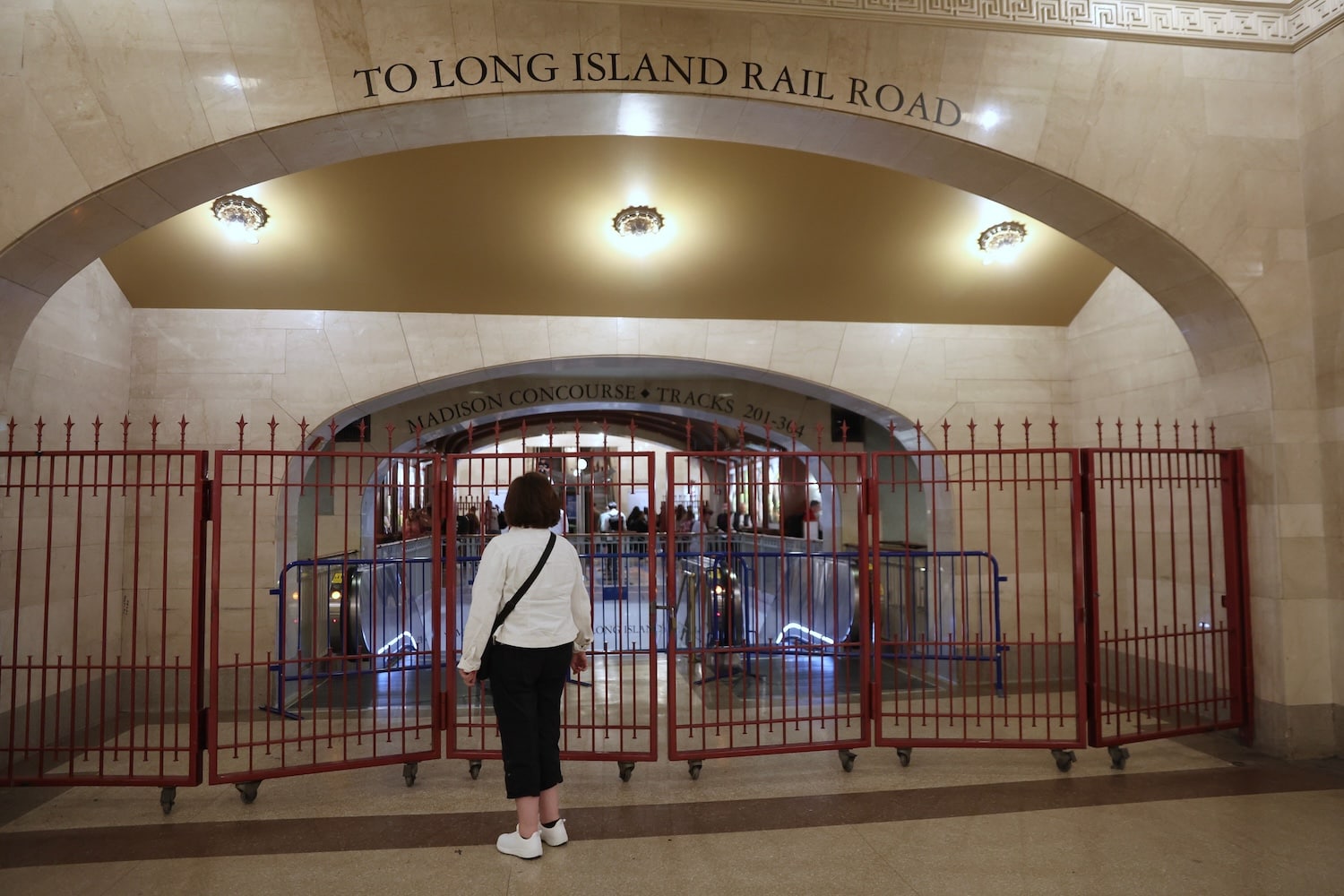
The sudden, crippling shutdown of the Long Island Rail Road (LIRR), North America’s largest commuter rail network, has brought transit across the New York metropolitan region to an abrupt halt. A coordinated walkout by five labor unions representing locomotive engineers, machinists, and signalmen has left more than 250,000 daily passengers stranded, forcing regional leaders to plead for federal intervention. While public officials frame the disaster as a sudden breakdown in contract talks, the crisis is actually the result of years of mounting fiscal pressure, political miscalculation, and systemic inflation that transit systems across the country are failing to manage.
The immediate fallout has turned major transit hubs like Penn Station into ghost towns. Roll-down gates block platform access, and electronic departure boards show nothing but cancelled trains. Beyond the immediate weekend chaos for sports fans and tourists, the long-term economic damage to the region is mounting quickly. State officials have openly admitted that the emergency shuttle buses deployed by the Metropolitan Transportation Authority (MTA) cannot handle a fraction of the weekday volume, leading to an official directive for anyone who can work from home to do so immediately.
The Economics of a Rail Stagnation
The core tension of this dispute lies in a structural math problem that public transit agencies across the country are facing.
Labor officials representing the striking workers argue that substantial, structural wage increases are a necessity, driven by the soaring cost of living in the New York metropolitan area. According to union representatives, workers are falling behind inflation and require baseline salary adjustments to preserve their purchasing power.
Conversely, management at the MTA claims they have already put forth generous compensation packages, including a multi-year wage hike structure paired with lump-sum payments. The agency insists that giving in to the union's full demands would spark a fiscal chain reaction.
To fund the contract terms demanded by labor, the MTA would be forced to increase passenger fares by as much as 8%. That is double the projected 4% rate hike already scheduled. Alternatively, the agency would have to rely on local tax increases, a move that local politicians desperately want to avoid.
This creates a zero-sum game where either the transit workers lose ground to inflation, or the riding public absorbs the cost during an already difficult economic period.
The Limits of Modern Labor Mediation
The collapse of these negotiations also highlights the limitations of federal labor frameworks when dealing with modern economic pressures.
Because interstate and commuter rail systems operate under specific federal labor laws, contract disputes generally go through a long process of mandatory mediation before a strike can legally occur. The National Mediation Board intervened in an attempt to broker a late-stage deal, but those efforts fell through just as the legal strike deadline arrived.
Political finger-pointing began almost immediately after the midnight walkout. State leaders blamed federal officials for cutting the mediation timeline short, while federal representatives distanced themselves from the breakdown, claiming they had no direct involvement in the local operational standoff.
This political blame game ignores the reality that mediation cannot easily bridge a structural funding gap. When an agency genuinely lacks the cash reserves to cover higher baseline wages without raising consumer costs, third-party arbitration rarely yields a magic solution. Instead, it delays the inevitable friction until a strike becomes the only remaining point of leverage.
The Collateral Damage of Commuter Standoffs
The impact of a major rail shutdown goes far beyond the transit agency and its immediate workforce.
A prolonged stoppage threatens to destabilize local businesses that rely heavily on the daily influx of commuters. Restaurants, convenience stores, and retail spaces inside urban centers see immediate drops in foot traffic when a quarter of a million people are told to stay home.
Furthermore, the regional highway network cannot handle the excess volume. If even a fraction of those 250,000 daily riders choose to drive into the city, the resulting traffic jams will choke commercial trucking and emergency services, multiplying the economic drag of the strike.
Urban transit advocates point out that these disruptions expose the fragility of regional transportation networks that rely too heavily on a single mode of travel. Without viable, high-capacity redundancies, the entire economic engine of a major metropolitan area remains highly vulnerable to labor disputes and infrastructure failures.
The Broken Blueprint for Public Transit Funding
The current crisis illustrates a broader truth about how public utilities are financed. For decades, major transit networks have operated on a delicate mix of passenger fares, government subsidies, and tax revenue. When inflation drives up operating costs and worker living expenses simultaneously, this funding model breaks down.
If fares are raised too high, ridership drops, which lowers revenue and requires even greater government bailouts. If fares are kept artificially low, agencies cannot afford to retain skilled labor, leading to service cuts and infrastructure decay.
Resolving the immediate strike requires more than just getting both sides back to a conference room. It requires a fundamental evaluation of how vital infrastructure is funded when traditional revenue streams can no longer keep pace with macroeconomic realities. Transit systems cannot continue to absorb rising costs without a sustainable strategy, and until that broader funding issue is addressed, shutdowns like this will become a recurring reality for commuters nationwide.