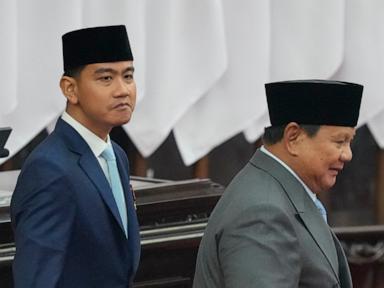
Indonesia's vice president has offered to resign amid mounting legal and political challenges regarding his constitutional eligibility to hold the nation's second-highest office. The sudden move, triggered by intense scrutiny over last-minute rule changes that cleared his path to the ballot, threatens to destabilize Southeast Asia's largest economy and test the integrity of its democratic institutions.
It was a predictable collision. When political dynasties bend constitutional guardrails to secure short-term electoral victories, the resulting legitimacy deficit rarely stays buried for long. For months, Jakarta's political establishment operated under the assumption that sheer parliamentary muscle and high approval ratings could insulate the executive branch from procedural blowback. They were wrong. For an alternative perspective, read: this related article.
How the Eligibility Dispute Started
To understand how the palace reached this breaking point, you have to look back at the mechanics of the candidate registration process. Under Indonesia's election laws, candidates for president and vice president must meet strict age and experience thresholds. Historically, these rules served as a straightforward filter to ensure executive maturity in a sprawling archipelago of over 270 million people.
Then came the legal maneuvering. A controversial judicial ruling altered the eligibility criteria just days before the registration deadline, creating a narrow exemption for individuals who had previously held elected regional office. Critics immediately flagged the timing and specificity of the decision. Rather than reading like a broad constitutional interpretation, the ruling functioned like a custom-tailored key designed to unlock a single door. Further analysis on the subject has been provided by USA Today.
At the time, the political machinery rolled forward anyway. The electoral commission accepted the candidacy without waiting to harmonize its own internal regulations with the new court mandate. That administrative shortcut, dismissed by insiders as a minor technicality during the heat of campaigning, became the exact legal vulnerability opposition lawyers and civil society groups have spent the last several months exploiting.
The Mechanics of the Constitutional Challenge
The core argument against the vice president's eligibility rests on two distinct pillars:
- Procedural sequence: Opponents argue the electoral commission violated administrative law by registering the ticket before updating its formal guidelines, rendering the initial acceptance legally defective.
- Judicial conflict of interest: Ethics panels have already sanctioned senior judicial figures over family ties to the incoming administration, tainting the original ruling that made the candidacy possible in the first place.
You cannot separate the legal text from the political optics. In a young democracy that fought hard to dismantle authoritarian rule in 1998, the perception that courts are being weaponized for familial succession strikes a raw nerve. Every time a new petition lands on the docket, it forces the state apparatus to defend a process that even sympathetic observers admit looked rushed.
Why an Offer to Resign Changes the Calculus
Offering to step down is rarely an act of pure surrender in Jakarta; it is almost always a calculated tactical move. By placing a resignation offer on the table, the vice president shifts the burden of responsibility onto the president, the ruling coalition, and the parliamentary leadership.
Consider the leverage dynamics at play. If the president accepts the resignation, it validates the opposition's claim that the administration's mandate is fundamentally flawed. It also triggers a messy constitutional succession process to fill the vacancy, burning political capital during the critical early phase of the governing agenda. Conversely, if the president rejects the offer and insists his deputy stay on, it signals unconditional backing—forcing the entire coalition to absorb the ongoing reputational damage together.
I have watched similar brinkmanship play out across emerging markets for decades. When a senior official offers their head to save the broader administration, they are usually betting that the coalition cannot afford the chaos of actually taking it.
The Constitutional Replacement Process
If the resignation were formally accepted and processed, Indonesia's 1945 Constitution outlines a specific, albeit rarely tested, mechanism to fill the void. Unlike systems where a new running mate is simply appointed by executive decree, Jakarta requires legislative intervention.
- Formal submission: The vice president must submit a written resignation to the People's Consultative Assembly, known locally as the MPR.
- Presidential nomination: Within 60 days of the vacancy, the president must propose two candidates to the legislature to fill the remaining term.
- Legislative vote: The MPR convenes a special session to select one of the two nominees via a majority vote.
This process is an open invitation for legislative horse-trading. Every party in the governing coalition—and several currently sitting in opposition—would immediately demand cabinet seats, state-owned enterprise directorships, or budget concessions in exchange for their votes in the assembly. The administrative paralysis alone could stall key infrastructure and fiscal reforms for half a year.
Economic Fallout and Investor Sentiment
Markets hate constitutional ambiguity. While Jakarta's political elite debates procedural nuances and judicial ethics, institutional investors are watching the rupiah and sovereign bond yields for signs of institutional decay.
Indonesia has spent the better part of twenty years building a reputation for macroeconomic stability, disciplined fiscal deficits, and predictable governance. Foreign direct investment into the country's nickel processing, renewable energy, and digital infrastructure sectors relies heavily on the assumption that contracts signed today will be honored by stable institutions tomorrow.
When the legitimacy of the executive branch is called into question, risk premiums quietly tick upward. A hypothetical global infrastructure fund looking at a ten-year commitment in Java or Kalimantan does not care about the interpersonal drama inside the palace; it cares whether the regulatory approvals signed by the current administration could be invalidated by a future court or legislative inquiry. Prolonged political uncertainty forces capital to sit on the sidelines.
The Coalition Dilemma
Inside the parliament, party leaders are running their own cold-blooded math. Indonesia's political system relies on massive, multi-party "rainbow coalitions" to pass legislation. Loyalty in these alliances is transactional, not ideological.
Right now, coalition partners are weighing the cost of defending the vice president against the potential rewards of positioning themselves as the kingmakers in a replacement scenario. Several mid-sized parties that joined the government late in the game have zero emotional attachment to the vice president's political survival. If public polling shows that the eligibility scandal is dragging down the coalition's broader popularity ahead of regional elections, those allies will quietly stop defending him in the press.
That silence is usually the first sign that a political figure's position has become untenable. In Jakarta, politicians rarely stab you in the front; they simply stop returning your phone calls when the reporters start asking hard questions.
What History Tells Us About Executive Crises in Jakarta
Indonesia is no stranger to mid-term executive turbulence. In 1998, economic collapse and street protests forced Suharto to step down, elevating Vice President B.J. Habibie to the presidency under deeply contested constitutional circumstances. Three years later, in 2001, the legislature impeached President Abdurrahman Wahid after months of bitter institutional warfare, installing Megawati Sukarnoputri in his place.
Those historical episodes share a common thread: when legal disputes intersect with street-level frustration and elite fragmentation, formal rules bend to political reality. However, the current crisis differs from 1998 and 2001 in one crucial respect. There is no underlying economic collapse driving masses of citizens into the streets. Inflation remains relatively contained, and the broader economy is still growing.
Because the pressure is coming primarily from legal institutions, student activists, and rival political elites rather than an acute financial panic, the palace still retains room to maneuver. The administration is not fighting an existential collapse; it is fighting a war of attrition over its own moral authority.
The Erosion of Institutional Trust
The deeper damage here goes beyond the fate of a single politician. Every time constitutional rules are stretched to accommodate political expediency, the guardrails become a little bit weaker for the next administration.
Look at the trajectory of Indonesia's independent institutions over the past decade:
- The Constitutional Court: Once widely respected as a fierce guardian of democratic reforms, its reputation has suffered severe blows from ethics scandals and accusations of political compliance.
- The Electoral Commission: Repeated administrative missteps and perceived favoritism have eroded public confidence in the neutrality of election referees.
- Anti-corruption agencies: Legislative revisions have steadily clipped the wings of independent investigators, reducing their ability to check executive overreach.
When referees lose their credibility, players stop respecting the whistle. Even if the vice president survives this current storm—whether through a rejected resignation offer or a favorable procedural dismissal—the precedent has already been set. Future political actors now know that procedural shortcuts and contested judicial rulings can be used to bypass statutory limits, provided they have enough parliamentary backing to weather the initial outrage.
The Reality of the Gray Areas
To be fair to the administration's defenders, the legal arguments surrounding the eligibility dispute are not entirely black and white. Under strict constitutional doctrine, rulings issued by the Constitutional Court are final and binding the moment they are read. Supporters argue that retroactively invalidating a candidate who relied on the nation's highest court creates its own form of legal chaos.
If citizens and candidates cannot rely on a standing ruling from the Constitutional Court when filing their paperwork, what is the point of having a supreme judicial arbiter? From this perspective, punishing the candidate for the procedural sloppiness of the electoral commission or the ethical lapses of individual judges violates basic principles of legal certainty.
That is a legitimate legal counter-argument, and it is precisely why this crisis has proven so difficult to resolve cleanly. Both sides are invoking fundamental democratic principles. One side demands accountability for a flawed, nepotistic process; the other demands stability and respect for the finality of electoral outcomes.
Yet legal technicalities rarely settle political crises. Voters do not read administrative law briefs; they look at the big picture and decide whether the system feels rigged. By offering his resignation, the vice president has acknowledged that the political cost of ignoring those questions has finally grown too high, forcing the palace to confront a legitimacy crisis it can no longer simply outvote.