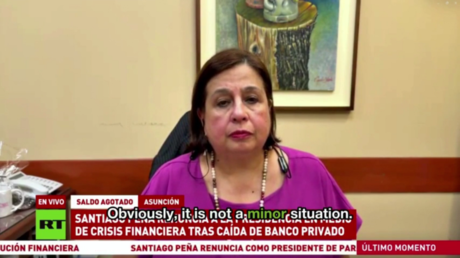
When San Cristóbal, one of Paraguay's most prominent financial cooperatives, unraveled under the weight of systemic fraud and illicit money management, thousands of working-class depositors lost access to their life savings. The collapse triggered legislative panic in Asunción, exposing how politicians and financial executives used non-bank institutions to siphon wealth while regulatory bodies looked the other way. Former President Mario Abdo Benítez faced direct accusations from opposition lawmakers for failing to oversight the institution before its eventual intervention. The crisis revealed a structural failure in how Latin American credit unions are monitored, transforming a localized financial scam into a broader sovereign liability.
Financial cooperatives occupy a unique position in Paraguay's economy. Unlike commercial banks, which face strict capital reserve mandates under the Central Bank of Paraguay, cooperatives fall under the jurisdiction of the National Institute of Co-operativism (INCOOP). This regulatory divide created a massive loophole. For two decades, these institutions operated with bank-like deposits while enjoying light-touch oversight designed for small agricultural credit pools.
The Mechanics of the San Cristóbal Insolvency
The money did not vanish overnight. It drained out through a deliberate architecture of unsecured loans, political favors, and phantom collateral.
San Cristóbal operated on a simple premise: higher interest rates for depositors than traditional banks could offer. That yield attracted small business owners, pensioners, and civil servants. Behind the scenes, executive management funneled millions into high-risk, uncollateralized loans to politically connected individuals and shell companies.
When borrowers defaulted, management did not write off the non-performing assets. They extended new loans to cover old interest payments.
+-----------------------------------------------------------------------+
|                       THE COOPERATIVE DRAIN                           |
+-----------------------------------------------------------------------+
|  1. Retail Deposits                                                   |
|     Pensioners and workers deposit funds for above-market yields.     |
|                                                                       |
|  2. Uncollateralized Lending                                          |
|     Executive leadership directs funds to political allies and shells.|
|                                                                       |
|  3. Regulatory Blindspot                                              |
|     INCOOP lacks real-time auditing metrics required for bank risks.  |
|                                                                       |
|  4. Insolvency Masking                                                |
|     Evergreening loans conceal defaults until liquidity runs dry.     |
+-----------------------------------------------------------------------+
This practice, known as evergreening, masked the cooperative's true financial condition for years.
When the National Anti-Narcotics Secretariat (SENAD) launched Operation A Ultranza Py, the façade crumbled. The investigation linked key cooperative leaders, including former lawmaker Juan Carlos Ozorio, to organized crime and money laundering networks. Depositors rushed to branches across Asunción to withdraw their capital, but the vaults were empty.
Legislative Inaction and Political Protection Rackets
Opposition senators pointed the finger directly at the executive branch. The charge was not merely negligence, but active tolerance of a system that funded political campaigns.
Under Mario Abdo Benítez’s administration, warnings from internal auditors sat on government desks without triggering formal police intervention. Senate hearings highlighted how political candidates routinely used cooperative funds to finance campaign logistics, bypassing campaign finance transparency laws. The cooperative sector had effectively turned into a shadow banking network for political actors.
INCOOP's structural weakness exacerbated the damage. The agency suffered from chronic underfunding, a lack of specialized forensic accountants, and a board composition susceptible to political appointments. While the Central Bank maintained strict anti-money laundering controls over traditional banks, INCOOP lacked the legal framework to enforce immediate asset freezes or mandate stress testing.
Why Depositors Suffer the Loss
Commercial bank deposits in Paraguay carry state-backed insurance up to specific caps. Cooperatives do not enjoy equivalent backing.
When San Cristóbal failed, depositors learned that their money was not backed by government reserves. The liquidation process meant account holders were pushed to the back of the creditor line, behind secured bondholders and government tax authorities.
The social cost cut deep across the country. Small merchants lost their operating capital. Families lost funds set aside for housing, healthcare, and retirement. The immediate economic contraction hit low- and middle-income communities hardest, proving that financial deregulation at the bottom of the income pyramid carries the highest social price.
Structural Reforms Required to Prevent Systemic Contagion
Fixing Paraguay's cooperative banking sector requires abandoning the political myth that these entities are simple community groups. They function as financial institutions and must be regulated accordingly.
- Unified Regulatory Authority: Transfer oversight of large financial cooperatives from INCOOP to the Central Bank of Paraguay to enforce standardized reserve ratios and audit standards.
- Mandatory Deposit Insurance: Establish a mandatory deposit guarantee fund for all registered credit unions, financed by risk-weighted premiums on member institutions.
- Beneficial Ownership Transparency: Mandate public registries for all borrowers taking loans above specific thresholds to prevent self-dealing by cooperative executives.
- Whistleblower Protection Mechanisms: Implement legal protections and financial incentives for internal auditors who report illegal lending activities directly to federal prosecutors.
The crisis at San Cristóbal is not an isolated bad-apple scenario. It is the predictable outcome of allowing multi-million-dollar financial entities to operate in a regulatory void. Until lawmakers strip political influence from credit union oversight and subject these institutions to the same rigor as commercial banks, the savings of ordinary citizens will remain collateral damage for political expediency.


