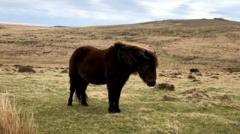
A quiet panic has settled over the windswept uplands of Dartmoor. While recent headlines celebrate new conservation measures designed to shield the region’s iconic semi-wild ponies from the threat of culling, these superficial victories obscure a far grimmer reality. The truth is that the traditional grazing systems keeping these herds alive are on the verge of structural collapse. Recent intervention schemes, while well-intentioned, function as temporary bandages on a deep, systemic wound inflicted by shifting agricultural subsidies, bureaucratic overreach, and a fundamental misunderstanding of upland ecology.
To understand why Dartmoor’s ponies faced the threat of a cull, one must look past the romanticized image of wild horses roaming the heather. These animals are not wild. They are owned by "commoners"—local farmers with ancient rights to graze livestock on the rugged commons of Devon. For centuries, this arrangement maintained a delicate ecological balance. Today, that balance is broken. A combination of post-Brexit subsidy transitions, soaring veterinary compliance costs, and bitter internal feuds over genetic purity has turned the Dartmoor pony from a prized ecological asset into an unsustainable financial liability.
The Subsidised Eviction of Upland Grazers
The primary driver of the pony crisis is not a sudden lack of public affection, but a dramatic shift in how the British government funds agriculture.
Following the UK’s departure from the European Union, the Department for Environment, Food and Rural Affairs (DEFRA) began phasing out the old Basic Payment Scheme, which paid farmers based on the amount of land they managed. In its place came the Environmental Land Management schemes. This system operates under the banner of "public goods for public review," rewarding landowners for environmental outcomes like carbon sequestration, peatland restoration, and rewilding.
On paper, this sounds progressive. In practice, it has created a perverse incentive structure that penalizes traditional commoners.
Under some of the new higher-tier stewardship agreements, landowners and associations are paid substantial premiums to reduce livestock numbers on the commons during the winter months. The goal is to prevent overgrazing and allow delicate heather and peat bogs to regenerate. However, ponies are uniquely suited to winter grazing. Unlike sheep or cattle, they possess a single-stomach digestive system that allows them to process coarse, fibrous vegetation like gorse and purple moor grass.
By forcing commoners to clear the commons of ponies during the winter, DEFRA has created an existential logistical nightmare. Hill farmers do not have the private, low-lying acreage required to house and feed dozens of ponies through the winter months. Forage is expensive. Keeping horses on private pasture requires significant infrastructure.
Confronted with the choice of losing lucrative government stewardship payments or offloading their herds, many commoners have felt forced to exit pony breeding altogether. When a market is flooded with animals that have high maintenance costs and low commercial value, the shadow of the slaughterhouse inevitably looms.
The Economics of the Autumn Drifts
Every autumn, commoners gather the ponies from the vast, unfenced expanses of the moor in an event known as the drift. It is a spectacular display of traditional horsemanship, but the economic reality of the subsequent sales is bleak.
For decades, the market for hill pony foals has been in a state of chronic depression. The financial math of raising a pony simply does not add up for the average commoner.
- The Passport Problem: UK law requires every equine animal to be microchipped and issued an official passport before it can be sold or moved off the moor.
- The Cost Discrepancy: Administering a microchip and obtaining a passport costs between £40 and £80 per pony, depending on vet fees and breed society charges.
- The Sale Price: At the traditional auction sales, a semi-wild, unhandled hill pony foal sometimes commands bids of only £10 to £30.
This means that before a farmer even drives a foal to market, they are already operating at a net loss. For years, the only viable financial outlet for excess colts (young male ponies) was the low-end meat trade or sales to dealers who transported them long distances in questionable conditions.
When animal welfare groups successfully campaigned to tighten transport regulations and close export routes, they unintentionally choked off the residual market that kept the herds economically viable. Without an outlet for surplus youngstock, and with winter grazing restricted by government environmental targets, commoners were left with few options. Talk of culling became a desperate, pragmatic response to an unsustainable surplus of animals that nobody could afford to keep.
The Genetic War Dividing the Moor
The crisis is further complicated by a civil war over identity and genetics. There is no single entity known as the "Dartmoor pony," and this division has crippled lobbying efforts.
On one side stands the Dartmoor Pony Society, custodians of the pedigree studbook. These are refined, registered animals bred to strict standards. They are relatively rare and hold significant commercial value as riding and showing ponies.
On the other side are the Dartmoor hill ponies. These are the hardy, rugged animals that actually live on the high moor year-round. They have mixed ancestry, containing genetic influences introduced over generations to improve hardiness or temperament.
+-----------------------------------------------------------------------+
|                        THE DARTMOOR PONY SPLIT                        |
+-----------------------------------------------------------------------+
|                                                                       |
|   [ PEDIGREE DARTMOOR PONY ]             [ DARTMOOR HILL PONY ]       |
|   - Registered in closed studbook        - Semi-wild, hardy           |
|   - High commercial/showing value        - Crucial for conservation   |
|   - Kept mostly on enclosed land         - Under constant economic    |
|   - Small population size                - threat                     |
|                                                                       |
+-----------------------------------------------------------------------+
Organizations like the Rare Breeds Survival Trust prioritize the pedigree Dartmoor pony due to its genetic purity and endangered status. However, environmentalists argue that it is the unregistered hill pony that possesses the precise behavioral traits and physical hardiness required to manage the tough moorland habitat.
Because the hill ponies lack "pedigree" status, they have historically been denied the same conservation funding and recognition. This artificial division has pitted farmers against breeders, diluting the political leverage needed to pressure DEFRA for tailored support.
The Failure of Bureaucratic Conservation
The "new protections" hailed in recent announcements focus heavily on micro-grants, heritage status recognition, and niche rewilding projects. While these initiatives draw positive press, they fail to address the core problem.
Relying on charity-funded grazing schemes or small-scale adoption programs is a fragile strategy. The Dartmoor Pony Heritage Trust and other local charities do vital work taming foals, educating the public, and finding domestic homes for surplus stock. But these operations are resource-intensive and cannot scale to support the thousands of ponies required to maintain the ecological health of the entire national park.
Furthermore, some conservationists advocate for replacing the commoners’ ponies with "wilded" cattle or imported hardy breeds like Konik horses. This approach ignores the cultural heritage of the commons and alienates the local community. It assumes that landscape management can be separated from the human farming systems that shaped it over millennia.
If the commoners are driven off the land by bad agricultural policy, the knowledge of how to manage these semi-wild herds will go with them. This is not a loss that can be remedied by a government grant or a corporate CSR initiative.
The Real Solution to the Crisis
To prevent the quiet eradication of the Dartmoor hill pony, agricultural policy must align with ecological reality.
First, DEFRA must explicitly recognize the semi-wild hill pony as an active conservation tool within the Environmental Land Management schemes. Commoners should receive direct, reliable payments for the specific ecological services these ponies provide, such as browse control, seed dispersal, and trampling bracken. These grazing subsidies must be decoupled from rigid winter exclusion mandates, allowing for flexible, localized management plans.
Second, the financial burden of regulatory compliance must be lifted from the backs of the commoners. If the state demands passports and microchips for semi-wild animals kept for public conservation benefit, the state should subsidize those costs in full.
Without these structural adjustments, the cycle of panic, temporary reprieve, and renewed cull threats will continue. The public will go on celebrating cosmetic protections while the economic foundation supporting these historic herds quietly turns to dust.