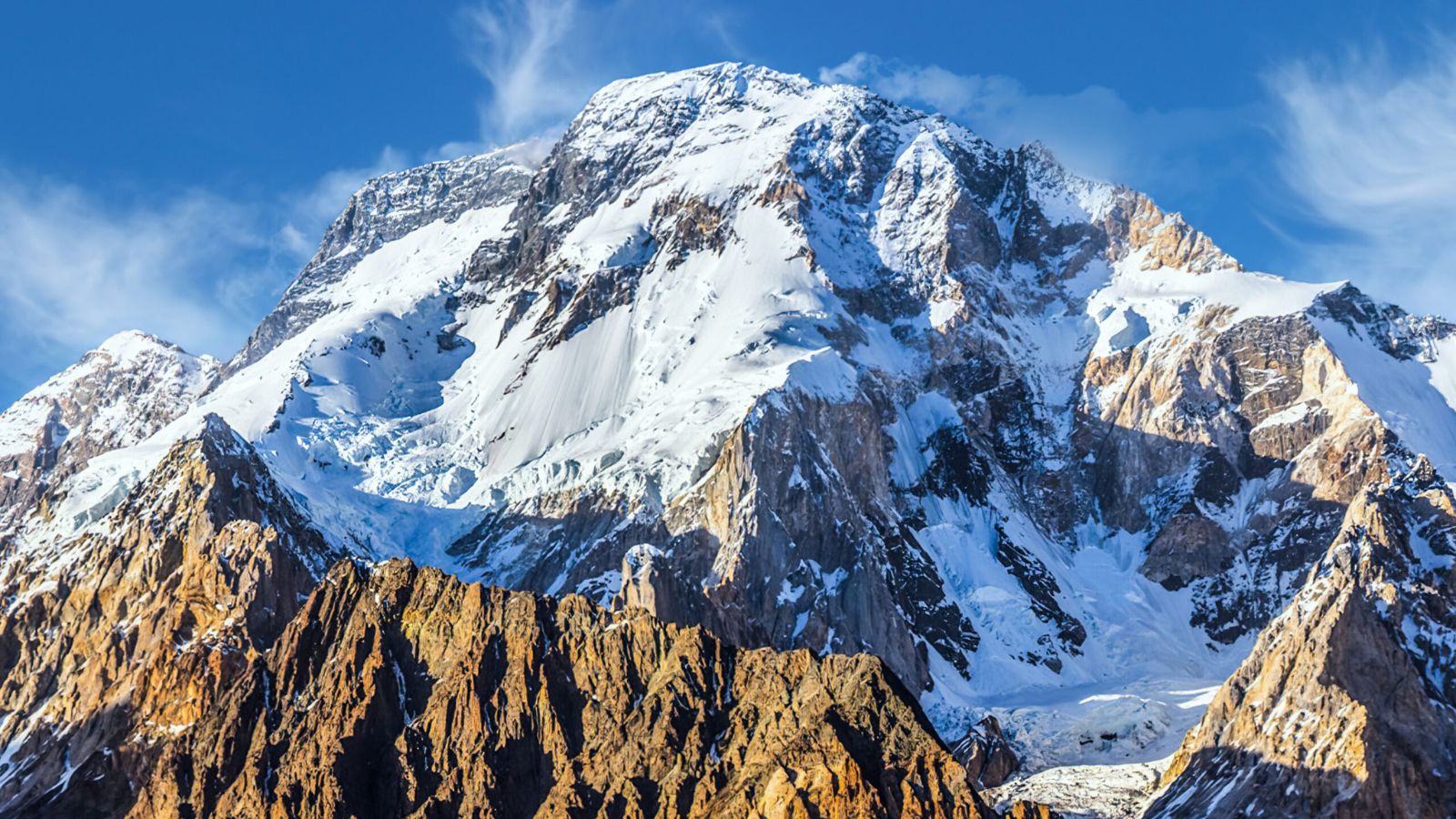
The death zone does not care about sponsorships, social media follower counts, or expedition marketing. At eight thousand meters, where atmospheric pressure hovers at roughly a third of sea level, the human body begins a slow, irreversible slide into cellular failure. When avalanches tear down high-altitude giants like Broad Peak, they expose a brutal tension at the core of contemporary commercial mountaineering. The pursuit of elite summits has collided with rapid-fire expedition logistics, turning the world's most dangerous slopes into crowded arenas of calculated risk.
Understanding the mechanics of a disaster on a mountain like Broad Peak requires stripping away the romanticized veneer of adventure tourism. Broad Peak stands at 8,051 meters in the Karakoram range of Pakistan, making it the twelfth-highest mountain on Earth. Unlike its towering neighbor K2, Broad Peak features a massive, sprawling summit ridge that stretches across over a kilometer of high-altitude exposure. That ridge creates a false sense of security. Climbers navigate massive snowfields, shifting seracs, and severe wind slabs where the weather can shift from blinding sunshine to whiteout hurricane-force gusts in minutes.
When tragedy strikes—such as the recovery of bodies and the sudden disappearance of elite climbers like Nirmal Purja, whose safety status sparked global panic before clarifications emerged—the spotlight invariably shifts to the rescue infrastructure. Yet, high-altitude rescue is not a safety net. It is a desperate, high-stakes gamble against physics.
The Logistics of High Altitude Recovery
Helicopters cannot simply hover at eight thousand meters. The thin air robs rotor blades of the lift required to generate stable flight, pushing modern aviation machinery to absolute structural limits. Pakistani military pilots flying the Eurocopter Ecureuil or equivalent high-altitude aircraft perform maneuvers that border on the impossible just to drop supplies or extract casualties from lower camps.
Above Camp III, however, the helicopter option vanishes entirely.
Any rescue or body recovery must be executed by human muscle. Sherpas, high-altitude porters, and fellow climbers must strap oxygen masks to their faces, shoulder heavy packs, and climb back up into the zone of death. They do this knowing that their own cognitive functions are impaired, their lungs are accumulating fluid, and the avalanche danger that killed the first party remains active for the second.
Commercial operators often market expeditions with the implicit promise of institutional support. Climbers pay tens of thousands of dollars expecting a seamless chain of safety: fixed ropes, oxygen depots, weather forecasters, and rescue insurance. But insurance policies do not change barometric pressure. A helicopter cannot fly through a blizzard. A porter cannot outrun a collapsing cornice. When an expedition goes wrong on Broad Peak, the bureaucratic layers peel away instantly, leaving individuals exposed to raw, unmitigated nature.
The Commercialization Pressure Cooker
The economics of extreme mountaineering have shifted dramatically over the past two decades. Expeditions that once required elite alpine credentials, years of self-sufficiency, and deep peer-reviewed experience are now accessible to anyone with a high credit limit and a baseline level of physical fitness.
This democratization of adventure has a dark side.
When hundreds of climbers converge on a narrow weather window, bottlenecks form on critical technical sections. Climbers linger in hazard zones for hours, waiting to ascend fixed lines. Fatigue accumulates. Oxygen supplies dwindle. The pressure to summit—fueled by personal financial investment and digital clout—frequently overrides self-preservation instincts.
Turnaround times are sacred rules in mountaineering. If a climber does not reach a specific landmark by a designated hour, standard protocol dictates an immediate descent regardless of how close the summit might be. Yet, modern commercial pressures routinely bend these rules. Guides face immense pressure from clients who demand value for their investment. The result is a dangerous culture of pushing through warning signs, ignoring deteriorating weather forecasts, and gambling against the mountain's unpredictable temperament.
The Myth of Total Control
We live in an era of satellite tracking devices, real-time meteorological modeling, and instant global communication. A climber sitting in a tent at Camp II can check high-resolution weather overlays on a smartphone, coordinate with a forecaster in Europe, and broadcast their emotional state to millions of followers via social media feeds.
This hyper-connectivity creates a dangerous illusion of control.
Technology maps the terrain and predicts the storm, but it cannot stop the avalanche. It cannot reinforce a rotting snow bridge. When a wind slab lets go on Broad Peak, the satellite messenger does not prevent the burial. It merely transmits the coordinates of the tragedy to a base camp thousands of meters below, initiating a complex, agonizingly slow chain of notification and response.
The mountains have not changed. The physical laws governing human physiology at extreme altitude remain unchanged. The Karakoram does not negotiate, and it does not offer discounts for modern technology. Every expedition that steps onto Broad Peak enters a fragile truce with an environment that operates on deep geological time, indifferent to human ambition, corporate logistics, or the desperate need for digital validation.
The next time a high-altitude crisis captures global headlines, the immediate reaction will focus on who was missing and why the rescue was delayed. But the real story is written long before the avalanche falls, embedded in the quiet compromises made months prior in corporate boardrooms, guide agency offices, and the quiet moments where tired climbers decide to ignore the warning signs and step out of the tent anyway.