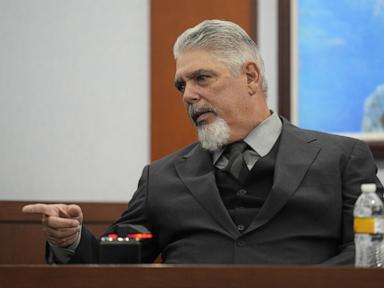
The machinery of American justice moves with agonizing slowness, especially when grease-stained by decades of myth, music industry folklore, and street-level gang politics. Nearly thirty years after a barrage of bullets ended the life of Tupac Shakur on a Las Vegas boulevard, the courtroom drama surrounding Duane “Keffe D” Davis offers a sobering look at how street power decays into legal vulnerability. Former detectives and prosecutors are currently building their case around the premise that Davis acted as a shot caller for the South Side Compton Crips, orchestrating the retaliation that led to the rap icon's death. Yet beneath the heavy headlines and tabloid nostalgia lies a much messier reality about how cases built on confessions, memoirs, and aging informants actually survive judicial scrutiny.
To understand why this prosecution exists now, one must discard the romanticized notions of master detective work and look at the raw mechanics of modern cold-case litigation. Duane Davis did not get caught by a breakthrough DNA sample or an uncorroborated eyewitness coming forward after decades of fear. He caught himself. Through a combination of true-crime documentary interviews, police clear-air chats in 2008, and a sensational 2019 memoir titled Compton Street Legend, Davis constructed the very narrative that the state of Nevada is now using to put him away for life. He talked because he believed the statute of limitations on his boasts had expired, or perhaps because the allure of financial payout and historical notoriety outweighed common survival sense.
The state's core argument rests on a simple premise: while Davis may not have pulled the trigger himself, his anger over an MGM Grand casino brawl involving his nephew Orlando Anderson and Shakur earlier that September night in 1996 triggered a coordinated execution. Prosecutors maintain that Davis secured a Glock .40 caliber handgun, handed it to occupants in the white Cadillac, and directed the pursuit of Suge Knight's BMW. It is a narrative of organizational liability, treating a street gang like a criminal enterprise under conspiracy frameworks.
Defense attorneys have attacked this foundation by pointing out the shifting nature of Davis's own public statements. Over the years, Davis changed his tune. In police recordings played for the jury, he detailed how the gun was passed and who fired. In later documentary footage, he retreated into vague denials, claiming he simply ducked when the shots rang out and did not know who fired from the back seat. Defense counsel argues this evolution proves their client was merely spinning tall tales to boost book sales and documentary appearance fees, a professional braggart inflating his role in American music history for personal gain.
This tension exposes a fundamental weakness in aging prosecutions. When memories fade, primary witnesses pass away—including Orlando Anderson, who died in a 1998 shooting—and physical evidence degrades, courts rely heavily on the defendant's own recorded words. If a jury decides Davis was a habitual liar who fabricated street credentials for profit, the state's case wobbles. If the jury believes his past confessions to law enforcement under structured interviews, the architectural logic of the prosecution holds firm.
The trial also drags in tangential ghosts from a bygone era of the East Coast versus West Coast rap rivalry, dredging up names like Sean "Puff Daddy" Combs amid unproven defense assertions regarding bounties. Investigators and seasoned observers know these angles often serve as sensationalist theater, distracting from the immediate, granular facts of a retaliatory gang shooting born from a casino floor scuffle. Street violence is rarely an intricate corporate conspiracy; more often, it is an impulsive, hyper-masculine reaction to perceived disrespect, amplified by local loyalties.
As proceedings unfold in Clark County District Court, the trial serves as a grim monument to an era of hip-hop history that devoured its own creators. The mythos surrounding Tupac Shakur has only grown denser with every passing year, transforming a tragic homicide into an almost mythical cultural touchstone. Yet inside the courtroom, the arguments are mundane, technical, and heavily reliant on the messy semantics of past interviews and jailhouse altercations. Whether this late-stage reckoning delivers legitimate closure or merely exposes the limits of justice decades too late remains the central question hanging over the Las Vegas bench.
Las Vegas jury finds Tupac murder suspect 'Keffe D' guilty in jail fight
This archival footage provides context on Duane Davis's behavior behind bars during the lead-up to his murder trial.