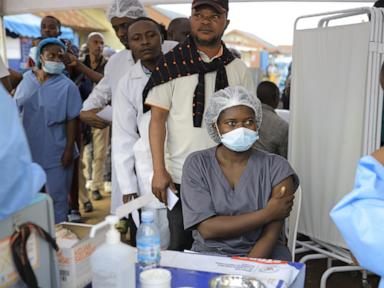
Billions have been pledged to fight the 2026 Ebola outbreak centered in the Democratic Republic of the Congo, yet Africa CDC leaders say they lack clear visibility into how disbursed funds are spent on the ground. Because international donors frequently route money directly through humanitarian agencies, United Nations bodies, and non-governmental organizations rather than national treasuries, host governments and continental health authorities often cannot see who received what or which health zones actually got supplies. The clash exposes a deeper fault line in global health response. Money moves fast on paper, while accountability lags behind in conflict zones.
For decades, emergency aid has operated under a familiar bargain. Wealthy governments and philanthropies write checks in crisis moments, trusting established humanitarian intermediaries to bypass slow or fragile state bureaucracies so medical teams can deploy immediately. That logic sounds practical during an emergency. In practice, it creates a fragmented reporting maze where each donor has its own grant rules, each agency tracks expenses in separate silos, and nobody outside a narrow circle of headquarters accountants holds a complete ledger of real-time field spending. Don't miss our recent post on this related article.
The Bypass Model Behind Emergency Aid
When an outbreak flares in an area already strained by insecurity, weak infrastructure, and displaced populations, donors rarely want to wait for national procurement systems to clear bottlenecks. Instead, they channel bilateral grants and emergency allocations through UN agencies, international NGOs, and multilateral partners. That bypass model was designed to speed up logistics. It also sidelined the very institutions tasked with long-term sovereign health security.
Communications officials in the Democratic Republic of the Congo have pointed out a stark reality when funds are not routed through the general treasury. Without centralized financial visibility, national authorities struggle to verify whether frontline clinics have received protective gear, fuel for ambulances, diagnostic kits, or timely hazard pay for health workers. Africa CDC Director General Jean Kaseya has pushed for joint management and clearer traceability so pledges translate into verifiable action inside affected villages and health zones rather than getting tangled in administrative opacity. If you want more about the background of this, TIME provides an excellent breakdown.
Consider a hypothetical example of how fragmentation plays out in a single district. Donor A gives a grant to an international NGO for community outreach and transport. Donor B funds a UN agency for clinic supplies and surveillance. Both organizations report success metrics back to their respective headquarters in metric tons delivered or workshops held, yet neither shares granular expenditure data with the local health authority or continental coordinator. On paper, both programs look active. In the field, one clinic may have surplus masks while a neighboring health post runs out of clean water and fuel.
Financial opacity during a lethal outbreak is not merely an accounting headache; it erodes public trust when communities see grand pledges alongside shortages at local clinics.
Why Tracing Every Dollar Is Harder Than It Sounds
Demanding full traceability sounds straightforward from a conference room in Addis Ababa, Geneva, or Washington. Executing it inside an active epidemic is messy. Outbreaks of the Bundibugyo virus—a rare strain lacking an approved vaccine or treatment—have unfolded alongside mass population movements, rebel violence, and deep community mistrust. Frontline workers operate under grueling conditions where roads wash out, cell service drops, and security threats force sudden evacuations.
Financial tracking also collides with competing incentives across the aid ecosystem. Non-governmental organizations face intense pressure from donors to spend quickly, hit burn-rate targets, and protect proprietary operational details in volatile regions. Meanwhile, shifting donor priorities and funding cuts in global health programs have left response planners juggling sudden shortfalls alongside massive multi-billion-dollar headline pledges. A pledge announced at a high-profile summit is not cash in a clinic bank account. Reports in November 2026 noted that a large share of pledged Ebola response funding had still not been disbursed even as the outbreak took a heavy toll.
There is also a genuine gray area in how strict financial controls interact with speed. Heavy pre-audit hurdles and rigid line-item approvals can slow down emergency purchasing when a single week of delay allows new transmission chains to form. If oversight becomes purely bureaucratic, aid groups spend more time filling out forms than reaching remote communities. If oversight is too loose, waste, duplication, and reputational damage follow.
What Accountability Actually Requires on the Ground
Real accountability cannot be solved by issuing a stern press release after money has already moved. It requires shared reporting architecture agreed upon before the next crisis peaks. That means standardizing how aid groups report geographic allocations—down to the health zone or facility level—so national ministries and Africa CDC can spot gaps and overlap in near real time.
- Joint financial visibility: National governments, Africa CDC, and key operational partners need a single, reconciled view of active grants, disbursements, and unspent balances rather than scattered bilateral updates.
- Health-zone level tracking: Reporting "millions spent regionally" tells leaders very little. Tracking funds by specific health zone, supply category, and frontline staffing shows where resources actually land.
- Timely disbursement schedules: Closing the gap between diplomatic pledges and actual cash transfers matters just as much as auditing money after it leaves an account.
- Frontline worker support: Accountability has to include verifying that nurses, contact tracers, and burial teams receive fair, predictable compensation and safe equipment, since underpaid or unprotected staff weaken containment efforts.
The Sovereignty Tension Behind the Ledger
Beneath the technical debate over ledgers and audits lies a power struggle over who runs African health emergencies. For years, external agencies and international NGOs held disproportionate financial and operational clout during epidemics because they controlled the money and logistics. As Africa CDC pushes for stronger continental leadership and greater transparency, friction is inevitable.
Some humanitarian groups worry that tighter government or regional oversight could politicize aid delivery or slow access to contested areas. Many African officials and health analysts counter that perpetual bypass mechanisms perpetuate dependency and undermine national accountability to citizens. Both concerns reflect real risks. An audit regime designed solely to score political points will fail patients, just as an aid system immune to local scrutiny will fail public trust.
Fixing the system does not require choosing between speed and integrity, though balancing both takes discipline. Donors can tie emergency tranches to open, standardized sub-grant reporting while keeping rapid-release mechanisms intact for urgent supplies. Host governments and regional bodies can pair firm oversight with predictable administrative processes so compliant partners are not stalled by red tape.
Every dollar left untracked or tied up in bureaucratic limbo is a missed chance to stop transmission where it starts—and the next outbreak will test whether leaders turned a funding dispute into lasting reform.



