Ordering diplomats and their families to leave Middle East embassies is rarely about a single incoming missile or a sudden breakdown in local security. It is a calculated signal of risk management, a legal liability shield, and a warning shot meant as much for Washington and regional capitals as for armed factions like the Houthis. When officials talk about diplomatic evacuations triggered by Houthi escalation, the public usually pictures panicked flights out of burning compounds. In practice, most of these moves look quieter, messier, and far more bureaucratic than cable news suggests.
I have watched embassies thin out across Beirut, Sanaa, Baghdad, and Cairo over decades of covering foreign policy and regional conflict. Every time the wires light up with talk of ordered departures, the same shorthand takes over. Headlines frame it as an imminent collapse or a straight line from Houthi attacks to full-scale war. Reality is stranger and much more granular. A mission rarely goes from full staffing to empty overnight. Instead, an ordered departure sits on a sliding scale between routine family rotations, non-emergency staff cuts, and a true evacuation where every non-essential person leaves on short notice. You might also find this related story insightful: Street Escalation Mechanics Across Spain and France.
Understanding why those orders happen requires looking past the loudest headlines. Houthi strikes on commercial shipping, drone and missile launches, and retaliatory exchanges across the region create a web of overlapping threats. None of those threats hit every post equally. An embassy in the Gulf faces different physical risks, host-nation politics, and airspace vulnerabilities than a consulate in the Levant or a mission in Iraq. Yet when Washington pulls personnel back, the move reverberates across markets, shipping lanes, and alliance politics long before a single suitcase is packed.
How Ordered Departures Actually Work Behind Closed Doors
The phrase "diplomats ordered to leave" does a lot of heavy lifting in news copy. It flattens distinct State Department mechanisms into one dramatic image. As reported in recent articles by The Washington Post, the implications are notable.
When security conditions deteriorate, regional security officers, intelligence analysts, and embassy leadership weigh threat reporting against mission requirements. They do not simply flip a switch. Chiefs of mission and Washington officials review threat assessments, local law enforcement capacity, medical support, and evacuation routes. A decision to authorize or order the departure of non-emergency personnel and eligible family members follows formal chains of command.
Family members are often the first to go. That makes practical sense. Spouses and children face fewer hardened security protocols than accredited officers working inside reinforced compounds, and schools or local movement restrictions quickly become untenable during heightened alerts. Pulling families out reduces the number of people who could become hostages, casualties, or logistical burdens if commercial airports close.
Essential personnel stay behind. Ambassadors, deputy chiefs of mission, political and economic officers, defense attaches, and security teams keep core operations running. Even when a post shrinks to core staff, diplomacy rarely stops completely. Cables still go out. Backchannel messages still move. Intelligence collection often intensifies right when public visibility drops.
Consider a hypothetical example to see how the math works on the ground. Suppose intelligence indicates a heightened risk of long-range drone or missile activity near a regional capital, combined with protests outside a diplomatic compound and erratic commercial flight schedules. Keeping fifty staffers plus thirty family members creates a large footprint dependent on local roads and civilian aviation. Cutting the footprint down to fifteen essential staffers inside a hardened facility lowers exposure without surrendering the diplomatic post entirely. That is why a drawdown can look like a retreat on television while functioning as a posture adjustment inside the building.
Why Houthi Escalation Ripples Far Beyond the Red Sea
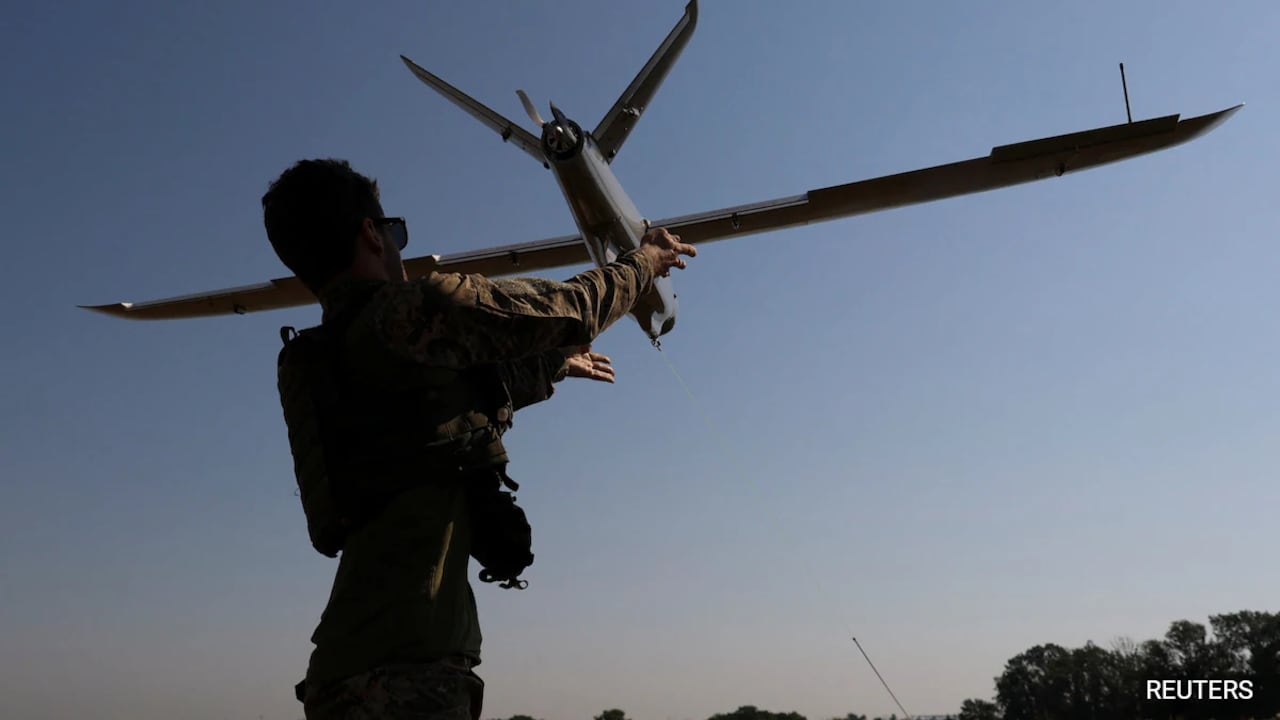
A common mistake in crisis coverage is treating Houthi actions as an isolated Yemen story or a simple proxy stunt. The Houthis have built real operational habits over years of war, learning how to combine cheap drones, anti-ship missiles, coastal radar, and media warfare to punch far above their economic weight.
When Houthi forces escalate against maritime traffic or regional targets, the shockwaves move through channels that have nothing to do with embassy walls. Maritime insurance rates jump. Shipping companies reroute vessels or demand hazard pay. Supply chains stretch out, adding days or weeks to transit times and pushing up freight costs on everything from industrial parts to consumer goods.
Diplomatic missions sit right in the middle of those secondary effects. Embassies track commercial shipping, coordinate with naval task forces, advise citizens in-country, and manage tense conversations with host governments worried about getting dragged into a wider fight. If a host government fears that US military responses to Houthi attacks could trigger domestic unrest or retaliatory strikes on its own territory, diplomatic friction rises fast.
There is also a signaling game at play. Moving personnel out of harm's way removes leverage from adversaries who might hope to threaten soft targets or hold civilian staffers at risk during a crisis. At the same time, a visible drawdown telegraphs seriousness. It tells allies that Washington takes escalation warnings seriously and tells regional actors that the United States is clearing the deck so it has greater freedom of action if military or covert responses become necessary.
Critics sometimes argue the opposite. They contend that pulling diplomats back projects weakness, feeds local narratives of American retreat, and emboldens armed groups to push harder. Both arguments have merit depending on the moment. If a drawdown happens without clear policy follow-through, local actors can spin it as fear. If it precedes decisive deterrence or de-escalation diplomacy, it looks like prudent preparation. Over the years, I have seen the exact same bureaucratic move praised as foresight in one crisis and mocked as jitteriness in the next.
The Overlooked Factors That Drive Evacuation Decisions
Most coverage stops at missiles, militias, and geopolitical tension. Anyone who has watched crisis management up close knows several quieter variables often tip the scale.
Airspace Closures and Transit Chokepoints
An embassy is only as secure as its exit routes. If regional air corridors close—or airlines suspend service because insurers refuse to underwrite flights near active missile and drone envelopes—getting people out becomes exponentially harder. Officials have to think about airspace closures days in advance, not after the runways go quiet.
Ground convoys across borders carry their own hazards, from checkpoints to rough terrain and shifting local loyalties. Helicopter transfers work in limited scenarios, yet range, weather, and host-nation permissions constrain them. When commercial flights start looking shaky, security planners move quickly to trim headcount while planes are still flying normally.
Host Nation Politics and Sovereign Friction
Local governments hate feeling caught in the crossfire. When regional tensions spike around Houthi attacks and retaliatory strikes, host capitals face intense domestic pressure. Parliaments demand distance from Washington. Protesters gather near diplomatic quarters. Local security forces may be stretched thin or reluctant to commit fully to protecting foreign missions if doing so looks unpopular at home.
A US ordered departure can quietly relieve pressure on a host government while signaling strain in the relationship. It says Washington does not fully trust local calm to hold—or does not want its people caught in a political trap if local authorities hesitate during an emergency.
Duty of Care and Legal Liability
Behind every security cable sits a cold institutional reality: duty of care. Governments face intense political and legal scrutiny if personnel or family members are harmed after warnings were already flashing red. Nobody wants another Benghazi-style congressional hearing or a preventable tragedy involving a diplomat's child.
That creates an unmistakable institutional bias toward caution once warning indicators cross a certain threshold. Bureaucrats and commanders who recommend pulling non-essential staff early rarely get punished for being too careful. Those who wait and get caught flat-footed pay a steep price.
Comparing Posture Shifts Across a Volatile Region
Not every warning looks the same on the ground. How a mission adjusts depends heavily on geography, threat profile, and diplomatic necessity.
| Posture Shift | Typical Trigger | Who Leaves First | Practical Impact |
|---|---|---|---|
| Authorized Departure | Rising regional threat, flight disruptions, or civil unrest | Eligible family members and select non-essential staff | Cuts vulnerability while keeping voluntary flexibility |
| Ordered Departure | Acute escalation risk, credible threat streams, or shrinking exit options | All non-emergency staff and dependents | Sharpens mission focus on core security and diplomacy |
| Suspended Operations | Direct attack risk, host instability, or collapsed local support | Remaining diplomatic staff via military or charter lift | Halts routine services; shifts diplomacy to neighboring hubs |
Looking at those tiers helps explain why headlines can sound alarming even when an embassy remains open. An ordered departure is serious. It is not the same thing as boarding up the doors and abandoning the capital.
What Markets, Allies, and Citizens Miss in the Noise
When news breaks that diplomats and families are being told to leave Middle East posts, financial markets and social feeds often react to the worst-case scenario first. Oil prices twitch. Defense stocks move. Travelers wonder if an entire region is about to shut down.
Often, the reality is more nuanced. A security measure in one country does not mean war has broken out across every neighboring state. Commercial life in nearby cities may keep humming while security officers tighten perimeter checks and airlines adjust flight paths around active hazard zones.
Still, ignoring the signal is just as foolish as panicking. Ordered departures rarely happen for no reason. They reflect intelligence assessments that ordinary observers do not see, combined with a sober calculation that escalation risks—including wider clashes tied to Houthi attacks—have moved from theoretical to plausible.
For ordinary travelers, businesses with regional exposure, and analysts watching the region, the smartest move is to separate theater from logistics. Watch flight cancellations, maritime advisories, and official embassy security alerts rather than relying on dramatic summaries. Those operational details tell you far more about real-world risk than any cable chyron ever will.