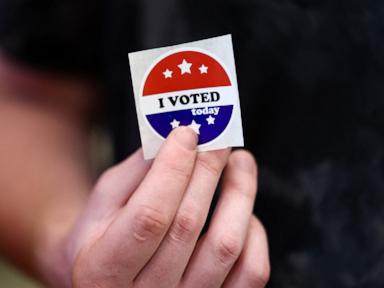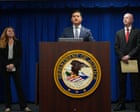
Federal prosecutors under the Trump administration have indicted six additional individuals in California on charges tied to alleged voter fraud, expanding an aggressive Justice Department enforcement campaign targeting election integrity in the nation's most populous state. The indictments center on allegations of double voting, falsifying voter registration records, and submitting ballots on behalf of ineligible individuals across multiple California counties. While federal officials frame these prosecutions as essential to protecting the ballot box, state election administrators and legal scholars argue the crackdown magnifies rare, isolated infractions to construct a broader political narrative of systemic election failure.
The mechanics of federal election prosecutions are rarely as straightforward as a press release suggests. When the Department of Justice announces a new wave of charges, the headlines immediately conjure images of coordinated, large-scale conspiracies capable of tipping statewide races. Look closely at the actual charging documents in California, however, and a very different picture emerges.
Most federal election cases brought under statutes like 52 U.S.C. § 10307(c) or 18 U.S.C. § 1015(f) involve individual, disconnected acts rather than organized rings. A person moves from one state to another and casts a ballot in both jurisdictions during the same federal election cycle. Someone fills out a registration form using inaccurate residency details. An individual submits a mail-in ballot belonging to a deceased relative. These are real violations of federal law. They carry serious penalties, including hefty fines and federal prison time. Yet they are fundamentally distinct from the kind of coordinated ballot-stuffing operations that dominate cable news panels.
How Federal Prosecutors Build California Election Cases
To understand why these six charges matter right now, you have to look at how the Department of Justice operates when election integrity becomes a top-tier mandate from Main Justice in Washington. Historically, the Public Integrity Section at the DOJ maintained strict protocols governing when and how federal prosecutors could bring election-related charges. Under the Justice Manual's long-standing rules, federal prosecutors generally avoided overt investigative steps—such as grand jury subpoenas or public indictments—during the immediate lead-up to an election, specifically to prevent the appearance of interfering with the vote itself.
Once an election cycle concludes, or during off-cycle enforcement windows, those constraints lift. U.S. Attorneys' offices across California—spanning the Central, Eastern, Northern, and Southern Districts—receive renewed directives to review referrals from local registrars, state databases, and federal tip lines.
The investigative pipeline typically relies on cross-referencing massive datasets. Federal investigators compare state voter rolls against Social Security death records, Department of Motor Vehicles databases, and national change-of-address registries. When an anomaly surfaces—say, a ballot cast in Los Angeles County alongside a ballot cast in Nevada under the same name and birthdate—it triggers a preliminary inquiry.
Agents then pull physical ballot envelopes, examine signature verification logs, and interview witnesses. In California, where universal vote-by-mail has been standard practice since the pandemic era, every returned ballot envelope carries a unique barcode and a wet signature that county registrars must compare against the voter's file. Ironically, the very paper trail that critics of mail-in voting often attack is precisely what allows federal agents to catch double voters after the fact.
Consider a hypothetical example to see how this plays out in practice. Suppose a seasonal retiree owns homes in both Palm Springs and Phoenix. That person receives mail-in ballots at both addresses, fills both out, and drops them in the mail. State election systems, particularly those participating in interstate cross-check programs or using commercial data vendors, flag the duplicate participation months later. The local registrar refers the file to the Secretary of State's investigative unit or directly to the FBI. By the time a federal grand jury hands down an indictment, the election is long over, and the single illegal ballot has been isolated—or, if caught during initial processing, never counted at all.
The Friction Between Washington and Sacramento
California has served as the primary foil for conservative critiques of modern American election administration for over a decade. The state's policies—automatic voter registration through the DMV, same-day voter registration, universal mail-in ballots, and ballot harvesting rules that allow third parties to collect and return completed ballots—represent the exact opposite of the restrictive voting frameworks favored by the Trump administration.
Because of this ideological chasm, every federal prosecution in California carries dual weight. In the courtroom, it is a standard criminal proceeding governed by the Federal Rules of Evidence. Outside the courthouse, it becomes ammunition in an ongoing political war over who controls the rules of American democracy.
State officials in Sacramento routinely push back against federal characterizations of their system. California's Secretary of State office and county registrars point out that the state processes upwards of 15 to 20 million ballots in major statewide elections. Against that staggering volume, a handful of criminal indictments represents a statistical fraction so small it barely registers on a spreadsheet.
Yet prosecutors counter that deterrence requires visible enforcement. From the Justice Department's perspective, a law that goes unprosecuted is merely a suggestion. If federal authorities ignore individual cases of double voting or false registration because the numbers are small, they risk signaling that election laws are optional. A veteran prosecutor will tell you that the standard for bringing a criminal charge is probable cause and proof beyond a reasonable doubt—not whether the crime altered the outcome of a Senate race.
What the Indictments Actually Reveal About System Vulnerabilities
Strip away the partisan rhetoric from both sides, and the recent California charges expose genuine operational friction points inside modern voter registration systems.
The most common vulnerability is not ballot box hacking or counterfeit printing. It is database latency.
Modern Americans move constantly. When a resident updates their driver's license at the California DMV, the state's "Motor Voter" program automatically registers them to vote or updates their address unless they explicitly opt out. That system has successfully added millions of eligible citizens to the rolls, reducing administrative barriers to voting. At the same time, automated pipelines create clerical noise.
Mistakes happen at the counter. A non-citizen applying for a driver's license under California's AB 60 program—which grants driving privileges regardless of immigration status—might inadvertently get swept into a voter registration queue due to a clerk's data-entry error or a confusing touchscreen prompt. California actually experienced a well-documented glitch of this exact nature when the DMV first rolled out its automated system in 2018, forcing the state to cancel tens of thousands of erroneous registrations.
Under federal law, proving criminal voter fraud requires establishing mens rea—criminal intent. A non-citizen who accidentally gets registered by a state agency and never casts a ballot has not committed a federal felony. However, if that individual knows they are ineligible, intentionally signs an affidavit claiming U.S. citizenship under penalty of perjury, and casts a ballot, federal prosecutors have the elements required for an indictment.
The six new cases brought by the Justice Department highlight where prosecutors believe that line of intent was crossed. Defense attorneys in these cases almost always attack the intent element first. They argue that language barriers, confusing government forms, or misunderstandings about probation and parole rules led their clients to make honest mistakes rather than calculated efforts to subvert an election.
The Chilling Effect Debate
Civil rights organizations and voting access advocates warn that high-profile federal crackdowns carry consequences that extend far beyond the defendants named in an indictment. When the Department of Justice issues national press releases highlighting arrests for registration errors or contested ballots, it creates fear among newly naturalized citizens, low-income voters, and minority communities.
Legal aid groups in California report that during periods of heightened federal enforcement, hotlines light up with calls from lawful voters asking if they could be arrested for making a minor mistake on their mail-in ballot envelope. A voter who forgets to update their apartment number or whose signature has changed due to age or illness might simply decide to stay home rather than risk scrutiny from federal authorities.
Proponents of strict enforcement dismiss these concerns as overblown. They argue that lawful citizens have nothing to fear from the prosecution of clear statutory violations, and that public confidence in election outcomes actually increases when voters see the government actively policing the rolls and punishing bad actors. In their view, ignoring small-scale fraud breeds public cynicism, feeding the exact conspiracy theories that election officials claim they want to stamp out.
Both arguments rest on observable truths, which is why the debate remains deadlocked. Enforcement does deter misconduct and validates the integrity of the rules. Overzealous or heavily publicized enforcement can simultaneously intimidate legitimate participants at the margins.
Why California Remains the Ultimate Testing Ground
The Justice Department's focus on California is unlikely to slow down. With massive population centers, decentralized county-level administration across 58 distinct counties, and some of the most expansive ballot access laws in the country, California provides an endless supply of complex administrative edge cases.
Each of California's 58 counties runs its own elections using different vendor equipment, different signature-verification workflows, and varying levels of staffing. A rural county in the Sierra Nevada operates on a shoestring budget with a handful of full-time clerks, while Los Angeles County manages an electorate larger than that of most U.S. states.
This decentralized structure means that errors, delays in list maintenance, and communication gaps between local registrars and federal agencies are inevitable. When a federal administration prioritizes election crimes, its investigators naturally gravitate toward jurisdictions with high ballot volume and complex registration pipelines.
For the six defendants now facing federal prosecution in California, the macro-level political battle over election integrity is secondary to an immediate, personal legal crisis. Federal conviction rates routinely exceed 90 percent, largely because U.S. Attorneys rarely seek an indictment unless they already possess documentary proof—signed affidavits, dated ballots, travel records, or financial trails—that locks down the timeline.
Even if these cases result in plea deals or convictions, they will not settle the broader national argument over how American elections should be run. Federal prosecutors can prove beyond a reasonable doubt that six people broke the law in California, but no indictment can bridge the divide between two fundamentally incompatible visions of American voting rights.