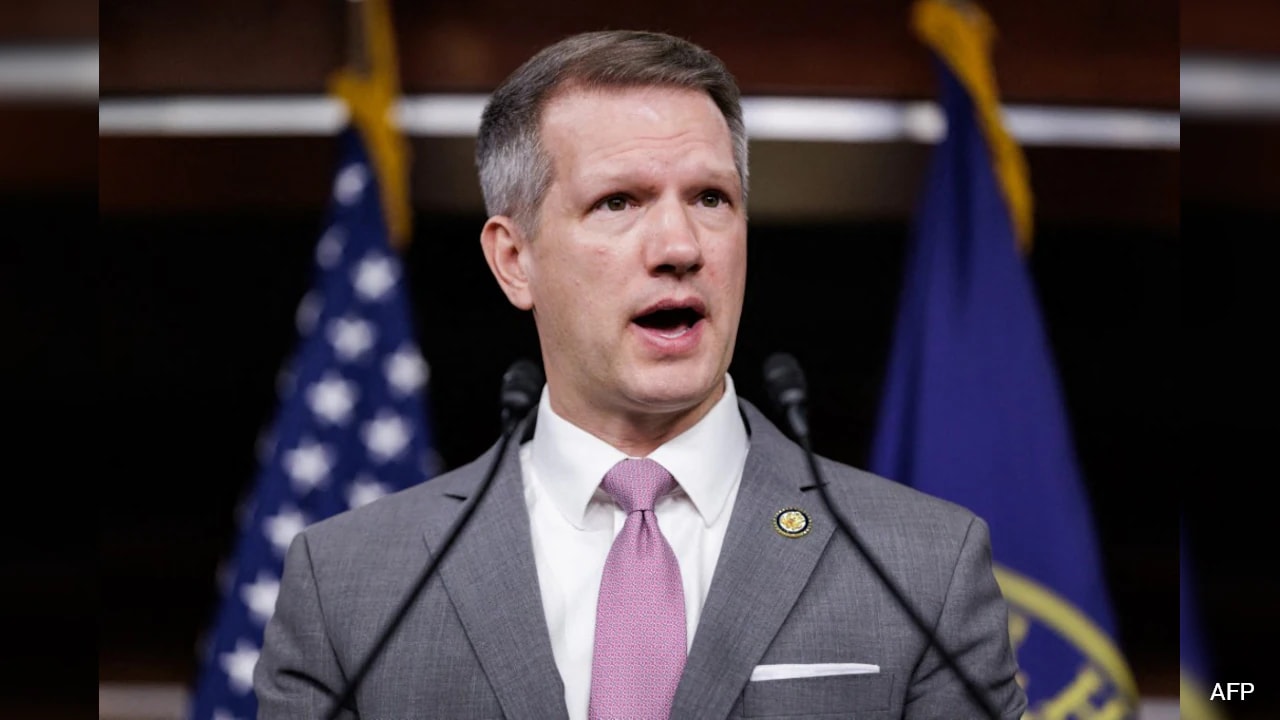
Washington and New Delhi are sliding toward a quiet collision over sovereignty, civil society, and foreign money. At the core of the friction is India’s proposed overhaul of its Foreign Contribution Regulation Act, a legislative mechanism designed to control overseas capital flowing into domestic non-governmental organizations. When a senior United States lawmaker publicly flags a legislative amendment in New Delhi as an assault on religious minorities and a threat to bilateral ties, diplomatic channels do not just hum—they fracture.
This is not a traditional trade dispute. Tariffs can be negotiated, lowered, or litigated through international trade bodies. Ideological and religious sovereignty, however, resists simple compromise. The confrontation unfolding around the Foreign Contribution Regulation Amendment Bill exposes structural differences in how two major democracies view outside influence, institutional accountability, and state power.
Anatomy of the Legislative Flashpoint
The Foreign Contribution (Regulation) Act has long served as an administrative lever for New Delhi to monitor and restrict money entering its domestic ecosystem from abroad. Successive administrations have tightened these screws, viewing foreign-funded entities with varying degrees of suspicion. The 2026 iteration of the amendment takes the state's oversight a step further by introducing a Designated Authority.
Under the proposed rules, if an organization loses its registration, fails to renew it, or surrenders its credentials, this state-appointed authority assumes direct management of remaining foreign contributions and the physical assets built using those funds. Government data indicates that tens of thousands of registrations have expired or faced cancellation over recent years. The sheer volume of affected entities highlights why this adjustment carries immense practical weight.
When those assets include places of worship, schools, or community clinics, the implications multiply. The legislation mandates that the religious character of a disrupted house of worship must be preserved under state management, but critics argue that the mechanism itself hands the executive branch unprecedented leverage over civil society infrastructure.
Foreign governments rarely comment openly on internal legislative drafts unless they perceive an intersection with their own domestic political constituencies or strategic priorities. The decision by US figures to step into the debate changes the temperature entirely.
The Diplomatic Cost of Domestic Policy
Foreign policy rarely operates in a vacuum. Lawmakers in Washington face domestic pressures from constituents who monitor the global status of religious freedom and minority rights. When a prominent congressional voice characterizes New Delhi's regulatory adjustments as a systemic hazard for minority institutions, the narrative shifts from a domestic regulatory update to an international human rights concern.
Foreign ministries handle these interventions with calculated caution. New Delhi views external commentary on its internal statutes as an infringement on parliamentary sovereignty. To Indian policymakers, the FCRA changes represent a straightforward domestic security and transparency measure aimed at curbing illicit influence operations disguised as charity.
Yet, international partnerships depend heavily on shared alignment, or at least managed friction. The United States and India have spent years building a strategic architecture centered on defense cooperation, technology transfer, and supply chain diversification to balance broader geopolitical pressures in the Indo-Pacific. Introducing ideological and religious friction into that architecture threatens to complicate cooperation on security matters that require absolute trust.
A hypothetical example clarifies the mechanism: if a medical charity funded by overseas donors loses its operating license under the revised statutory thresholds, and state administrators step in to manage its hospitals, the resulting outcry does not stay localized. International advocacy networks mobilize, congressional letters multiply, and executive branch officials find themselves forced to balance strategic defense goals against human rights advocacy.
The Mechanics of State Control
To understand why this amendment creates such acute anxiety, one must look at the mechanics of transnational funding in developing democracies. For decades, religious organizations, educational trusts, and secular human rights watchdogs have relied on cross-border capital to fund grassroots operations.
New Delhi argues that unrestricted foreign money has historically been weaponized to destabilize governance, fund unverified political advocacy, or distort domestic public opinion. Regulatory tightening is framed as a defense of national integrity. From this viewpoint, a sovereign state has every right to know who is funding domestic actors and to sequester assets if compliance fails.
Conversely, civil society groups argue that the compliance thresholds are engineered to systematically starve independent voices of resources. When the law penalizes organizations that fail to utilize or receive baseline amounts of foreign capital, smaller or heavily scrutinized entities face operational death by a thousand administrative cuts.
The inclusion of state takeover powers for physical infrastructure compounds these fears. Critics point out that once the apparatus of the state can legally step into the management seat of a dissolved trust, the boundary separating bureaucratic oversight from outright expropriation blurs significantly.
Navigating the Strategic Crossroads
Bilateral ties between Washington and New Delhi have weathered historic storms, from Cold War realignments to technology embargoes. Both capitals recognize the necessity of maintaining a united front against shared strategic challenges. Because the stakes of the broader geopolitical competition are extraordinarily high, neither side desires a permanent rupture over regulatory compliance.
Diplomats will likely work behind the scenes to decouple the legislative debate from broader strategic agreements. Concessions on administrative enforcement or clarifications regarding how the Designated Authority exercises its mandate could offer a path toward de-escalation.
The core tension, however, remains unresolved. As sovereign nations increasingly prioritize internal security and cultural protectionism over globalist integration, the friction between domestic legal autonomy and international scrutiny will only intensify. The debate over foreign funding rules is a symptom of a changing global order where national capitals are reclaiming the power to shut out external influence, regardless of the diplomatic fallout.