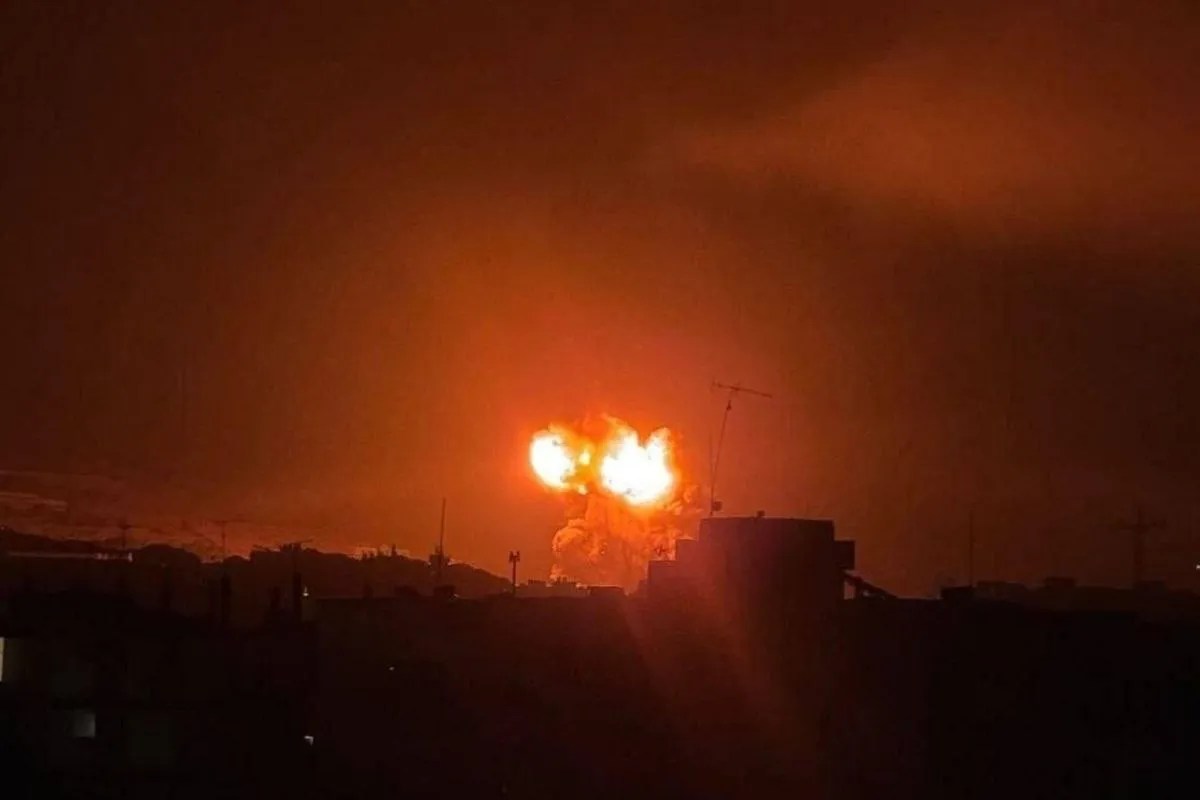
The quiet across southern Lebanon was always an illusion. Beneath the fragile architecture of international frameworks and nominal June lulls, the night sky over the Jabal Amel region routinely fractures under the weight of Israeli warplanes, artillery batteries, and drone incursions. Recent overnight bombardments targeting areas like Ansar, Deir al-Zahrani, and the Wadi al-Hujair valley have shattered what little confidence remained in the US-backed security arrangements.
When multi-story residential buildings are flattened in the dark hours, leaving double-digit civilian death tolls and scattering thick columns of smoke over municipal streets, the reality of the ground situation diverges sharply from diplomatic communiqués issued in foreign capitals. Understanding why southern Lebanon continues to burn requires looking past surface-level summaries of nocturnal explosions to examine the structural collapse of Resolution 1701, the tactical imperatives driving the Israel Defense Forces, and the compounding pressures facing the Lebanese state. Don't forget to check out our recent coverage on this related article.
The Anatomy of a Breaking Truce
Diplomacy moves at the speed of committees, while military escalation operates on the trigger of immediate tactical friction. The framework agreement brokered to establish temporary lulls and pilot withdrawal zones has consistently stumbled over fundamental contradictions. On one side, Israeli military planners maintain that operational necessity requires active strikes against re-emerging infrastructure. On the other side, local populations find themselves caught in a zone where the line between combatant infrastructure and civilian residency is perpetually blurred by airstrikes.
Consider a hypothetical strategic outpost in the rugged terrain north of Nabatieh. When an explosive drone targets a ridge or an artillery battery shells an outlying agricultural belt, the shockwaves do not remain contained to military targets. They ripple directly into civilian neighborhoods miles away. To read more about the context of this, The Guardian provides an excellent summary.
United Nations peacekeepers monitoring the Blue Line have logged hundreds of airspace violations and projectile exchanges within single reporting cycles. Fighter jets break sound barriers over coastal cities while reconnaissance drones buzz continuously overhead. These are not random acts of aggression. They form a systematic pattern of enforcement designed to signal permanent operational freedom across sovereign borders, regardless of formal diplomatic agreements signed on paper.
The Ground Realities Behind the Night Raids
Why do these operations peak under the cover of darkness? Tactical surprise offers a clear operational advantage, but nocturnal bombardments also serve a psychological function. The thunderous echo of ordnance dropping near residential sectors ensures that displacement remains permanent for thousands of families who dared to return during brief windows of quiet.
In towns like Bint Jbeil and Khiam, the physical landscape has been fundamentally altered. Heavy machinery and controlled demolitions routinely clear entire neighborhoods, a method justified by military command as the eradication of subterranean networks. Yet, independent observers and local municipal authorities point out that this systematic razing creates a de facto buffer zone far exceeding any officially negotiated parameters.
The human cost accumulates quietly outside the immediate flashpoints. Hospitals in Tyre and Sidon absorb the overflow of injured civilians, while municipal infrastructure—already battered by years of economic collapse—faces total functional failure. Power grids, water pumping stations, and local agricultural reserves frequently sustain collateral damage from nearby artillery shelling, cutting off basic survival mechanisms for those who refuse to evacuate.
The Impossible Bind Facing the Lebanese State
Lebanese political leadership navigates a treacherous political minefield. Prime Minister Nawaf Salam and state officials face intense scrutiny for accepting international terms that demand the gradual disarmament of non-state actors while failing to secure an immediate, unconditional halt to foreign military incursions.
At the same time, the national army finds itself deployed into volatile sectors as a political buffer. Critics argue that sending regular military units into regions under active aerial bombardment exposes soldiers to direct risk without providing them the defensive mandate required to deter modern air power. Hezbollah leadership has publicly rebuked state authorities for bowing to external pressures, framing the ongoing diplomatic process as a humiliation that yields zero practical protection for Lebanese citizens.
This dynamic paralyzes effective governance. If the state asserts authority too forcefully against armed factions, internal stability fractures. If the state fails to comply with international demands for localized disarmament and border control, foreign financial and diplomatic backing dries up entirely.
The Broader Regional Calculation
The nocturnal violence in southern Lebanon cannot be viewed in isolation. It functions as a primary pressure valve for a wider theater stretching from Tehran to Tel Aviv. Cross-border skirmishes and targeted drone strikes act as calibrated messages between adversaries who are perpetually testing the threshold of all-out war.
When elite engineering units are targeted by localized explosive devices, the military response from the air is swift, heavy, and deliberately disproportionate to re-establish deterrence. This cycle of action and reaction creates an unyielding momentum. Every strike hardens political resolve on both sides of the border, making long-term stabilization increasingly unattainable through standard diplomatic channels.
As long as operational zones remain vaguely defined and enforcement mechanisms lack teeth, the night skies over the border will continue to deliver sudden destruction. The explosions shaking the valleys of southern Lebanon are symptoms of a deeper, unresolved structural conflict that no temporary framework has managed to contain.