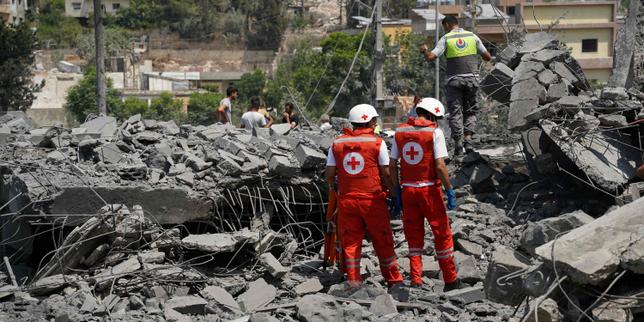
Eleven dead. Two flattened homes. A diplomatic framework hanging by a fraying thread.
The Israeli airstrikes that tore through the southern Lebanese villages of Ansar and Deir al-Zahrani mark the bloodiest escalation since a fragile U.S.-mediated truce went into effect in June. Beneath the diplomatic theater of Washington-backed peace frameworks and upcoming Rome negotiations, the ground reality in southern Lebanon remains defined by an unyielding cycle of kinetic retaliation.
To understand why this latest bloodshed threatens to unravel months of painstaking talks, one must look past the immediate body count and examine the structural fault lines built into the June agreement itself.
The Anatomy of a Fractured Framework
The diplomatic architecture engineered in Washington and embraced by Beirut contains an inherent contradiction. It demands two mutually exclusive outcomes to happen simultaneously: the immediate operational withdrawal of Israeli forces and the total disarmament of Hezbollah.
Hezbollah views the disarmament mandate as an absolute surrender. Consequently, the militant group refuses to recognize the direct negotiations process, leaving Lebanese state officials to bargain on behalf of a country where they do not hold a monopoly on force.
When an armed faction operates independently of the state it inhabits, any localized skirmish carries existential weight.
Saturday's escalation began, according to the Israel Defense Forces, with a tactical strike against Israeli soldiers in the southern security zone that wounded three personnel. The retaliatory response was swift and disproportionate in scale. Israeli warplanes targeted what military officials identified as a command hub belonging to Ali Samir Al-Haj Hassan, a commander within Hezbollah's elite Radwan Force.
The structural mechanics of asymmetric warfare ensured that the cost was paid primarily by non-combatants.
The Civilian Toll and the Human Shield Doctrine
In Ansar, a single strike obliterated a residential home, killing seven people. Among the dead were three children and two women, identified later as members of the targeted commander's extended household. Another four individuals perished in Deir al-Zahrani, with dozens more wounded.
The official military explanation follows a well-worn playbook. The Israeli government maintained that the structure functioned as a military headquarters, accusing Hezbollah of embedding fighters within civilian family spaces.
This justification exposes the grim arithmetic governing southern Lebanon. When combatants live among civilian populations in densely populated towns, precision munitions cease to be precise in their broader human impact.
Lebanese President Joseph Aoun did not mince words, characterizing the strikes as a deliberate sabotage of American-led implementation efforts. Yet, the inverse argument echoes loudly in security circles in West Jerusalem: inaction in the face of cross-border soldier casualties would signal a dangerous deterrence failure, inviting further probing attacks by militant cells testing the boundaries of the June pact.
The Rome Talks and the Danger of Collapse
As delegations prepare for an eighth round of talks in Rome next month, the utility of these negotiations faces profound skepticism.
Diplomacy requires incentives. Right now, neither primary belligerent feels compelled to compromise. Prime Minister Benjamin Netanyahu's administration insists that heavy military pressure is the only mechanism capable of forcing structural compliance and pushing Hezbollah north of the Litani River. Meanwhile, Hezbollah vows that every escalation will meet an equivalent or harsher response, urging the Lebanese populace to reject what it labels a capitulation strategy dictated by foreign capitals.
The Lebanese state, caught directly in the crossfire, possesses neither the military capacity to disarm Hezbollah nor the political leverage to halt Israeli air campaigns.
Every civilian funeral in Ansar and Deir al-Zahrani hardens public sentiment against compromise. The diplomatic track relies on the assumption that exhaustion will eventually outweigh ideology. But as the rubble settles over southern Lebanon, the prevailing reality suggests that exhaustion is merely a brief intermission between rounds of fire.


