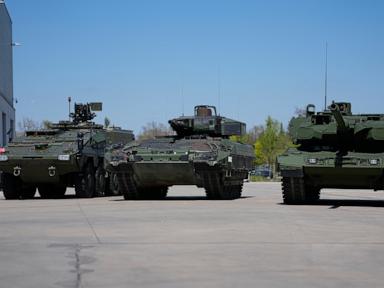
Germany will acquire a 40 percent stake in KNDS, the manufacturer of the Leopard 2 tank, in a highly politicized intervention timed to match France's holding ahead of a massive multi-billion euro stock market listing. The decision settles months of intense behind-the-scenes wrangling over corporate governance and national sovereignty, ensuring that Berlin and Paris maintain absolute parity over the Continent's primary armored vehicle producer. Yet beneath the surface of this state-directed consolidation lies a deeper story of industrial gridlock, massive cash payouts to a reclusive German dynasty, and a deeply fractured European defense strategy that capital markets may struggle to fix.
State Capitalism and Strategic Parity
The agreement announced by the French presidency and the German economy ministry marks a profound shift for Berlin. Traditionally, Germany has favored private ownership for its defense industrial base, especially when compared to the heavily state-managed sector in France. The looming exit of the Wegmann family—the secretive heirs who have held half of KNDS since its creation in 2015—forced Berlin's hand.
Had the German government not stepped in, the balance of power within Europe's largest land defense conglomerate would have tilted decisively toward Paris. France already owns its 50 percent share of KNDS via a state holding company. Under the new arrangement, Berlin will utilize the state-owned development bank KfW to purchase a 40 percent block of shares directly from the exiting Wegmann family. France will simultaneously pare its own holding down to 40 percent. Over the next two to three years, both nations intend to reduce their stakes further to 30 percent each, floating the remainder on the Frankfurt and Paris stock exchanges.
The financial engineering behind this deal is staggering. Market insiders estimate the upcoming initial public offering will value KNDS between 15 billion and 20 billion euros. This means German taxpayers are effectively on the hook for an upfront payment of 6 billion to 8 billion euros just to maintain political veto power.
The Reclusive Heirs and the Billion Euro Payout
While political leaders pitch this intervention as a triumph for European defense sovereignty, the immediate beneficiaries are a tight-knit circle of German billionaires. The Wegmann shareholders, descendants of industrialist August Bode, have quietly operated behind a wall of corporate anonymity for decades. They are exiting at the absolute peak of the defense market cycle.
Driven by Russia's invasion of Ukraine, European defense spending has surged. KNDS boasts an order backlog stretching roughly six years, including an anchor order of 198 Leopard 2 tanks for the German Bundeswehr through 2030. This demand has turned a once-sleepy heavy industry firm into an extraordinary cash machine.
Financial disclosures reveal that the KNDS board authorized a massive 1 billion euro special cash dividend distributed between the French state and the Wegmann family late last year to adjust the corporate balance sheet ahead of the listing. A second payout of undisclosed size is scheduled to hit their accounts just before the public float.
The exit of the family marks the end of an era. The 2015 merger that created KNDS by combining Germany’s Krauss-Maffei Wegmann with France’s state-owned Nexter was originally structured as a defensive alliance. It was designed to keep the rival German defense giant Rheinmetall from swallowing KMW whole. Now, with family leadership passing from the late Manfred Bode to his heirs, the family’s appetite for managing international defense politics has evaporated. They are converting their industrial legacy into billions of euros in liquid capital, leaving the German government to manage the messy realities of a binational corporate structure.
The Illusion of Corporate Harmony
The joint statement issued by Paris and Berlin claims this restructuring will reinforce European sovereignty in an enduring fashion. The structural reality suggests otherwise. The agreement locks both nations into an equal-voting-rights framework that requires absolute consensus for major decisions, regardless of how many shares are eventually floated to the public.
This governance model has historically bred institutional paralysis rather than efficiency. For years, the French and German branches of KNDS have operated more like competing fiefdoms than a unified corporate entity. The German side holds the intellectual property and manufacturing apparatus for the globally dominant Leopard 2 tank. The French side controls Nexter, the maker of the Leclerc tank and the Caesar self-propelled howitzer.
The Blocked Future Tank
The structural dysfunction is most visible in the Main Ground Combat System. This joint project was launched to develop a next-generation battle tank to replace both the Leopard 2 and the Leclerc by the late 2030s. Progress has been virtually non-existent.
Berlin and Paris have spent years deadlocked over work-share allocations, technological transfers, and export philosophies. Germany wants its domestic champions to lead the heavy armor and gun systems. France demands equal high-tech development shares for its own engineers. The gridlock got so severe that Germany recently looked outside the partnership, joining a separate consortium with Italy, Sweden, and Spain to develop a competing next-generation tank concept.
The fact that this KNDS capital restructuring comes right after the high-profile collapse of a parallel Franco-German initiative to build a future fighter jet underscores the fragility of the alliance. When state interests conflict, corporate structures break down.
Can Public Markets Save European Defense
By pushing KNDS onto the public stock exchanges, Paris and Berlin are hoping to invite capital market discipline into a sector notorious for state-subsidized inefficiencies. The strategy carries profound risks.
| Metric | KNDS Operational Status |
|---|---|
| Target IPO Valuation | €15 Billion to €20 Billion |
| Current Order Backlog | Approximately 6 Years |
| German State Target Holding | 30% (After transition period) |
| French State Target Holding | 30% (After transition period) |
| Corporate Headquarters | Amsterdam, Netherlands |
Institutional investors typically demand agility, clear lines of command, and a focus on maximizing shareholder value. KNDS offers none of these. A combined state ownership that will hover around 80 percent immediately post-IPO, dropping only to 60 percent later, means that public shareholders will have zero say in the strategic direction of the firm.
If KNDS needs to shutter an inefficient factory in France or consolidate a redundant supply chain in Germany to protect profit margins, political vetoes will block the move every time. No French president can afford the optics of defense layoffs in Roanne, just as no German chancellor will permit tank assembly lines to leave Munich.
Furthermore, the equal-voting-rights structure faces imminent regulatory scrutiny. The transaction must still clear the German federal cartel office and European Union competition authorities. Regulators will have to weigh whether an explicit pact between Europe's two largest military powers to control the continent's dominant land defense platform violates anti-monopoly laws.
The public listing is not an integration strategy. It is an expensive exit mechanism for a private family, papered over by state capital to prevent an ally from gaining a corporate advantage. Berlin’s 8 billion euro gamble ensures that Germany keeps its hand on the steering wheel of the tank industry. It does absolutely nothing to fix the engine.