More than two thousand residents scrambled from their homes in the western German village of Gey as a ferocious forest fire raced to within two hundred meters of residential perimeters. The evacuation, executed under the cover of a grim pre-dawn darkness on Friday, highlights an escalating environmental hazard that combines modern climate stress with the deadly, buried remnants of twentieth-century conflict.
This is not merely a story about dry timber and shifting summer winds. It is an account of a modern disaster response paralyzed by the ghost of the Hürtgen Forest battleground, where unexploded ordnance transforms standard wildfire containment into an active military hazard zone. Building on this topic, you can find more in: Cultural Diplomacy in the Caucasus How Bihar Found a Stage in Azerbaijan.
The Anatomy of the Hürtgen Threat
The blaze tearing through North Rhine-Westphalia's Düren district is burning across roughly three hundred hectares of rugged terrain. When the regional fire department declared a Red Flag Day, they were responding to a dangerous convergence of low atmospheric humidity, erratic wind patterns, and a tinderbox forest floor.
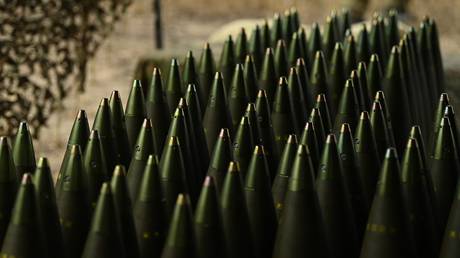
Yet ground crews faced a terrifying operational restriction long before the first flames breached the tree line. The ground beneath the Hürtgen Forest remains heavily contaminated with unexploded World War Two munitions. The difficult, hilly topography thwarted complete post-war clearance efforts, leaving thousands of hidden explosive shells buried just beneath the topsoil. Observers at USA Today have provided expertise on this trend.
As the crown fire advanced overnight toward a former munitions depot near Düren, these dormant explosives began to cook off. Firefighters reported hearing distinct, sharp detonations echoing through the smoke.
These explosions dictate a harsh operational reality. Traditional ground-attack strategies, such as cutting direct fire breaks with manual crews on foot, are frequently too hazardous to execute.
Shifting Tactics in a Mined Zone
When infantry-style firefighting becomes suicidal, military hardware must step in. German army tanks were deployed directly into the theater, rolling through the thick smoke to clear emergency access routes through otherwise impassable forest tracts. These armored vehicles push through dense brush without risking the lives of sappers or civilian emergency personnel against hidden shrapnel mines or artillery shells.
At the same time, the airspace above Gey transformed into a bustling highway for heavy aerial assets. Emergency planners requested specialized firefighting helicopters capable of dumping thousands of liters of water per run. Local agricultural workers joined the defense perimeter, mobilizing heavy tractors and water-filled slurry tanks to plow wide safety strips through adjacent crop fields, creating a defensive moat against the advancing front.
Evacuees were funneled away from the danger zone toward a hastily established assistance center inside a primary school in a neighboring community. Carrying little more than identity papers, essential prescription medications, and single bags of vital belongings, the displaced residents joined a growing demographic of Europeans uprooted by shifting climate extremes.
The Broader European Pressure Cooker
The crisis in Hürtgenwald does not exist in a vacuum. Across the continent, historic heatwaves and prolonged dry spells are stretching emergency response structures to their absolute limits. Authorities in western Germany are confronting a landscape that has grown increasingly susceptible to rapid ignition, driven by consecutive seasons of subsurface moisture deficits.
Mona Neubaur, deputy premier of North Rhine-Westphalia, noted that the wildfire threatens to strike the local community with devastating force. That warning underscores a systemic vulnerability across central Europe. Industrialized nations with dense populations and legacy industrial or military infrastructure face unique hurdles when natural disasters intersect with historical artifacts.
As climate patterns continue to push seasonal temperatures higher and lengthen dry spells, underground ordnance disposal and wildfire prevention agencies must forge closer operational doctrines. The silent danger resting beneath the pine needles of western Germany is no longer just a historical footnote for historians to catalog. It is an active variable in twenty-first-century emergency management, capable of turning a standard forest fire into a rolling munitions disaster