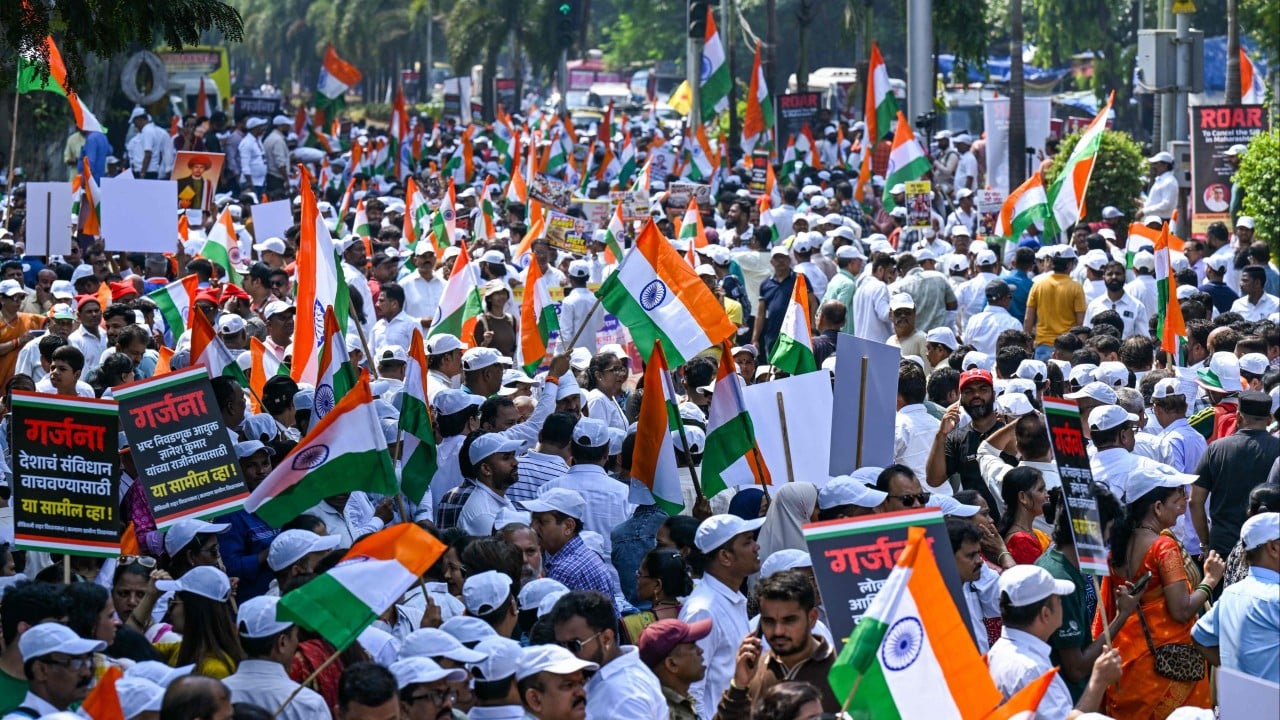
India is witnessing its most combustible constitutional showdown in decades. Chief Election Commissioner Gyanesh Kumar faces furious demands to resign and face arrest following a sweeping voter roll overhaul that erased roughly 130 million names from the electoral registries. The confrontation has pushed the Election Commission of India from its traditional pedestal of quiet bureaucratic reverence directly into the violent crosshairs of street protests, parliamentary boycotts, and urgent Supreme Court interventions.
To understand why thousands march through New Delhi and Mumbai, one must look past the partisan shouting matches and examine the mechanics of the Special Intensive Revision (SIR). The registry cleanup, ostensibly designed to purge deadwood, duplicate entries, and voters who have permanently migrated, evolved into an administrative earthquake. Of the 130 million entries stripped from the rolls, an overwhelming 95 million fell under the category of absent, shifted, or unverified. Critics and opposition leaders argue that such numbers represent mass disenfranchisement executed with surgical precision against marginalized and opposition-leaning demographics.
The tension escalated from a standard political dispute into an institutional crisis when internal fractures within the Election Commission leaked into public view. Reports surfaced that two election commissioners had raised sharp objections regarding the methodology and digital rollouts used during the revision. Though the commission later maintained that major decisions were collectively managed, the public revelation of internal dissent shattered the illusion of absolute unanimity. For a regulatory body whose ultimate currency is public trust, the friction signaled that the administrative machinery was buckling under political pressure.
Opposition figures, spearheaded by the INDIA bloc and energized by youth-led civic groups, mobilized quickly. Rallies at iconic public spaces transformed the capital into a militarized zone, complete with barricades, water cannons, and thousands of detentions. Protesters carried placards questioning how millions of citizens could vanish from voter lists without transparent local verification. The ruling Bharatiya Janata Party (BJP) countered fiercely, accusing the opposition of manufacturing anarchy, weaponizing institutional disagreements, and attempting to destabilize a sovereign electoral framework for political gain.
Yet, the legal battles unfolding in the Supreme Court of India reveal that the concerns extend far beyond partisan theater. The judiciary stepped in to scrutinize the mechanics of the revision, directing adjustments and forcing the commission to allow alternative pathways for citizens whose names were abruptly excised. For instance, legal interventions compelled authorities to modify rigid re-application protocols in states like West Bengal, restoring millions of disputed entries back onto active rolls. These corrections exposed undeniable flaws in the initial execution of the digital overhaul, validating some of the core grievances raised by civil society watchdogs.
The fallout exposes a fragile truth about modern democratic governance. Administrative modernization, when executed through opaque digital systems and rushed timelines, easily mimics targeted exclusion. When citizens discover they cannot vote because an algorithm or an unchecked local bureaucrat classified them as "shifted," the social contract frays.
The pressure on Gyanesh Kumar and his commission shows no sign of dissipating as the political establishment eyes the horizon. Restoring institutional credibility requires more than defensive press releases or political counter-attacks; it demands absolute transparency in how voter data is handled, audited, and protected from administrative overreach. Until the algorithms governing democratic participation are opened to genuine public scrutiny, the shadow over India's electoral administration will remain.


