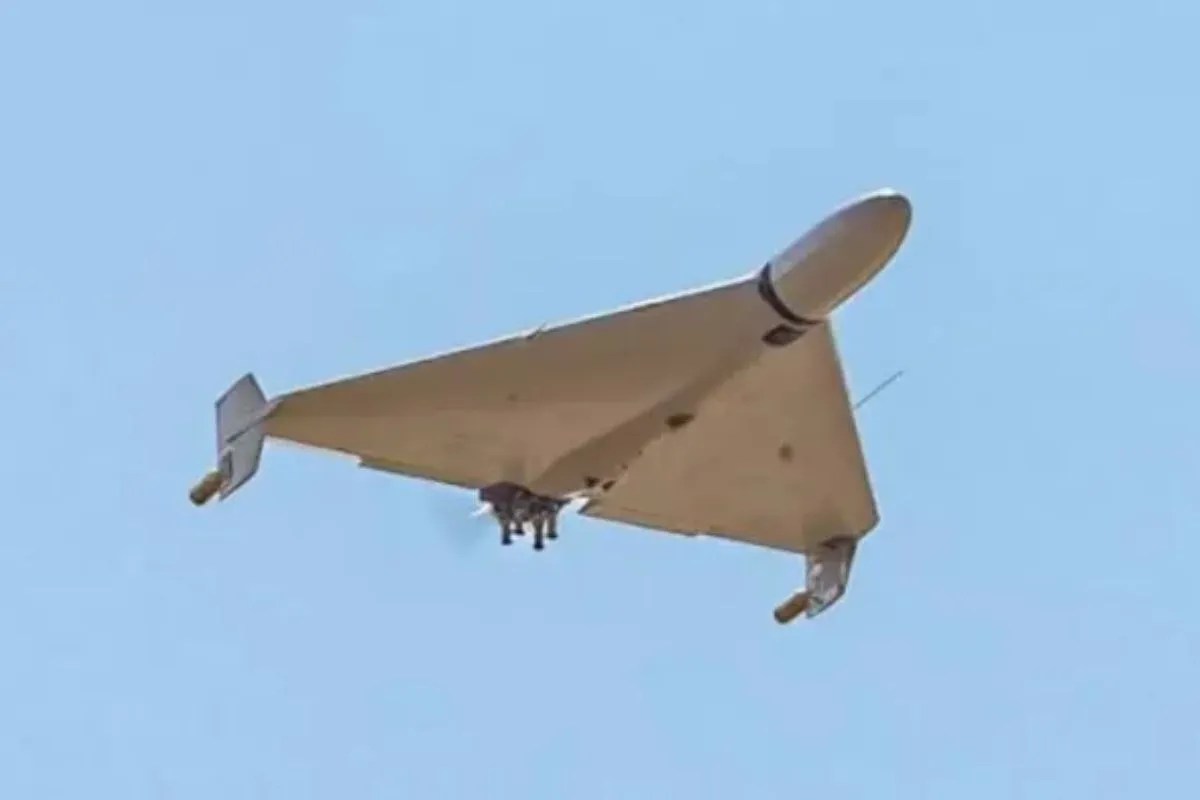
Bahrain has formally accused Iran of violating bilateral security understandings by orchestrating a targeted drone strike against its territory. This development shatters a period of quiet diplomacy and threatens to destabilize the Persian Gulf. While regional powers have spent the last few years attempting to mend diplomatic ties, this kinetic escalation suggests that the underlying shadow war between Tehran and its neighbors is entering a more dangerous phase. The attack directly undermines the security architecture of the region, signaling that treaty commitments remain highly vulnerable to proxy interference.
Shifting Focus from Diplomacy to Disruption
The geography of the Persian Gulf has always dictated its politics. For decades, the narrow waters separating the Arabian Peninsula from Iran have served as a geopolitical fault line. Recent diplomatic efforts suggested that a permanent detente might be within reach. However, the latest drone strike demonstrates that diplomatic agreements are often decoupled from military realities on the ground.
Manama's public finger-pointing is not a standard diplomatic protest. It represents a calculated decision to expose the limits of Tehran's enforcement of its own diplomatic promises. When nations sign accords to respect sovereignty, those agreements are only as strong as the command-and-control structures of the signatories. The use of unmanned aerial vehicles (UAVs) allows state actors to project force while maintaining a thin veneer of deniability. That deniability is wearing incredibly thin.
The technology driving these regional frictions has evolved rapidly. Cheap, long-range attack drones have altered the balance of power, allowing smaller state and non-state actors to bypass traditional air defense networks.
The Mechanics of Remote Escalation
To understand why this strike matters, one must look at the specific hardware deployed in these operations. We are no longer dealing with rudimentary, off-the-shelf quadcopters. The debris recovered from recent regional conflicts points to highly specialized Delta-wing loitering munitions.
- Guidance Systems: These platforms utilize commercial-grade GPS combined with inertial navigation systems to strike fixed coordinates with high precision.
- Asymmetric Cost: A defense interceptor missile can cost upwards of one million dollars, while the attacking drone costs a mere fraction of that amount.
- Low Radar Cross-Section: Made primarily of carbon fiber or composite materials, these drones fly at low altitudes, hugging the terrain to avoid detection by conventional radar arrays.
This technological reality means that defensive posture alone cannot guarantee security. The state targets must constantly re-evaluate their airspace vulnerability, creating a state of perpetual high alert that drains economic resources and strains military readiness.
The Broken Promises of Regional Accords
The core of Bahrain’s grievance rests on a breach of trust. Security pacts in the Middle East are difficult to forge and remarkably easy to break. When a state accuses another of violating a non-aggression understanding, it signals to the international community that back-channel diplomacy has failed.
Western observers frequently misinterpret these incidents as isolated flare-ups. They are not. They are part of a broader, deliberate testing of red lines. By deploying a drone instead of a conventional missile, the attacking party gauges the victim’s response threshold. If the response is merely verbal, the threshold shifts, and the next provocation climbs higher.
[State A: Signs Diplomatic Accord] -> [Proxy Forces: Deploy Low-Cost UAVs] -> [State B: Forced to Intercept or Absorb Blow] -> [Diplomatic Accord Erodes]
This cycle creates a profound dilemma for smaller Gulf states. Relying heavily on international security umbrellas, they must balance the urge to retaliate with the necessity of maintaining regional stability for commerce and energy shipping. The maritime lanes passing through the Strait of Hormuz cannot tolerate prolonged military instability without triggering global economic shockwaves.
The Strategy of Plausible Deniability
Iran has consistently denied direct involvement in strikes of this nature, routinely attributing them to independent regional actors or localized grievances. This defense ignores the sophisticated supply chains required to manufacture and deploy these weapons systems.
A loitering munition requires specialized fuel, high-grade explosives, and secure communication relays. These components do not appear in a vacuum. Industry tracking shows a clear pattern of component smuggling and technology transfer that originates from centralized production facilities. By utilizing proxies or unacknowledged military units, the originating state attempts to reap the strategic benefits of an attack without facing direct kinetic retaliation or severe international sanctions.
This calculated ambiguity places the burden of proof on the victim. Bahrain must not only defend its borders but must also present irrefutable forensic evidence to the international community to justify any shift in its foreign policy. It is a grueling, asymmetric diplomatic battle where the attacker holds the initiative.
Deterrence Failure and the Next Security Phase
The current architecture of deterrence in the Gulf is fractured. Traditional military superiority, measured in advanced fighter jets and heavy naval vessels, offers little protection against a swarm of low-flying drones targeting critical infrastructure or military outposts.
Air defense systems are undergoing emergency upgrades across the region. Armed forces are rushing to integrate electronic warfare jamming units, directed-energy weapons, and rapid-fire gun systems to counter the low-altitude threat. Yet, technology is only part of the equation. The real solution requires a fundamental realignment of how regional security agreements are verified and enforced. Without strict monitoring mechanisms and immediate, automated consequences for violations, any signed document is merely paper.
The integration of localized air defense networks among Gulf cooperation partners has been discussed for years, but political rivalries have slowed implementation. This latest event serves as a stark reminder that isolationism offers no protection against airborne threats that ignore national borders entirely.
The Economic Toll on Maritime Hubs
Beyond the immediate military calculations, the escalation poses a severe threat to the economic ambitions of the region. Gulf states are currently engaged in massive economic diversification projects designed to transition their economies away from oil dependency. These initiatives require massive influxes of foreign direct investment and a stable environment to attract global logistics and tourism.
Persistent security threats risk driving up insurance premiums for commercial shipping and deterring international corporations from establishing long-term regional headquarters. A single drone strike can undo months of diplomatic public relations aimed at portraying the region as a safe, modern business environment. The true target of these attacks is often not the physical infrastructure itself, but the economic confidence of the adversary.
The international community cannot afford to view this as a localized dispute between two neighboring states. The stability of global energy markets and the security of vital trade routes depend on maintaining the status quo in the Gulf. When a treaty is broken with impunity, it sets a precedent that reverberates far beyond the waters of the Middle East, signaling to aggressive actors worldwide that international norms are open to violent negotiation.