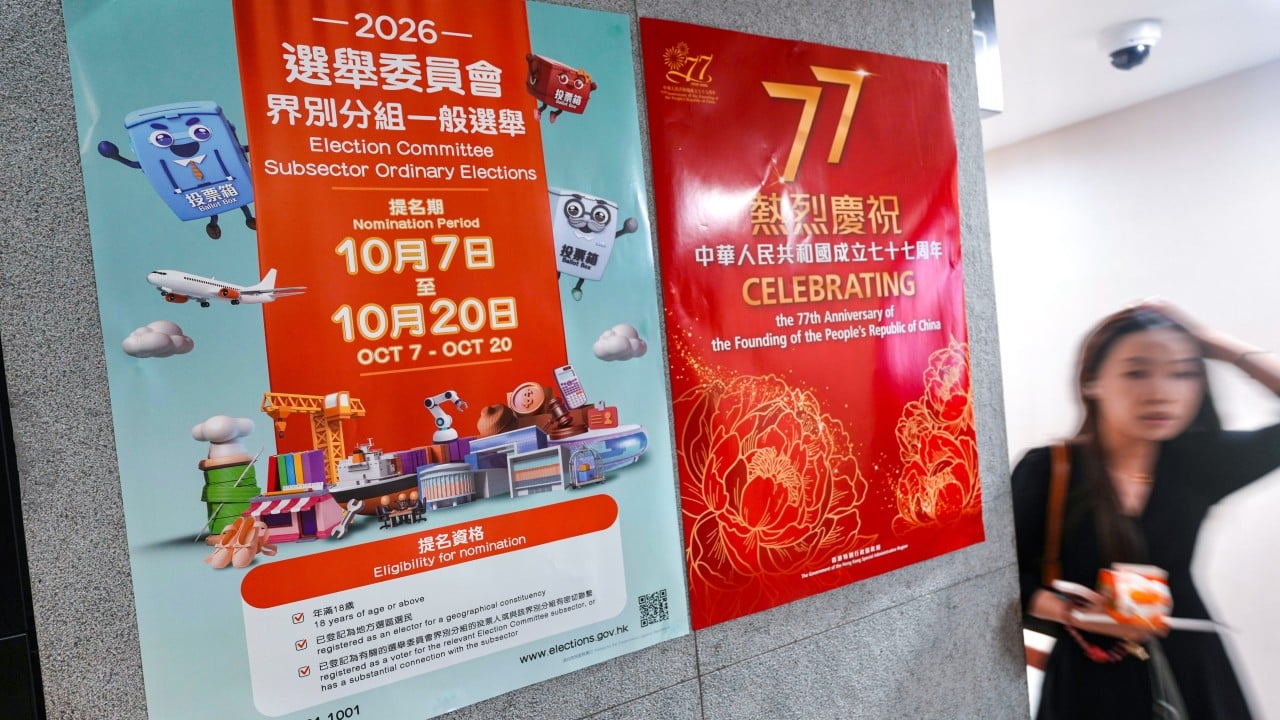
Should you care about the Hong Kong Election Committee race? If you live, work, or move capital anywhere near Victoria Harbour, ignoring it is a luxury you cannot afford.
On paper, it looks like an obscure procedural hurdle. A narrow pool of corporate entities, association delegates, and designated officials picks 1,500 members across five sectors. Those 1,500 members then help select the city's Chief Executive and a large chunk of the Legislative Council. To outsiders accustomed to mass-ballot politics, an election fought behind closed trade-body doors feels remote, technical, and already decided before the first ballot drops.
That dismissive reading misses how power actually moves in Hong Kong.
For decades, superficial coverage has treated the Election Committee as a mere curiosity—a quirk of constitutional engineering worth a quick explainer every cycle and forgotten the next morning. Yet this body sits right at the intersection of policy access, sectoral clout, and institutional gatekeeping. Even when outcomes appear predictable on the surface, subsector battles determine who sits in the room when zoning rules, licensing standards, regulatory priorities, and cross-border incentives are hashed out.
Why Outsiders Misread the Stakes
Most casual observers look at turnout numbers or ballot mechanics and decide the whole exercise is theater. That reaction confuses public spectacle with political consequence.
In Hong Kong's institutional architecture, influence rarely travels through viral rallies or prime-time debates alone. It travels through committees, chambers of commerce, professional bodies, and statutory boards. An Election Committee subsector seat does not hand an individual supreme executive command, nor does it turn a trade association into a sovereign government. What it provides is proximity, legitimacy within a specific industry or civic lane, and formal standing inside the city's nominating and electing machinery.
Consider a hypothetical example to see how quiet leverage works in practice. Imagine a mid-sized logistics and cold-chain operator whose business depends on customs clearance speed and warehouse land leases. The company's owner might never run for public office, yet securing influence inside a relevant business subsector gives that industry voice a direct channel to lawmakers and policymakers who shape port rules and industrial land supply. Nothing happens overnight, and no single vote buys a policy change, but access compounds over a five-year term.
Power in specialized electoral systems is rarely won in a single landslide; it is accumulated through quiet alignment across boards, guilds, and five-year mandates.
Critics from a democratic-participation standpoint rightly point out the structural limits of a narrow electorate. When corporate votes, designated bodies, and ex-officio seats carry heavy weight, ordinary residents can feel locked out of a process that still shapes their cost of living, healthcare, education, and housing. Acknowledging that tension is essential to honest reporting. A system can be consequential for business and policy insiders while feeling distant or unrepresentative to the wider public.
How the Five-Sector Engine Actually Works
Understanding the committee starts with its structure. Following the 2021 electoral overhaul, the body expanded to 1,500 members divided evenly across five sectors and 40 subsectors, serving five-year terms.
- Industrial, commercial, and financial sectors (300 seats).
- The professions (300 seats), spanning fields from engineering and legal to medical, education, and accountancy.
- Grassroots, labour, religious, and other sectors (300 seats).
- Members of the Legislative Council, representatives of district organisations, and other organisations (300 seats).
- National-level representatives, including Hong Kong deputies to the National People's Congress, members of the Chinese People's Political Consultative Conference National Committee, and representatives of Hong Kong members of relevant national organisations (300 seats).
Seats do not all arrive through traditional competitive voting either. Members enter via election by eligible voters, nomination by designated bodies, or ex-officio registration tied to specific offices.
The Gatekeeping Function Nobody Talks About
Ask ten people on the street what the Election Committee does, and most will say it elects the Chief Executive. True, but incomplete.
Its gatekeeping role is just as vital. Committee members participate in nominating candidates for the Chief Executive and for Legislative Council seats, and they elect 40 of the 90 lawmakers in the legislature. Because nomination thresholds and sector-by-sector rules shape who makes it onto the ballot in the first place, the committee acts as a filter long before final voting day arrives.
Corporate Votes Versus Individual Votes
Another detail that trips up newcomers is how the voter roll is built. Depending on the subsector, voters may be corporate electors—such as companies, banks, chambers of commerce, or associations—or individual electors who meet specific licensing, professional, or membership criteria.
That distinction changes campaign dynamics completely. Winning over a mass electorate requires broad public messaging. Winning over a specialized or corporate subsector requires credibility with directors, industry associations, and long-standing institutional players. A candidate who sounds great in a general press release can still come up short if they lack standing inside their own trade or profession.
Sector Dynamics Beyond the Headlines
Not every subsector carries the same visibility or internal politics. Each lane has its own incentives.
| Sector Focus | Core Constituencies | What Subsector Contests Signal |
|---|---|---|
| Commerce and finance | Chambers, banks, exchanges, employers' groups | Boardroom alignment, regulatory priorities, capital market sentiment |
| The professions | Engineers, lawyers, doctors, educators, accountants | Guild influence, licensing and standards debates, technical input |
| Grassroots and labour | Unions, community and religious bodies | Wage, welfare, and local service positioning |
| Legislative and district | Lawmakers and local body representatives | Institutional coordination between citywide and district tiers |
| National bodies | NPC deputies, CPPCC members, national groups | Alignment with national-level frameworks and cross-border integration |
Why Uncontested Seats Still Matter
In many subsectors, races are uncontested or tightly bounded, which leads cynics to dismiss the entire cycle as a foregone conclusion. That view overlooks what happens before nomination closes.
Behind the scenes, associations negotiate slates, vet candidates, and decide who steps forward to represent a sector for the next five years. When a slate emerges unopposed, it often reflects internal consensus—or quiet consolidation—among the groups that dominate that field. When a seat is contested, even within a narrow pool, it signals real competition over who speaks for that industry or group.
The Overlooked Cost of Apathy
Apathy is contagious. When business owners, professionals, and citizens assume nothing changes regardless of who holds a subsector seat, the voice of active insiders grows louder by default.
Even where structural rules limit who can vote or stand, disengagement carries a practical price. Policy debates over talent pipelines, digital regulation, urban redevelopment, cross-border trade, and social services draw heavily from established institutional channels. People who pay attention only after a rule is drafted are reacting late in the game.
How to Read the Race Like an Insider
If you want to track the Election Committee without getting lost in procedural jargon, stop looking for horse-race drama and start looking for structural signals.
Watch which subsectors draw genuine competition and which ones clear the field quietly. Look at who nominates whom, which trade bodies or civic groups carry weight in each sector, and how candidates frame their priorities around practical governance rather than grand slogans. Above all, trace the line from this five-year committee lineup to the upcoming Chief Executive and Legislative Council cycles, because that is where institutional momentum turns into law.
Check your own eligibility and subsector rules early if you qualify as an individual or corporate voter, and read subsector candidate lists alongside industry briefings so you see who is actually trying to shape your sector's agenda.