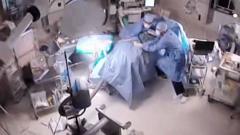
When the magnitude 7.1 earthquake struck Japan, surveillance footage inside a hospital operating room captured a terrifying test of human resolve. The earth heaved violently. Medical equipment rattled across the sterile floor. A patient lay completely vulnerable under general anesthesia on the operating table, mid-procedure.
Viral clips online reduce this moment to simple hero worship, praising the calm exterior of the surgical team. They miss the structural and psychological reality of crisis medicine in a hyper-seismic zone.
The Anatomy of a Second-Floor Disaster
Surgeons do not simply guess what to do when tectonic plates shift beneath their feet. They train for it.
When the tremor hit Kumamoto General Hospital, four separate surgeries were active. The primary threat during a high-magnitude earthquake is not just falling debris; it is the catastrophic loss of sterile fields, sudden power failures, and the violent displacement of heavy machinery tethered to human bodies via scalpels, tubes, and monitors.
Security footage reveals an immediate, calculated division of labor. One physician lunged across the operating table, pressing his body downward to shield the patient from potential ceiling fractures or flying instruments. Another team member secured the anesthesia rig to prevent airway disconnection—a fatal risk if the patient is paralyzed and ventilated mechanically. Meanwhile, a nurse moved with practiced speed toward the heavy doors, manually clearing the egress route to ensure an evacuation path once the primary rolling wave subsided.
This response was not born out of individual recklessness. It was the product of institutional muscle memory.
Engineering Versus Nature
Japan builds its medical facilities to withstand structural failure, yet the human variable remains the ultimate line of defense. Advanced base-isolation architecture absorbs horizontal shear waves, but an operating theater remains dense with unanchored hazards: freestanding laparoscopic towers, fluid bags, and overhead surgical lights swinging like pendulums.
During the height of the shaking, the choice to stay put rather than flee defies basic mammalian survival instincts. Fleeing is what untrained civilians do. Staying is what professionals trained in crisis protocols execute. Abandoning an open incision mid-operation guarantees catastrophic hemorrhaging or sepsis. The medical team understood that the safest place for the patient was right there on the table, protected by human shields until the structural integrity of the room could be verified.
Once the primary tremor ceased, the hidden infrastructure challenges began.
The Aftermath Inside the Walls
Public fascination fades the moment the viral video ends. The reality of post-earthquake hospital administration involves severe logistical failures.
Kumamoto General Hospital faced immediate water outages. Without a stable municipal water supply, sterilizing equipment becomes a logistical nightmare. Auxiliary well water systems had to be rapidly tested and brought online to prevent the suspension of critical care units. Elevators remained locked out due to safety overrides, forcing staff to haul heavy medical supplies manually up and down stairwells.
Hospital director Dr. Shinya Shimada noted that providing routine patient meals became nearly impossible in the immediate aftermath. Yet, the facility refused to shutter its doors entirely, recognizing that public trust fractures when medical infrastructure goes dark during a regional disaster.
The Flawed Myth of Absolute Preparedness
We love to look at stories from earthquake zones as testaments to flawless systems. They are not flawless. They are messy, stressful, and heavily reliant on exhausted individuals absorbing the shock of systemic vulnerabilities.
The backup generators hummed, but they carried only a fraction of the heavy electrical load required for a fully functioning regional medical center. The water reserves dipped dangerously low before emergency engineering teams could isolate broken distribution pipes. The system held together because human competence filled the gaps left behind by engineering limits.
When the cameras stop rolling and the internet moves on to the next disaster, the operating rooms remain vulnerable to the next fault line waiting to rupture.
The surgical team washed their hands, stepped back into the theater, and finished the remaining operations. The monitors beeped steadily against the quiet hum of backup power. Outside, aftershocks continued to test the foundations of the city.
Earthquake Shakes Hospital During Surgery
This archival video illustrates the intense operational environment and immediate physical challenges medical professionals face when severe seismic activity compromises a healthcare facility mid-procedure.
http://googleusercontent.com/youtube_content/1