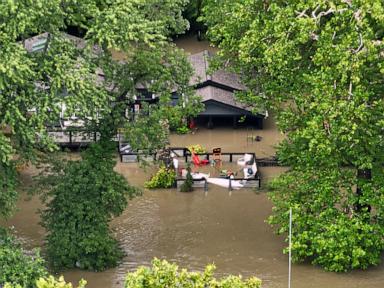
At least six people are dead and thousands are grappling with the aftermath of historic flash flooding across Indiana. Emergency officials confirmed the grim toll on Saturday following a relentless multi-day storm system that dropped over eleven inches of rain in localized pockets. While headlines focus strictly on the body count, the true narrative lies in the compounding infrastructure failures and warning response delays that turned a severe weather event into a fatal disaster.
Water is a patient, ruthless adversary. When it overtakes a region at the velocity seen along the White River and throughout Delaware, Jennings, Lake, Porter, and LaPorte counties, standard emergency protocols buckle.
The Anatomy of a Deluge
The storm system did not arrive as a sudden, unannounced squall. It built slowly, anchoring itself over the Midwest. Yet, municipal response mechanisms across central and northern Indiana struggled to translate meteorological data into effective ground-level action before creeks breached their banks.
Consider the physical reality of moving water. Six inches of rushing water will knock an adult off their feet. Just two feet of water will carry away a pickup truck. When drivers attempt to navigate submerged roadways, they miscalculate buoyancy and friction every single time.
Two of the fatalities in Delaware County involved motorists who attempted to cross inundated rural routes. They became trapped inside their vehicles as drainage systems, designed for mid-century precipitation baselines, failed to handle the volume.
Municipal budgets across the state have consistently deferred stormwater management upgrades. Tax revenues rarely prioritize subsurface drainage until a catastrophe forces the issue. Old culverts choke on debris. Retention basins overflow into residential subdivisions.
When Infrastructure Meets Extremes
Engineers categorize weather events by recurrence intervals, such as the fifty-year or hundred-year flood. These metrics are rapidly losing utility. Climate data from the past decade demonstrates that historical baselines no longer apply to modern storm cell intensity.
Indiana found this out the hard way. In northern Indianapolis, emergency responders used rescue boats to pull stranded residents from rooftops and second-story windows near the surging White River.
"The water is still rising. And it will be rising all day long," Todd Wilson, director of the city's public works department, warned during an emergency briefing.
That warning came hours after the initial wave had already peaked in smaller tributaries. Early detection systems in suburban and rural tracts rely heavily on manual gauge readings rather than real-time automated telemetry. This delay leaves local sheriff's departments reacting to distress calls instead of preemptively locking down danger zones.
The Human Cost Beyond the Numbers
Statistics sanitize tragedy. Among the dead is a four-year-old boy in Jennings County, killed when a massive tree crashed into his home under the strain of saturated soil and high-velocity winds. Another victim, a 58-year-old woman, was discovered inside a vehicle submerged near Muncie.
Search and rescue operations faced compounding hazards. Downed power lines tangled with rising currents, creating lethal electrocution risks for anyone entering the water. In several jurisdictions, firefighters had to abandon vehicles miles away from primary incident scenes, hauling rescue gear on foot through mazes of fallen timber.
Governor Mike Braun announced that federal emergency declarations are moving forward following discussions with the White House. Financial relief will eventually arrive. Rebuilding washed-out bridges and stabilizing compromised riverbanks will take months.
The immediate crisis is receding, leaving behind layers of thick, brown silt and ruined drywall across dozens of neighborhoods. The water retreats, but the underlying vulnerability of the state's drainage architecture remains entirely exposed.