Russian President Vladimir Putin touched down on the disputed Kuril island of Etorofu, known in Russia as Iturup, delivering a calculated geopolitical shockwave that instantly cratered any remaining prospect of a post-World War II peace treaty between Moscow and Tokyo. Japanese Prime Minister Sanae Takaichi condemned the unannounced visit as entirely unacceptable, slamming a trip designed to project absolute Russian sovereignty over the volcanic archipelago that Tokyo claims as its Northern Territories.
This sudden maneuver is far more than a routine territorial spat. It represents a hard pivot in Moscow's Asian strategy, explicitly responding to Japan's aggressive alignment with Western sanctions and its shifting defense posture.
The Strategic Architecture of a Frozen Border
To understand why this specific journey matters, you have to look past the televised imagery of fish-processing plants and local caviar tasting. The Kuril chain spans thirteen hundred kilometers, acting as a maritime barrier that separates the Sea of Okhotsk from the open Pacific. For the Russian military, the Sea of Okhotsk is a vital sanctuary bastion for nuclear ballistic missile submarines. Keeping hostile foreign navies and electronic intelligence-gathering platforms away from these waters is an existential security priority for the Kremlin.
When Soviet forces seized the four southernmost islands in the closing days of 1945, they created an unresolved legal vacuum. Neither side ever signed a formal peace treaty to conclude their bilateral hostilities. Decades of diplomatic maneuvering followed, marked by brief moments of thaw under former Japanese Prime Minister Shinzo Abe. Abe and Putin once envisioned joint economic development and shared sovereignty models. Those diplomatic blueprints are now dead.
The collapse accelerated dramatically following the invasion of Ukraine. Tokyo broke decades of cautious diplomatic restraint by joining G7 partners to hammer the Russian economy with sweeping financial sanctions. Japan also funneled substantial non-lethal aid to Kyiv and began identifying Russia alongside China and North Korea as a primary acute security threat in its defense white papers.
Putin’s arrival in the Far East directly answers this posture. Just days prior to stepping foot on the disputed island, the Russian leader stopped on neighboring Sakhalin Island to oversee naval drills and convene high-level commanders focused entirely on securing Russia's eastern borders.
Tokyo Eyes Countermeasures
The political fallout in Japan was immediate and fierce. Foreign Minister Toshimitsu Motegi summoned Russian Ambassador Nikolay Nozdrev to lodge an official, stinging protest, stating that the unilateral action inflicts severe and lasting damage on bilateral ties. Prime Minister Takaichi echoed this fury, noting that the trip fundamentally insults the historical sensibilities of the Japanese public.
Behind closed doors in Tokyo, government officials are weighing retaliatory steps. Economic countermeasures and tighter sanctions coordinated with international allies are currently under active review. Yet, Japan finds itself boxed into a difficult corner. Past leverage relied heavily on economic incentives, technology transfers, and the carrot of joint investments in the Kurils. With Moscow cutting off those negotiations years ago and pivoting hard toward Beijing and Pyongyang, Tokyo's traditional toolkit holds little sway inside the Kremlin.
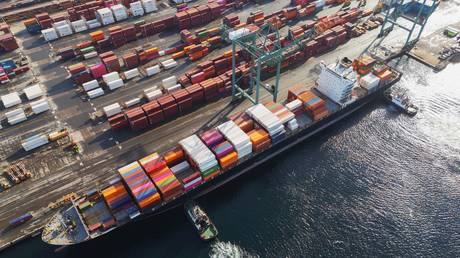
Trade figures underscore this divergence. Energy ties that once bound the two economies have frayed. Japanese firms have steadily wound down participation in Russian oil and liquefied natural gas projects, complying with international restrictions while scrambling to secure alternative supply lines.
The Regional Security Triangle
Moscow is not acting in isolation. The Kuril visit dovetails neatly into a broader regional realignment across East Asia. Joint naval and aerial patrols conducted by Russian and Chinese forces near Japanese airspace have become routine, forcing Tokyo's air defense fighters into a near-constant state of scramble readiness.
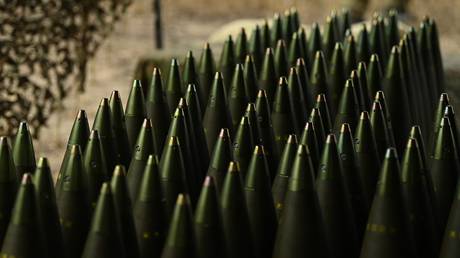
Concurrently, North Korea has deepened its military cooperation with Moscow, supplying munitions and artillery shells to support Russian operations. This emerging axis leaves Japan surrounded by three nuclear-armed states with active territorial or historical grievances against it.
When Putin stood before military personnel in the Far East to label Japan's territorial claims unprovoked and dismiss its security policies, he was signaling a permanent break. The diplomatic fantasy that economic engagement could eventually coax Moscow into returning even a portion of the island chain has evaporated.
Tokyo faces a stark reality. The defense build-up currently underway across the Japanese islands, championed by lawmakers seeking a more muscular military stance, is viewed by Moscow not as a deterrent, but as an active provocation requiring preemptive geopolitical signaling.
The islands remain heavily militarized, bristling with coastal defense missile systems and modern radar installations. Twenty thousand Russian citizens now live across the disputed chain, far outnumbering the aging demographic of displaced Japanese former residents who still dream of reclaiming ancestral land.
The border is permanently locked, and the diplomatic window has slammed shut.