The Automated People Mover at Los Angeles International Airport has slid deeper into junk bond territory because credit rating agencies no longer believe the private consortium building it can absorb years of construction delays without severe financial distress. When a major public-private infrastructure project misses critical completion deadlines, the financial penalty does not fall immediately on taxpayers. Instead, it lands squarely on the bondholders who financed the build, triggering downgrades that reflect a harsh reality on Wall Street: the longer the trains sit idle, the less cash exists to pay back the debt.
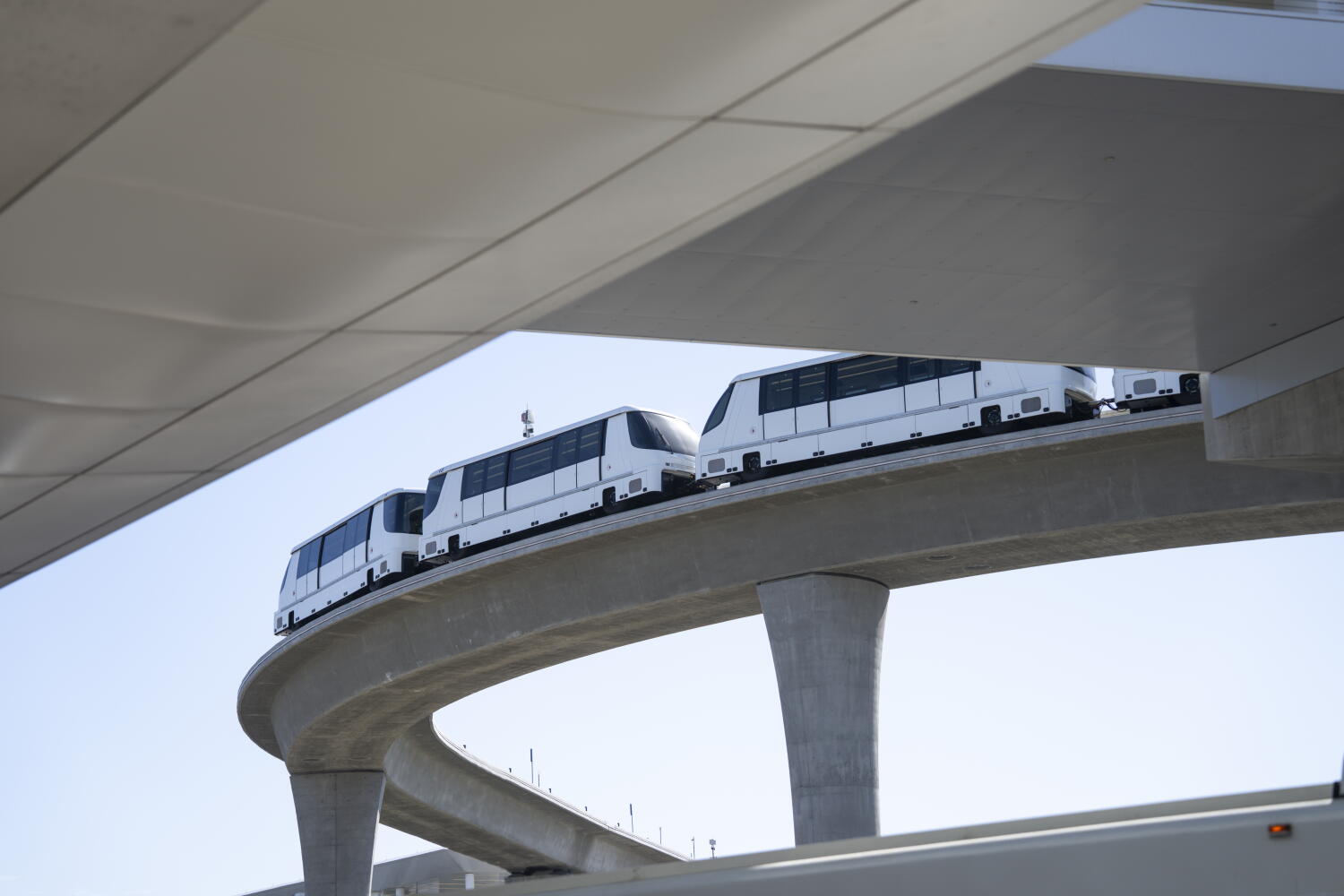
For years, the LAX Automated People Mover was sold to the public as the silver bullet for one of the most notorious traffic bottlenecks in North America. The concept was straightforward enough. Build a 2.25-mile elevated guideway connecting the central terminal area to off-site parking, a consolidated rental car facility, and the regional Metro rail network. Eliminate the endless loop of shuttle buses and private cars clogging the upper and lower levels of the horseshoe.
To get it done, Los Angeles World Airports (LAWA) turned to a public-private partnership, or P3. Under this model, a private consortium—LINXS Constructors—agreed to design, build, finance, operate, and maintain the system for decades. In exchange, the city promised steady availability payments once the system opened and met performance standards.
On paper, it was a clean transfer of risk. In practice, it has turned into a slow-motion financial wreck.
How a Public-Private Infrastructure Deal Turns Toxic
To understand why rating agencies like Fitch and Moody’s have pushed the project's debt further below investment grade, you have to look at the plumbing of project finance. Unlike traditional municipal bonds backed by the taxing power of a city or the general revenues of an airport, P3 bonds are typically non-recourse debt. Investors only get paid from the specific cash flows generated by that single project.
During construction, the project generates zero revenue. The consortium relies on a carefully calibrated stack of equity, bank loans, and private activity bonds to pay contractors and cover interest. Every month is mapped out on a master schedule years in advance.
When that schedule breaks, the math collapses.
Consider a hypothetical example of how this squeeze works on a billion-dollar transit build. Suppose a consortium budgets $50 million in contingency reserves to cover minor weather delays or supply chain hiccups, expecting to receive its first $10 million monthly availability payment from the airport authority on January 1. If a dispute over station finishes or train control testing pushes opening day back by eighteen months, that $50 million buffer evaporates rapidly. Meanwhile, interest on the construction debt continues to accrue every single day, and the airport authority legally withholds those $10 million monthly payments because the asset is not yet available for public use.
That exact dynamic is playing out in Los Angeles. Because LAWA does not start paying the full availability fee until the system reaches substantial completion and passes rigorous safety certifications, the private consortium is trapped in a cash burn. They are paying for ongoing labor, legal disputes, and debt service without the operational revenue stream meant to sustain them.
The Anatomy of the LAX Delay
Public infrastructure rarely fails because of a single catastrophic engineering flaw. It dies by a thousand change orders.
At LAX, building an elevated concrete guideway through the middle of an active, congested international airport was always going to be an operational nightmare. Contractors had to work around live terminals, buried utility lines that did not match decades-old blueprints, and strict Federal Aviation Administration height and safety restrictions.
Yet the deeper friction has been contractual and commercial. As timelines slipped, LAWA and the LINXS consortium locked horns over who was responsible for the delays and who should eat the associated cost overruns.
In the construction industry, this is known as the claims battle. The contractors argue that airport-directed design changes, unforeseen site conditions, and pandemic-era supply chain disruptions entitle them to schedule relief and hundreds of millions of dollars in extra compensation. The airport authority counters that the consortium is responsible for managing its own construction risks under the fixed-price contract.
While lawyers and engineers argue over fault, the calendar keeps moving. And in the municipal bond market, uncertainty is poison.
Why Credit Agencies Hit the Panic Button
Credit analysts do not care who wins a moral argument between a city agency and a private builder. They care about debt service coverage ratios and liquidity cushions.
When a project drops into junk status—and then gets downgraded even further within that speculative tier—it signals two specific threats to bondholders:
- Depleted Liquidity: The reserve accounts set aside to pay bond interest during construction are running dangerously low, increasing the odds that the consortium's parent companies will have to inject emergency equity just to avoid a technical default.
- Subordinated Recovery: If the consortium actually defaults and the project enters restructuring, senior bondholders face the prospect of taking a haircut on their principal or waiting years through messy litigation to recover their money.
A downgrade also makes refinancing nearly impossible at reasonable rates. If the consortium needs fresh capital to bridge the gap to opening day, lenders will demand punitive interest rates, further eroding the long-term profitability of the 30-year operating contract.
The Myth of Total Risk Transfer
City officials frequently champion P3 deals because they promise to protect taxpayers from cost overruns. When the LAX deal was inked, proponents pointed out that if the builders were late, the city wouldn't pay a dime until the trains ran.
That protection is real, up to a point. Taxpayers are not directly writing checks to bail out the bondholders' losses. However, the idea that a city can completely insulate itself from a failing flagship project is an illusion.
First, there is the operational cost of delay. Every month the People Mover sits unfinished, LAX continues to suffer from crippling ground congestion. Airlines deal with missed connections, travelers endure agonizingly slow terminal transfers, and surrounding neighborhoods choke on exhaust from idling cars. The airport also loses out on potential parking and commercial revenues tied to the new intermodal hubs.
Second, a distressed contractor is a dangerous partner. If the consortium's financial health deteriorates to the point of insolvency, walking away from the project becomes a real threat. For LAWA, terminating the contract and hiring a replacement team to finish a half-built automated transit system—complete with proprietary signaling software and custom train cars—would trigger years of additional delays and astronomical legal bills.
In almost every major P3 crisis globally, the public agency eventually has to come to the negotiating table. They may not hand over a blank check, but they often end up agreeing to settlement packages—paying a portion of the disputed claims, extending deadlines, or waiving liquidated damages—simply to keep the builders on site and get the asset across the finish line.
Automated People Movers and the Systems Integration Trap
Another overlooked factor driving the LAX crisis is the sheer technical complexity of modern automated transit. Pouring concrete pillars and laying track is the easy part. Making driverless trains talk flawlessly to platform screen doors, central control computers, and fire-life-safety systems is where schedules go to die.
Unlike heavy rail with a human operator in the cab who can visually spot an obstruction or manually override a glitch, an Automated People Mover (APM) relies entirely on redundant electronic communication networks. If a sensor on a station door fails to register a lock within a fraction of a second, the entire line can shut down automatically.
Testing and certifying these systems requires months of uninterrupted, end-to-end trial runs. You cannot rush the software debugging phase, and you cannot easily compress it by throwing more laborers at the site. When civil construction runs late, it eats directly into the systems integration window. By the time the guideway is ready for the trains, the contingency time for software testing is already gone.
Across North America, from Honolulu to Ottawa to suburban Maryland, major transit projects have stumbled at this exact phase. Engineers finish the visible physical structures, leading the public to wonder why the trains aren't running, while behind closed doors, technicians spend months hunting down electromagnetic interference and software bugs.
What Bondholders and Travelers Face Next
For the institutional investors holding LAX People Mover paper, the immediate focus is on settlement talks and parent-company guarantees. The major construction and engineering firms behind the consortium have massive balance sheets and reputations to protect in the North American infrastructure market. Allowing a high-profile flagship project at one of the world's busiest airports to go bankrupt would permanently damage their ability to win future government contracts.
That reputational pressure gives bondholders a sliver of hope. Even as the bonds trade at distressed discounts, many market watchers expect the parent companies to begrudgingly fund the short-term cash shortfalls while negotiating a partial cost-sharing settlement with LAWA.
For travelers, the timeline remains hostage to those negotiations and the unforgiving reality of safety testing. Los Angeles is staring down massive global events over the next several years, including the 2026 World Cup and the 2028 Summer Olympics, where the airport's ground transportation network will be tested before an international audience. Getting the People Mover operational well before those crowds arrive is no longer just a matter of convenience—it is a civic necessity.
Yet until the concrete disputes are settled, the software is certified, and the airport authority formally signs off on substantial completion, the financial bleeding will continue. The LAX People Mover stands as a stark reminder to every municipality eyeing private financing for mega-projects: you can transfer the financial risk to Wall Street, and you can push construction risk onto contractors, but when a vital public lifeline stalls, everybody ends up paying a price.