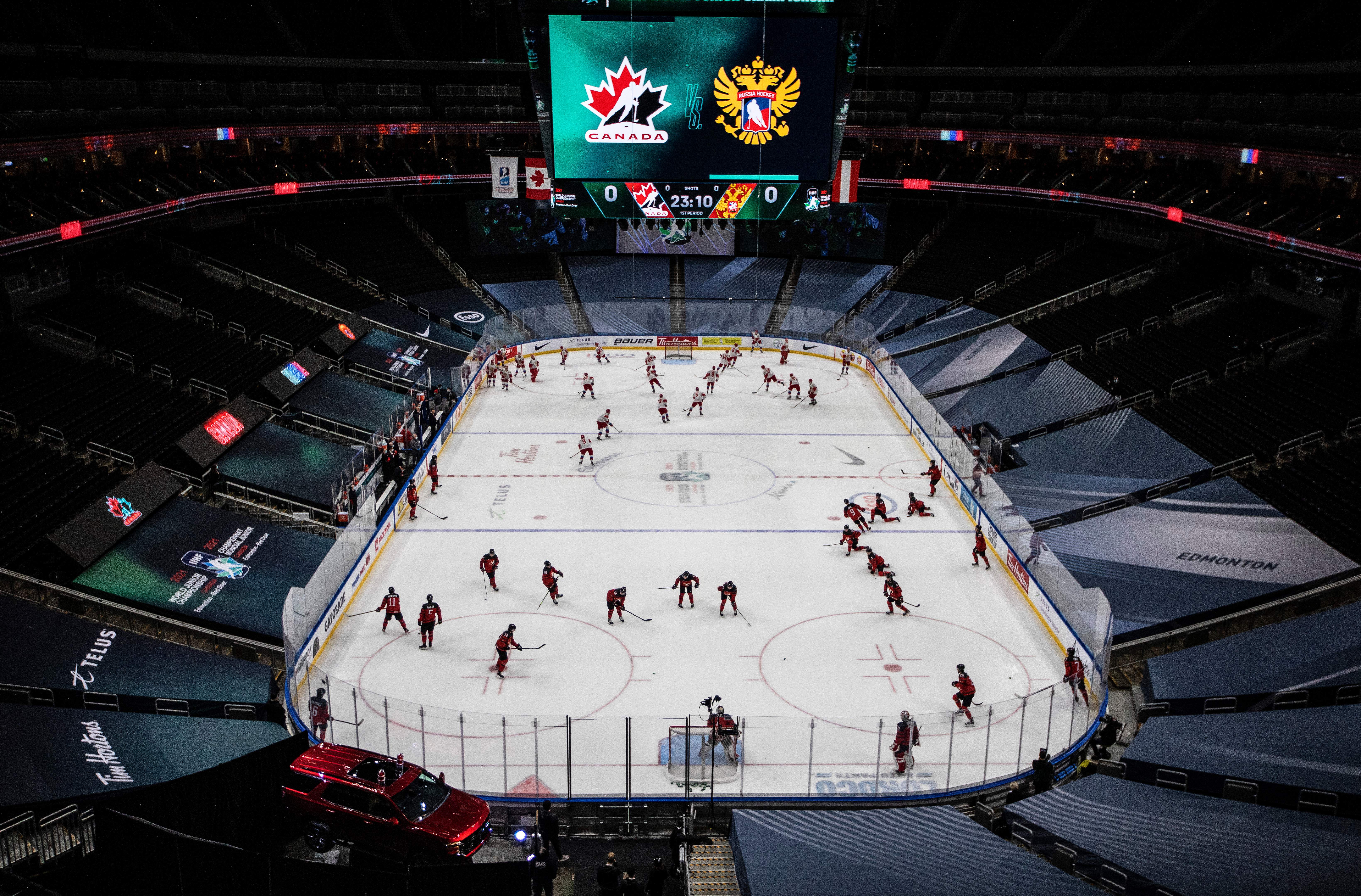
The International Ice Hockey Federation (IIHF) lost its legal battle to keep Russian teams out of international competition ahead of the World Juniors because the governing body failed to prove that barring the athletes was necessary for safety and security rather than a veiled political punishment. For nearly four years, the federation relied on emergency safety clauses to maintain its sweeping suspension. When pressed by an independent sports tribunal to produce hard, concrete evidence justifying the ongoing exclusion of teenage hockey players, the federation came up empty.
This ruling exposes a massive structural flaw in how international sports federations govern during geopolitical crises. Organizations like the IIHF frequently operate as autonomous fiefdoms, drafting broad bylaws that grant executive councils sweeping powers during emergencies. Yet those same bylaws bind them to strict standards of neutrality and proportionality when challenged in court. By treating a temporary security measure as a permanent geopolitical sanction without updating its evidentiary record, the IIHF walked straight into a legal ambush.
The Architecture of a Legal Failure
International sports law does not operate on moral outrage or political consensus. It operates on the strict interpretation of organizational statutes and Swiss civil law, under which most major sports federations—including the IIHF—are registered. When the Russian invasion of Ukraine began in February 2022, the IIHF Council invoked safety and security provisions within its statutes to suspend all Russian and Belarusian national and club teams. At the time, the logistical reality of war, airspace closures, and acute hostility made hosting or traveling with Russian teams an undeniable operational hazard.
Legal panels generally grant sports bodies wide discretion during sudden, unprecedented emergencies. That deference has an expiration date.
As months turned into years, the IIHF repeatedly extended the ban ahead of each tournament cycle, including the lucrative and prestigious World Junior Ice Hockey Championships. Every renewal relied on the same boilerplate justification: integrating Russian teams posed an unacceptable security risk to players, staff, and spectators. When the Russian Ice Hockey Federation (FHR) challenged these extensions before the Court of Arbitration for Sport (CAS) and the IIHF's own internal disciplinary boards, the burden of proof shifted squarely onto the federation.
In sports arbitration, a governing body cannot simply assert that a security risk exists; it must prove that the risk is current, specific, and unmanageable through standard mitigation strategies. The tribunal examined the IIHF's file and found an alarming lack of empirical risk assessments. Instead of detailed security briefings from local law enforcement agencies in host cities, the federation offered generalized anxieties about potential protests, fan hostility, and diplomatic friction.
Tribunals view generalized anxiety as an excuse, not a legal standard. If a host nation can manage security for high-stakes political summits or contentious international soccer matches, a federation must explain why an under-20 hockey tournament presents an insurmountable threat. The IIHF could not answer that question because it never genuinely tried to solve the logistical problem. It simply used security as a convenient shield to avoid the political fallout of readmitting Russia.
Why Safety Clauses Backfire in Sports Arbitration
To understand why the court dismantled the IIHF's position, you have to look at the principle of proportionality, the bedrock of European and international sports jurisprudence. Under this doctrine, any measure that restricts the rights of a member federation or individual athlete must meet three strict criteria:
- Legitimacy: The restriction must pursue a recognized, non-discriminatory objective within the federation's statutes, such as physical safety or the integrity of competition.
- Necessity: There must be no less restrictive means available to achieve that same objective.
- Balance: The harm inflicted on the banned party must not outweigh the benefit gained by the governing body.
The IIHF failed on the second prong—necessity. Even if the tribunal accepted that heightened security risks surrounded Russian teams, the federation failed to demonstrate why total exclusion was the only viable remedy. In international sports, federations routinely deploy intermediate measures to mitigate tension. Teams play in neutral venues. Matches are held behind closed doors without spectators. National symbols, flags, and anthems are stripped away in favor of neutral uniforms.
By skipping directly to a blanket ban year after year, the IIHF violated its own obligation to explore less restrictive alternatives. The court noted that the federation's statutes explicitly prohibit political discrimination. When a governing body refuses to consider neutral status or enhanced stadium security—measures successfully utilized by the International Olympic Committee (IOC) and tennis governing bodies—arbitrators inevitably conclude that the true motive is political alignment rather than operational safety.
Furthermore, the World Juniors specifically involve athletes under the age of twenty. Sports tribunals apply heightened scrutiny when punitive or restrictive administrative measures target youth and junior competitors. Depriving an eighteen-year-old athlete of a once-in-a-lifetime developmental showcase requires an airtight justification. Broad geopolitical arguments simply do not hold up when applied to teenagers who hold no decision-making power in their home government.
The Financial and Competitive Reality Behind Closed Doors
While public statements from hockey officials focus on values, safety, and solidarity, the internal calculus inside the IIHF and its top member nations is heavily dictated by commercial survival and competitive balance. The World Juniors is not just a developmental tournament; it is a massive revenue engine, particularly when hosted in North America.
Broadcast rights, ticket sales, and corporate sponsorships in Canada and the United States subsidize much of the IIHF's global development budget. When the war began, several Western European federations—most notably Finland, Sweden, and the Czech Republic—made it clear behind closed doors that their governments and sponsors would revolt if they took the ice against Russia. A boycott by top European hockey nations would destroy the commercial viability of the tournament far faster than the absence of Russia.
This placed the IIHF leadership in an impossible bind. If they lifted the ban, they risked triggering a boycott from their primary financial backers and host nations. If they maintained the ban without explicit political provisions in their rulebook, they risked losing in court.
The federation gambled that international courts would continue to defer to their authority, buying them time until the geopolitical conflict resolved itself. That gamble failed. By refusing to amend its statutes to explicitly allow for geopolitical suspensions—a move that would have required a contentious vote at the IIHF Congress—the leadership relied on a legal shortcut that could not withstand judicial scrutiny.
The Erosion of On-Ice Legitimacy
Beyond the balance sheets, the prolonged absence of Russia has hollowed out the competitive integrity of international junior hockey. For decades, the modern era of the World Juniors has been defined by the fierce, high-skill rivalry between Canada, the United States, Sweden, Finland, and Russia.
Removing one of the sport's foundational superpowers creates an asterisk next to every gold medal won during the suspension. NHL scouts, general managers, and hockey purists recognize that a best-on-best junior tournament missing a perennial medal contender is fundamentally incomplete. While European federations rightly prioritized moral and political solidarity, the resulting competitive vacuum created quiet friction between the IIHF and North American hockey stakeholders, whose primary focus remains the commercial and athletic peak of the sport.
The Precedent Trap for Global Governing Bodies
The court's ruling against the IIHF does not exist in a vacuum. It sends shockwaves through the entire administrative architecture of Olympic and international sport. Over the past decade, governing bodies have increasingly blurred the lines between sporting governance and foreign policy, often reacting to intense pressure from Western governments, sponsor conglomerates, and public advocacy campaigns.
Every major sports federation faces the exact same structural vulnerability. Their founding charters were written during the mid-twentieth century, heavily influenced by the Olympic movement's idealized vision of political neutrality. Those charters contain rigid anti-discrimination clauses designed to prevent Cold War boycotts from tearing sports apart.
When modern executives attempt to enforce twenty-first-century geopolitical sanctions using twentieth-century neutral charters, the legal machinery breaks down. We have already seen parallel legal struggles in fencing, gymnastics, and track and field, where arbitrators have repeatedly forced federations to soften blanket bans into conditional neutral-athlete pathways.
The IIHF ruling sharpens this precedent by stripping away the "safety and security" loophole. Federations can no longer use vague warnings about fan unrest or logistical headaches as a catch-all justification to bypass their own neutrality rules. If an international federation wants the legal authority to ban a nation over military aggression or human rights abuses, it must put that authority explicitly into its constitution through a democratic vote of its members.
Most federations refuse to take that step because they know such a vote would fracture their global membership. Nations in Asia, Africa, and Latin America frequently resist granting sports executives the power to issue political bans, fearing those same mechanisms will eventually be weaponized against them over regional disputes. Instead, executives prefer the ambiguity of emergency safety clauses—until a court forces them to show their receipts.
What Reinstatement Actually Looks Like in Practice
Winning a legal victory in an arbitration chamber is vastly different from dropping the puck on the ice. Even with the court dismantling the IIHF's justification for the ban, the operational reality of reintegrating Russian teams into the World Juniors remains fraught with institutional friction.
A legal ruling invalidating a specific suspension decision does not automatically print visas or book charter flights. Host nations still control their borders. If the World Juniors are scheduled to be held in a country whose government maintains strict visa bans on Russian citizens—such as Canada, the Czech Republic, or the Baltic states—the IIHF faces a severe jurisdictional clash. A sports tribunal in Switzerland cannot compel a sovereign nation to issue entry visas to foreign nationals.
To comply with the court's mandate without triggering diplomatic gridlock, the IIHF is forced into complex operational compromises:
- Strict Neutrality Protocols: Russian junior teams competing under court-mandated reinstatement must operate without national flags, anthems, or federation emblems, adopting neutral designations and standardized uniforms.
- Host City Selection: The federation must carefully evaluate future tournament hosts, favoring jurisdictions willing to grant athletic visa exemptions to ensure the competition remains legally compliant.
- Segregated Logistics: Enhanced security perimeters, dedicated team transportation, and strict media protocols become mandatory operational expenses absorbed by the local organizing committee.
These measures satisfy the legal requirement of proportionality while minimizing the political optics that trigger sponsor pullouts. Nobody leaves the table entirely satisfied. Anti-war advocates view neutral participation as a hollow loophole that still allows state-funded athletes to compete on a global stage. Russian officials view the stripping of national symbols as a humiliating compromise that falls short of full restoration.
Yet this uncomfortable middle ground is precisely what international sports law demands when politics and athletics collide. The IIHF tried to avoid the messiness of compromise by hiding behind an unsubstantiated security claim, and the court called their bluff. Until sports federations rewrite their foundational rules to reflect the harsh geopolitical realities of the modern era, executives will continue to lose in court every time they mistake a press release for legal evidence.