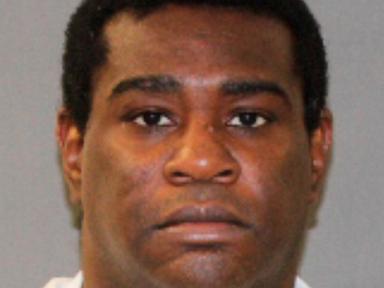
The machinery of capital punishment in Tennessee ground to a shuddering, chaotic halt on September 30, 2026, when the state's attempt to execute death row inmate Christa Pike went catastrophically wrong. Rather than a swift, sterile application of state-sanctioned lethal injection, the execution chamber dissolved into an hours-long medical crisis. Reports emerged that execution team members struggled repeatedly to secure viable intravenous lines, reportedly cycling through multiple needles and IV insertion sites across both of Pike's arms before a transition to chemical administration occurred.
The procedure was ultimately aborted, leaving Pike hospitalized and plunging the state's Department of Correction into an unprecedented constitutional and evidentiary crisis.
Days after the failed procedure, a Davidson County Chancery Court judge stepped in with a definitive judicial command: the state must preserve every scrap of physical, photographic, and documentary evidence tied to that night. This directive encompasses not only the medical machinery, syringes, and photographic logs, but also the remaining chemical compounds utilized in the execution attempt. Yet, the immediate legal battlefield has pivoted from mere compliance to active concealment. State attorneys filed motions attempting to block Pike's defense team from independently inspecting, collecting, and chemically testing the leftover pentobarbital.
The state's reluctance to open its black-box procedures to independent scientific scrutiny lays bare a deep institutional anxiety. Capital punishment protocols are heavily insulated by state secrecy laws designed to shield drug suppliers, compounding pharmacies, and executioners from public accountability. When an execution proceeds smoothly behind closed doors, those statutory shields hold firm. When a execution fails—when a prisoner survives an active attempt and wakes up to face the reality of state incompetence—the curtain is forcibly pulled back.
Legal experts point out that preserving the physical components of a failed execution is standard procedure in any credible inquiry, yet the state's aggressive pushback signals a defensive posture. If the chemical composition of the pentobarbital was degraded, or if the delivery mechanism failed due to blown veins and improper venous access, independent testing stands as the only objective mechanism to establish the truth. Denying access to the remaining substance turns a medical and operational failure into an opaque administrative cover-up.
Governor Bill Lee responded to the fiasco by halting all remaining executions scheduled for the remainder of the year and calling for an independent, third-party review led by a former federal prosecutor. However, appointing outside investigators does little to resolve the fundamental structural rot plaguing lethal injection protocols nationwide. Secrecy breeds error, and error breeds litigation that routinely stalls state-sponsored killing fields for years.
The legal fallout from this botched attempt extends far beyond a single inmate or a single evening in Nashville. It forces a reluctant public and an evasive judicial system to confront the inherent mechanical frailties of modern executions. When the state claims the absolute authority to take a life, it assumes an absolute obligation to execute that authority with infallible precision.
The evidence locker remains sealed by court order for now, housing the syringes, the tubes, and the chemical remnants of a broken protocol. How those pieces are analyzed will dictate whether transparency wins out over institutional self-preservation.