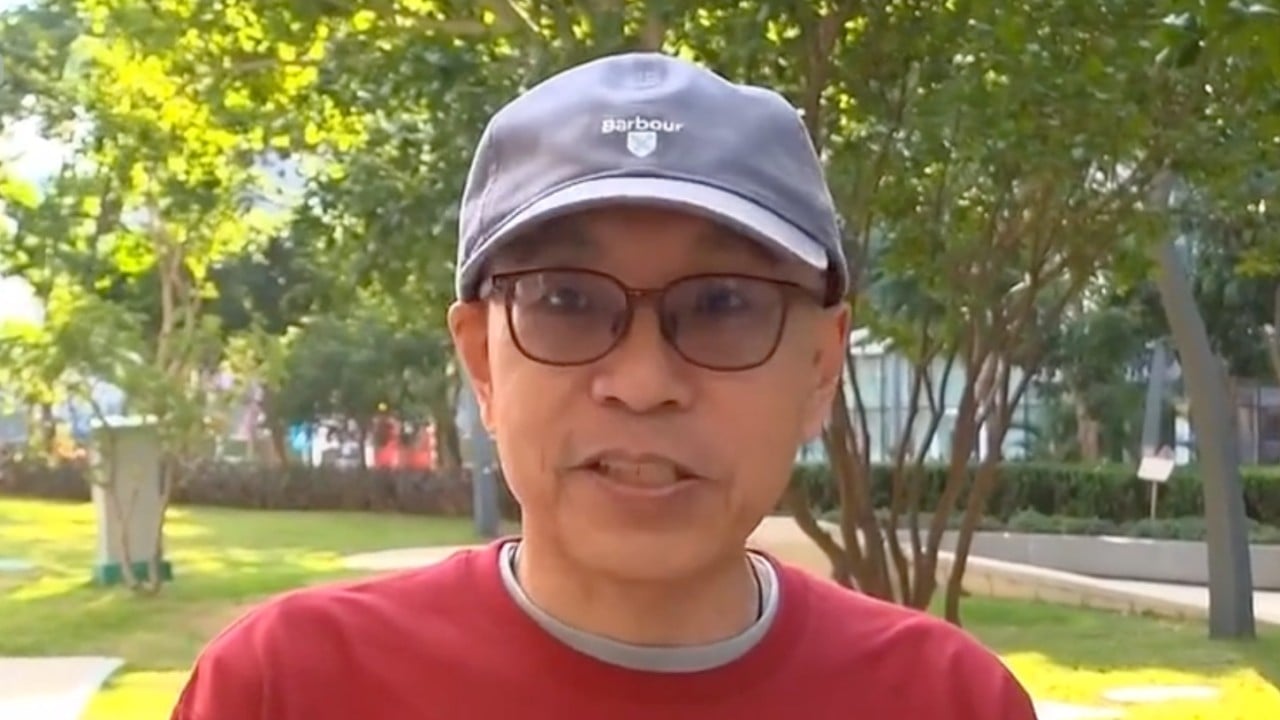
Cheung Kim-hung, the former publisher of Hong Kong's defunct pro-democracy newspaper Apple Daily, recently joined a mainland China tour organized by Hong Kong's Correctional Services Department for rehabilitated offenders. The trip, which took participants to the Greater Bay Area, marks a stark turn for a senior media executive who spent years awaiting sentencing under the city's National Security Law after pleading guilty to conspiracy to collude with foreign forces.
For decades, Cheung sat at the upper echelons of Hong Kong's most combative media empire, Next Digital. Watching a man who once oversaw editorial lines fiercely critical of Beijing now walk through mainland infrastructure projects as part of a state-backed rehabilitation program highlights the complete transformation of Hong Kong's legal, political, and media environment since 2020.
Who Is Cheung Kim-hung and Why Does His Presence Matter
To understand the weight of this appearance, you have to look at Cheung’s career before the 2021 shutdown of Apple Daily. He was not a low-level reporter or an activist on the fringes. He was the chief executive officer of Next Digital and the publisher of its flagship paper, operating directly alongside founder Jimmy Lai.
When Hong Kong authorities froze the company's assets and arrested its top brass in June 2021, Apple Daily ceased publication within days. That closure ended a 26-year run that had defined tabloid journalism and opposition politics in the territory.
Cheung was charged under the Beijing-imposed National Security Law. Unlike Jimmy Lai, who pleaded not guilty and fought the charges in a high-profile trial, Cheung opted to plead guilty. He subsequently took the witness stand as a prosecution witness, testifying against his former boss and detailing the internal operations of the newsroom.
His participation in the mainland tour is the first public glimpse into his post-remand or transitional phase, signaling how the Hong Kong Correctional Services Department integrates high-profile national security offenders into its broader civic education and rehabilitation framework.
The Mechanics of Hong Kong's Rehabilitation Tours
The Correctional Services Department (CSD) has long run programs aimed at reducing recidivism and helping former inmates reintegrate into society. In recent years, however, the ideological dimension of these programs has expanded significantly.
The tour Cheung joined falls under a specific initiative designed to expose rehabilitated individuals and youth to the economic and technological development of mainland China, particularly within the Greater Bay Area. This region links Hong Kong and Macau with nine cities in Guangdong province, forming the centerpiece of Beijing's regional integration strategy.
What Happens on These Trips
Participants do not simply go sightseeing. The itineraries are carefully curated to demonstrate state capacity, economic modernization, and national identity. Standard stops typically include:
- Tech and Innovation Hubs: Visits to major robotics, electric vehicle, or telecommunications facilities in Shenzhen or Guangzhou to showcase mainland industrial strength.
- Historical and Cultural Sites: Tours of museums dedicated to modern Chinese history, the Opium Wars, or the rise of the Communist Party, framing national rejuvenation as the logical arc of history.
- Civic Exchanges: Meetings with local officials, entrepreneurs, or youth groups to normalize cross-border interaction and foster a sense of shared national belonging.
For the CSD, bringing a former Apple Daily executive on such a trip serves a dual purpose. Operationally, it treats him like any other individual going through the reintegration pipeline. Symbolically, it provides unmistakable visual proof that even the staunchest figures from Hong Kong's opposition media apparatus have been brought into the fold of patriotic education.
The Shift in Correctional Philosophy Since 2020
Before the 2019 anti-government protests, Hong Kong's prison system focused primarily on vocational training, psychological counseling, and basic education. Inmates learned trades like carpentry, laundry services, or catering to prepare them for the job market upon release.
The mass arrests following the 2019 unrest and the 2020 enactment of the National Security Law changed the demographic profile of Hong Kong's prisons. Suddenly, the CSD was housing thousands of detainees—many of them young, university-educated, or professional—convicted of politically motivated offenses rather than traditional street crimes.
In response, the department introduced the "Project Path" initiative and other deradicalization programs. These efforts explicitly target three areas:
- Historical and National Education: Re-educating inmates on Chinese history and the constitutional relationship between Beijing and Hong Kong.
- Psychological Reconstruction: Addressing the grievances and ideological frameworks that led individuals to participate in protests or anti-government activities.
- Life Planning: Guiding former offenders toward career paths and social networks aligned with Hong Kong's new political reality.
Cheung’s inclusion in a mainland tour demonstrates that this correctional philosophy applies across the board, regardless of age or former social status. It is not merely a youth intervention; it is a systemic approach to political rehabilitation.
The Optics and Public Reaction
In Hong Kong, public reaction to Cheung's appearance has been sharply divided, reflecting the deep, lingering fractures within the city.
Pro-establishment figures and state-aligned media view the development as a success story. From their perspective, Cheung’s guilty plea, cooperation with prosecutors, and willingness to tour the mainland represent genuine remorse and a constructive path forward. They argue that recognizing the reality of China's development is essential for anyone wishing to reintegrate into Hong Kong society today.
Critics, exiled activists, and former colleagues see something very different. To them, images of the former publisher touring Shenzhen under official supervision evoke the long-standing mainland practice of televised confessions and public contrition. While Cheung has not made a scripted public apology on camera in the traditional mainland style, his physical presence on an official tour carries a similar weight.
There is also a pragmatic reality that outside observers often miss. In Hong Kong's legal system, demonstrating remorse and cooperating with rehabilitation programs directly impacts sentencing and early release calculations.
By pleading guilty and testifying for the prosecution, Cheung positioned himself for a significant reduction in his prison term. Participating in CSD-organized events further reinforces his status as a cooperative, rehabilitated individual, which is critical when judges weigh final mitigation factors.
The Broader Signal to Hong Kong's Media Industry
Cheung Kim-hung’s journey from the boardroom of Next Digital to a CSD tour bus sends an unambiguous message to every remaining journalist, editor, and media owner in Hong Kong.
The space for adversarial journalism that challenges Beijing's legitimacy no longer exists. Following the closure of Apple Daily, other independent outlets—including Stand News and Citizen News—shut down amid raids, arrests, and sedition prosecutions. The legal boundaries surrounding what constitutes "collusion," "sedition," or "incitement" have been drawn tightly, leaving newsrooms to operate under strict self-censorship.
Watching a veteran publisher participate in a state-sponsored patriotic tour underscores the permanence of this shift. It illustrates that the state does not merely seek to silence opposition voices through incarceration; it seeks to actively reorient them.
For those still working in Hong Kong's media sector, the lesson is concrete. The institutions that once provided legal, financial, and political cover for aggressive reporting have been dismantled, and their leaders have either fled abroad, remain behind bars, or are now walking through mainland tech parks under the guidance of correctional officers.