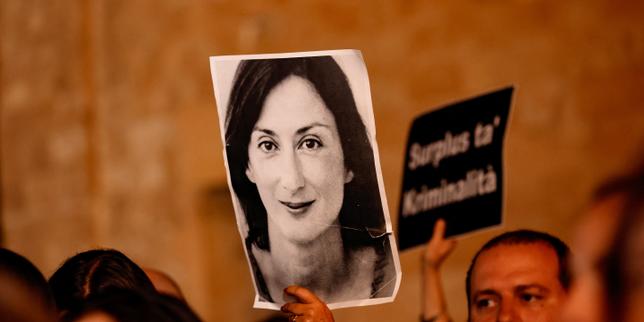
Nearly nine years after a remote-controlled car bomb ripped apart the life of Malta’s most ferocious anti-corruption investigator, the architecture of impunity remains entirely intact. When a Maltese jury voted eight to one to acquit prominent businessman Yorgen Fenech of masterminding the 2017 assassination of Daphne Caruana Galizia, it did more than deliver a shocking legal verdict. It exposed the structural failure of a Mediterranean state where political power, opaque corporate money, and judicial boundaries bleed together so completely that true accountability becomes structurally impossible.
The trial itself was an agonizingly long theater of shadows. Spanning months in a stifling Valletta courtroom, the proceedings laid bare the murky mechanics of how high-level corruption functions in the European Union’s smallest member state. Prosecutors argued that Fenech, the former chief executive of a major hospitality and property conglomerate and owner of the secretive Dubai-incorporated entity 17 Black, had funneled thousands of euros to finance the murder. Caruana Galizia had been tracking 17 Black and its connections to senior government figures, including the prime minister's former chief of staff, linking state-backed energy projects directly to secret offshore bank accounts.
Yet when the dust settled and the jury delivered its decisive rejection of the conspiracy charges, Fenech walked out of custody a free man. He maintained throughout the trial that he was merely a messenger trapped in a web of blackmail, pointing fingers elsewhere while denying any active role in the assassination plot. The defense successfully picked apart the credibility of key prosecution witnesses, including a self-confessed middleman who had secured a presidential pardon to testify. For the family of the slain reporter, the verdict was an unmitigated disaster. It left them facing a stark and bitter reality. The foot soldiers of the murder have been jailed, but the financial and political apex of the conspiracy has slipped through the legal net.
To understand why this happened, one has to look past the courtroom drama and examine the anatomy of the Maltese state. A landmark independent public inquiry published years prior had already delivered a damning verdict on the nation itself. The inquiry panel of retired judges concluded that the state bore direct responsibility for Caruana Galizia’s death. They found that an atmosphere of impunity had been systematically cultivated at the highest echelons of government, creating an environment where a crusading journalist was left exposed, isolated, and effectively marked for death.
State protection failed because the institutions designed to act as checks and balances were co-opted by the very networks they were meant to police. Senior officials caught in the fallout of the Panama Papers leaks—which Caruana Galizia spent her final years analyzing on her blog, Running Commentary—retained deep institutional linkages. Even as public outrage forced the resignation of former Prime Minister Joseph Muscat in 2019, the underlying machinery of governance remained fundamentally unreformed.
The legal system operates within this exact institutional amber. Trials of this magnitude place immense pressure on standard evidentiary thresholds, particularly when relyng on compromised intermediaries and witness testimonies tainted by accusations of political leaks and police sabotage. When a jury decides that the state has failed to prove its case beyond a reasonable doubt against the alleged mastermind, it reflects a broader institutional collapse. The investigative work required to map high-level white-collar conspiracy often outpaces the structural capability or political will of local law enforcement agencies.
International observers and press freedom organizations have watched these developments with mounting alarm. The message sent across Europe is chillingly clear. If an investigative journalist can be assassinated with a car bomb outside her home for exposing grand corruption, and nearly a decade later the courts still cannot definitively assign responsibility to those who ordered the hit, the deterrent against future violence is severely compromised.
The systemic danger extends far beyond the borders of Malta. It highlights a dangerous vulnerability within European democracies where economic oligarchies can intersect with state power to suppress independent scrutiny. When accountability stalls at the highest levels, investigative reporting becomes a terminal hazard rather than a protected pillar of democratic society.
Protests erupted in Valletta immediately following the verdict, with citizens and opposition leaders demanding genuine institutional overhauls rather than empty governmental promises. Yet the state has repeatedly dragged its feet on implementing the fundamental recommendations outlined by the public inquiry. The laws remain unchanged, the protections for journalists remain weak, and the political class continues to operate with a cushioned sense of immunity.
Daphne Caruana Galizia’s blog posts are archived, but her notebook remains an open wound for a country that refuses to clean house. The courtroom doors have closed on the final primary prosecution tied to her assassination, but the broader trial of Malta's political integrity is far from over.