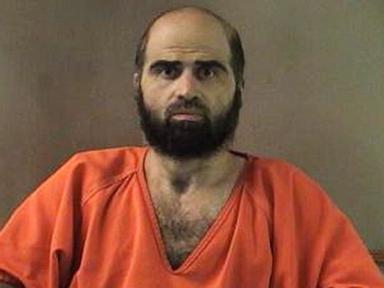
The United States military has not executed a prisoner since 1961. While Nidal Hasan’s case continues to draw headlines as the closest thing the Pentagon has to an active execution track, the broader reality inside the United States Disciplinary Barracks at Fort Leavenworth is one of total legal gridlock. Only a handful of men sit on military death row, yet their cases remain trapped in a labyrinth of mandatory appeals, jurisdictional overlaps, and executive reluctance that has effectively frozen capital punishment within the armed forces for more than six decades.
The Anatomy of a Broken Pipeline
Capital punishment in the military operates under the Uniform Code of Military Justice (UCMJ), a legal framework built for wartime discipline rather than modern appellate endurance. When a general court-martial hands down a death sentence, the verdict does not simply move toward a scheduled date in an execution chamber. It triggers an automatic, multi-tiered review process that dwarfs civilian post-conviction litigation in both duration and complexity.
First comes the convening authority—the commanding general who ordered the trial—who holds broad clemency powers to commute the sentence before an appellate judge ever touches the file. From there, the case goes to the service branch’s Court of Criminal Appeals. Then it moves to the Court of Appeals for the Armed Forces (CAAF), a civilian bench established to oversee military justice. Only after CAAF affirms the conviction and sentence can the prisoner petition the United States Supreme Court.
Even then, the clock has barely started. Under Article 71(a) of the UCMJ, no military death sentence can be carried out until the President of the United States personally approves it. This single requirement turns a legal question into a political calculation. Presidents of both parties have quietly let these files gather dust on the Resolute Desk, unwilling to expend political capital or invite international scrutiny over an execution that carries no immediate strategic benefit.
Why Fort Leavenworth Is a Holding Pattern
The men confined to the Special Housing Unit at Fort Leavenworth live in a state of suspended animation. Unlike state death rows in Texas or Florida, where execution dates are routinely set and litigated under compressed timelines, the military system lacks an institutional apparatus designed to actually carry out lethal injections.
The Pentagon does not maintain a dedicated execution team on standby. Protocols must be drafted, reviewed, and scrubbed against evolving federal standards every time a case inches forward. Furthermore, the Federal Bureau of Prisons facility in Terre Haute, Indiana—where military executions would legally take place under current Department of Defense regulations—operates under its own separate administrative and legal constraints. Whenever federal lethal injection protocols face litigation in civilian courts, military cases automatically stall in their wake.
The Nidal Hasan Factor
Nidal Hasan occupies a unique position in this stalled machinery. Convicted in 2013 for the 2009 mass shooting at Fort Hood that left thirteen people dead and more than thirty wounded, Hasan did not merely accept his sentence. He actively sought it.
During his court-martial, Hasan fired his defense team, represented himself, and offered virtually no mitigation evidence during the sentencing phase. For defense attorneys appointed to handle his mandatory appeals, this created an ethical and procedural nightmare. You cannot waive mandatory appellate review in a military capital case. Regardless of whether Hasan wants to die, the system forces appellate counsel to comb through thousands of pages of trial transcripts looking for structural errors, ineffective assistance claims, or constitutional violations.
In 2020, the Army Court of Criminal Appeals upheld Hasan’s conviction and death sentence. In 2023, the Court of Appeals for the Armed Forces affirmed that ruling, and the Supreme Court subsequently declined to hear his appeal. On paper, Hasan exhausted his direct appellate remedies, pushing his case directly toward the presidential approval stage under Article 71(a).
Yet exhausting direct appeals is not the end of the road. It is simply the entrance to collateral review—habeas corpus petitions filed in federal civilian courts challenging the constitutionality of the military proceedings. Hasan’s case appears closer to the end only because his direct appeals moved faster than those of his fellow inmates, largely due to the overwhelming factual record and his own refusal to mount a conventional defense at trial.
The Forgotten Cases in Limbo
While Hasan commands the media oxygen, the other men on military death row have spent decades locked in procedural trench warfare. Their cases expose the systemic vulnerabilities that keep the military’s execution chamber permanently idle.
Consider Ronald Gray, convicted in 1988 for a series of brutal rapes and murders near Fort Bragg, North Carolina. In 2008, President George W. Bush formally approved Gray’s execution—the first presidential death warrant signed for a military prisoner since Dwight D. Eisenhower signed off on the execution of John A. Bennett in 1957. Gray was given an execution date. He never went to the gurney. Federal civilian courts issued stays to allow habeas corpus litigation to play out, stretching a 1988 conviction across nearly four decades without resolution.
Then there is Hasan Akbar, convicted in 2005 for a 2003 grenade and rifle attack on fellow soldiers in Kuwait that killed two officers and wounded fourteen others. Akbar’s appellate battles have centered heavily on mental health evidence and whether his trial attorneys adequately investigated his psychiatric history. Because military courts apply heightened scrutiny to capital defense representation—often referencing the American Bar Association Guidelines for capital cases—any perceived shortcoming by trial counsel can trigger years of evidentiary hearings.
Other cases, such as those of Timothy Hennis—tried three times across state and military courts for the 1985 murders of a mother and her two young daughters—illustrate how jurisdictional tangles compound the delay. Hennis was acquitted in a state retrial before being recalled to active duty decades later after DNA evidence linked him to the crime scene, allowing the Army to court-martial him under the dual-sovereignty doctrine. Every novel constitutional question raised by such prosecutions becomes an appellate anchor dragging the timeline out by years.
| Inmate | Branch | Crime Year | Sentence Year | Primary Bottleneck |
|---|---|---|---|---|
| Ronald Gray | Army | 1986–1987 | 1988 | Federal habeas corpus stays post-presidential approval |
| Hasan Akbar | Army | 2003 | 2005 | Mental health mitigation and ineffective counsel claims |
| Timothy Hennis | Army | 1985 | 2010 | Double jeopardy and active-duty recall jurisdiction |
| Nidal Hasan | Army | 2009 | 2013 | Presidential action under Article 71(a) and collateral review |
Why Military Capital Trials Fail Under Scrutiny
To understand why these cases rot in appellate limbo, you have to look at how military courts actually conduct capital trials. They are structurally ill-equipped for them.
In the civilian federal system, capital prosecutions are handled by specialized career prosecutors from the Department of Justice Capital Case Section, opposing veteran public defenders whose entire careers are dedicated to death penalty litigation. In the military, the personnel system works against specialization. Judge Advocates (JAGs) rotate assignments every two to three years. A prosecutor or defense counsel handling a death penalty court-martial might be a brilliant military lawyer who has never tried a capital murder case in their life—and may never try another one before rotating to a completely different legal billet.
This constant rotation produces predictable appellate vulnerabilities:
- Inadequate Mitigation Investigations: Modern capital defense requires years of forensic social work, neurological testing, and generational trauma mapping before a jury ever hears opening statements. Military defense teams, historically under-resourced and operating under command pressure to move dockets quickly, frequently struggled to match civilian standards.
- Unlawful Command Influence: Known within the JAG Corps as the "mortal enemy of military justice," any perception that a senior commander subtly pressured jurors, witnesses, or legal personnel can taint an entire proceeding and force appellate courts to scrutinize the record with extreme skepticism.
- Panel Size and Unanimity Rules: Until relatively recent reforms in the National Defense Authorization Act, military courts-martial did not even require a fixed twelve-member jury panel in capital cases, creating persistent constitutional challenges under the Sixth Amendment.
Appellate judges at CAAF know that if they affirm a flawed military death sentence, the Supreme Court or a federal circuit court will eventually tear it apart. Rather than risk institutional embarrassment, military appellate courts routinely remand cases for DuBay hearings—fact-finding proceedings ordered to investigate post-trial claims of counsel error or juror misconduct. A single DuBay hearing can easily add five to seven years to a case’s lifespan.
The Geopolitical and Political Paralysis
Beyond courtroom mechanics sits an unspoken reality in Washington. Executing a member of the United States armed forces carries diplomatic and political baggage that few administrations want to unpack.
Many of America’s closest military allies—including the United Kingdom, Germany, Australia, and Canada—have abolished the death penalty entirely and refuse to extradite suspects or share certain intelligence if capital punishment is on the table. Even when a crime occurs on domestic soil, like Fort Hood, a military execution draws intense international media coverage that complicates the Pentagon’s broader messaging on human rights and the rule of law.
Domestically, the political calculus is equally lopsided. A president gains virtually nothing by signing a death warrant for a crime committed twenty or thirty years ago. Most voters have forgotten the details of the case. Meanwhile, signing that warrant immediately mobilizes anti-death-penalty coalitions, triggers emergency litigation from federal defenders, and forces the White House counsel’s office to manage a volatile legal crisis.
Look at the track record. Since 1961, eleven presidents have occupied the Oval Office. Only one—George W. Bush—signed a military death warrant, and he did so in the final months of his second term, leaving the actual execution to be tangled up in court during the Obama administration. Neither Barack Obama, Donald Trump during his first term, nor Joe Biden moved a single military death row inmate to the execution chamber. Even during the Trump administration’s unprecedented resumption of federal civilian executions in 2020 and 2021—which saw thirteen federal inmates put to death at Terre Haute—the military death row inmates at Fort Leavenworth remained untouched.
The Cost of Perpetual Limbo
Keeping a handful of inmates on death row for thirty or forty years is not a neutral policy choice. It imposes severe costs on the military justice system and the families left waiting for finality.
Every year a capital case remains open, the Department of Defense spends hundreds of thousands of dollars funding specialized appellate defense teams, government appellate counsel, psychiatric experts, and administrative overhead. For the families of victims—whether at Fort Hood, Fort Bragg, or Camp Pennsylvania in Kuwait—the promise of a death sentence becomes a cruel illusion. Instead of closure, they receive decades of incremental legal filings, technical remands, and silence from the White House.
At the same time, the military’s inability to carry out its own sentences undermines the credibility of the UCMJ. A punishment that exists only on paper ceases to function as a deterrent or a meaningful instrument of military discipline.
What Actually Happens Next
Unless a sitting president decides to expend the political capital required to enforce Article 71(a) and weather the inevitable storm of federal habeas injunctions, the military death penalty will remain a legal phantom.
Nidal Hasan’s file may sit closer to the front of the queue than the others, stripped of the usual trial-level mitigation disputes because he chose to orchestrate his own conviction. Yet even his path to Terre Haute runs straight through the federal civilian judiciary, where capital defenders have spent half a century perfecting the art of running out the clock. Until Congress overhauls the capital appellate architecture of the UCMJ or a commander-in-chief forces the issue, Fort Leavenworth’s death row will stay exactly what it has been since John F. Kennedy was in the White House—a waiting room with no exit.