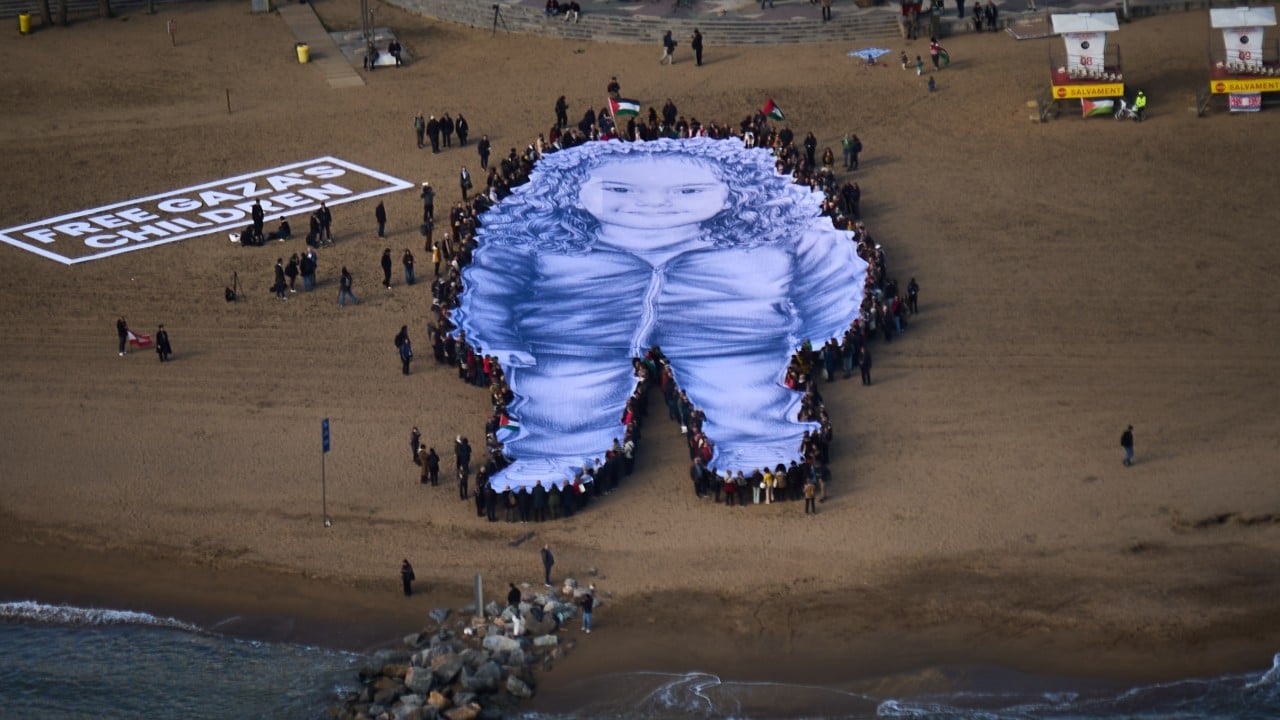
The audio recordings still haunt anyone who listens to them. A five-year-old Palestinian girl named Hind Rajab spent hours trapped inside a bullet-riddled car in Gaza City, speaking to emergency dispatchers while her dead relatives surrounded her, begging for a rescue team that would also never return. For nearly three years, the official stance from the Israel Defense Forces maintained that troops were simply not present near the vehicle or within firing range. That narrative shattered when the military announced it would finally open a criminal investigation into the January 2024 killing of Hind Rajab, alongside a separate probe into the deaths of 15 paramedics killed in Rafah.
This sudden procedural pivot arrives after thousands of deaths and years of international pressure. Yet behind the official statements lies a bureaucratic labyrinth designed to protect military operations from external accountability. To understand why these specific investigations are happening now requires examining the internal mechanics of military law, the architecture of domestic oversight, and the pressure applied by international legal bodies.
The Anatomy of an Internal Review
Military legal systems are built to evaluate operational intent rather than purely civilian outcomes. When an exceptional incident occurs during combat, the standard procedure within the Israel Defense Forces begins with the General Staff Fact-Finding Assessment Mechanism. This independent military body conducts preliminary inquiries, sifting through operational logs, unit debriefs, and available battlefield footage to establish a baseline narrative.
Out of thousands of flagged incidents from the conflict, this mechanism has completed roughly 150 reviews. Only a fraction of those are ever transferred to the Military Advocate General for criminal evaluation. In the recent announcement, the military reviewed five high-profile cases, choosing to dismiss three entirely—including the April 2024 airstrikes that killed seven World Central Kitchen aid workers, concluding there was no reasonable suspicion of criminal misconduct.
Only two incidents crossed the threshold into a formal criminal investigation by the Military Police Criminal Investigation Division. The Rajab case moved forward only after investigators acknowledged that troops fired on a vehicle approaching their position, coupled with an admission that an ambulance sent by the Palestine Red Crescent Society was struck while attempting a rescue. Similarly, the March 2025 incident involving the killing of 15 rescue workers in Rafah moved to a criminal probe only after video and audio evidence publicly contradicted the initial testimony provided by deployed units.
The Record of Military Jurisprudence
Skepticism from human rights monitors is rooted in historical precedent. Independent analyses of military investigations in the region consistently demonstrate that internal mechanisms rarely culminate in indictments or convictions. Organizations that track military accountability point out that the vast majority of operational probes close without disciplinary action or formal charges.
The structural tension is inherent to any system where an army investigates its own conduct during active hostilities. Prosecutors must weigh the fluid, chaotic realities of urban warfare against domestic and international legal standards. When political leaders openly criticize legal proceedings against soldiers—such as the fierce domestic blowback over investigations into abuse allegations at detention facilities—the atmosphere surrounding military prosecutors grows increasingly complex.
This domestic political climate creates a powerful deterrent against aggressive prosecutions. Even when graphic footage or audio recordings capture tragic civilian deaths, the burden of proof required within military tribunals to establish criminal intent remains remarkably high. Command decisions made under the pressure of combat are frequently granted wide latitude under the doctrine of operational necessity.
External Pressures and Global Jurisdiction
The timing of these criminal probes cannot be separated from the looming shadow of international courts. Investigators at the International Criminal Court have spent months examining wartime conduct in Gaza, while various independent legal foundations actively track deployed soldiers abroad to seek universal jurisdiction warrants.
When domestic judicial systems fail to demonstrate genuine, active willingness to investigate and prosecute alleged war crimes, international tribunals gain firmer jurisdictional footing to step in under the principle of complementarity. Opening high-profile criminal probes into cases like Hind Rajab acts as a legal shield for the domestic judiciary, signaling to international observers that local mechanisms are functioning. Whether these newly opened files will break historical patterns and actually reach the courtroom remains an entirely different question.
The families of the victims and independent legal experts continue to argue that internal military policing is inherently compromised, demanding independent commissions free from chain-of-command influence. As military prosecutors begin the painstaking task of gathering testimony from soldiers stationed in Gaza years ago, the outcome will test the limits of self-investigation under global scrutiny.