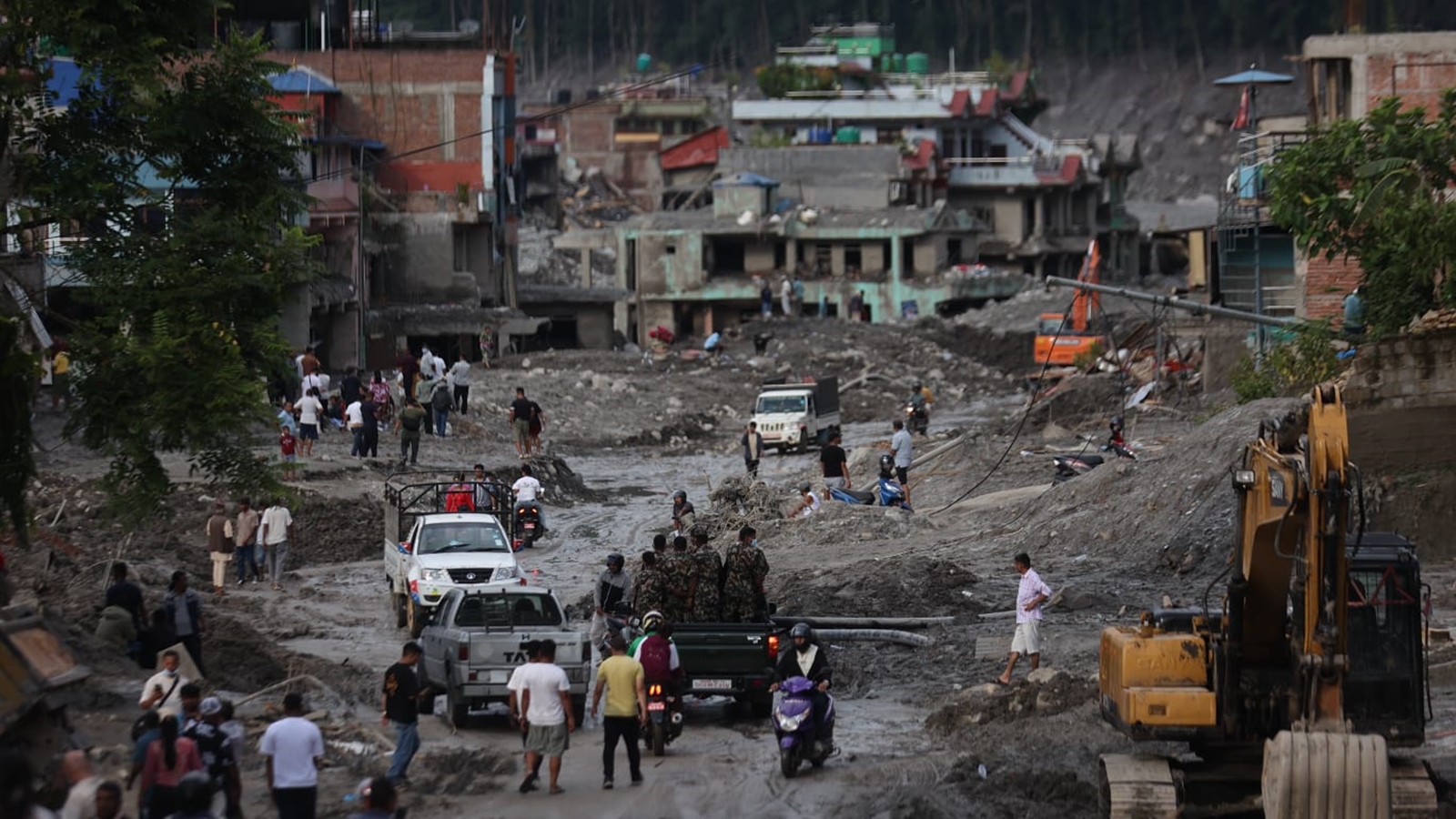
The confirmed death toll from the catastrophic flash floods and landslides along the Nepal-China border has risen to 955, while 4,471 people remain missing across the rugged Himalayan river corridors. Weeks after an ice-rock avalanche and sudden cloudbursts triggered walls of water and debris down the Bhotekoshi-Trishuli river systems, emergency responders are facing an agonizing race against time. Prime Minister Balendra Shah announced that over 11,000 survivors have been pulled to safety, yet thousands of families remain stranded in limbo as rescue operations claw through feet of mud and ruined infrastructure.
The Anatomy of a Himalayan Catastrophe
Water does not merely flow down these mountain valleys during a failure of this magnitude; it acts like a scouring machine. When the initial torrent broke loose from the high-altitude borderlands, it carried millions of tons of boulders, mud, and snapped timber directly into narrow gorges.
Entire communities along the riverbanks were wiped out before local warning systems could sound. Infrastructure planning in the Himalayas has long struggled against the sheer physics of extreme terrain. Roads, suspension bridges, and sprawling hydroelectric facilities were built to withstand seasonal monsoons, not sudden glacial breaches or high-altitude barrier lake bursts.
When the surge hit, it transformed mountain engineering marvels into death traps.
Trapped in the Tunnels
Among the most desperate chapters of this disaster are the search operations unfolding inside commercial infrastructure. Hundreds of construction and maintenance workers remain unaccounted for after mud and debris flooded deep underground hydropower tunnels along the river corridor.
Specialized rescue squads, including international technical experts, are currently drilling and digging through tons of solid sediment inside concrete chambers where dozens of workers are believed trapped. These subterranean spaces quickly filled with a slurry of fine silt and heavy rocks, sealing off escape routes instantly. Heavy machinery struggles to operate inside the cramped, structurally compromised tunnels, forcing rescuers to rely heavily on manual extraction and ground-penetrating radar.
The Long Road to Recovery and Accountability
As international aid trickles into isolated districts like Rasuwa and Nuwakot, questions are mounting regarding early warning infrastructure and industrial zoning in fragile high-altitude zones. Power grids remain largely offline, with only a fraction of households regaining electricity, and public health agencies warn of secondary crises involving clean water and sanitation for tens of thousands of displaced residents.
Temporary barrier lakes forming upstream in Tibet continue to pose active threats, forcing monitoring teams to keep emergency sirens armed even as recovery crews pull bodies from the receding rivers below.